
Plant Library · Fruits · By Faizan Ahmad
Updated November 17, 2026
🍊 How to Grow Orange Tree
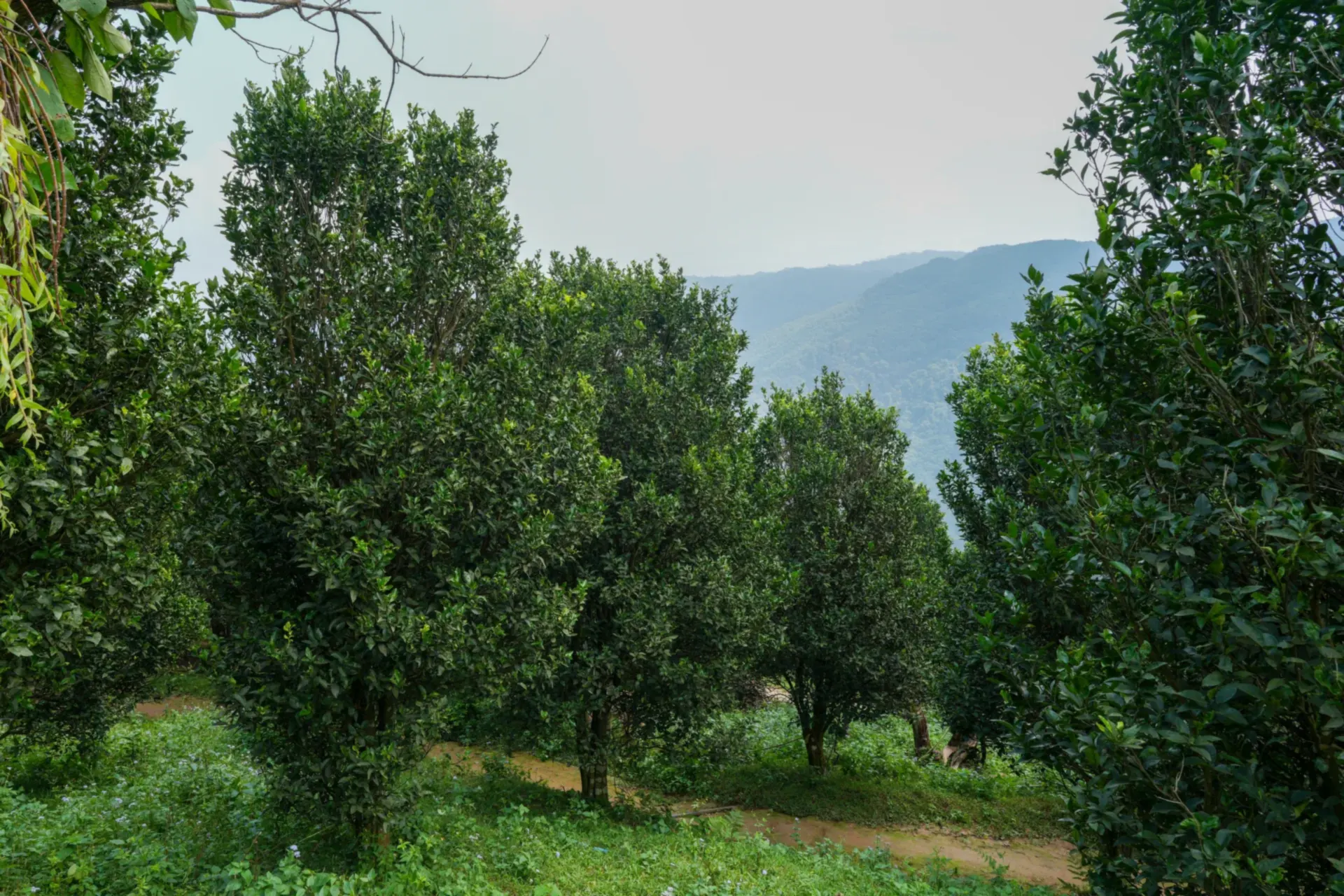
The orange tree is the classic citrus: glossy evergreen leaves, fragrant white blossom, and fruit that ripens through winter in zones 9–11. Trees grow 12–20 ft and fruit in 3–5 years. Outside the warm zones, grow one in a big pot — out for summer, in for winter — and it will still give you a basket of oranges.
Grow Orange Tree with us — step by step
An orange tree repays steady routine more than fuss: deep watering, citrus feed split across the season, and picking by taste because rind colour is a liar in warm weather. Navel types give you winter fruit to eat fresh; Valencia types hang into summer for juice. The steps below follow that rhythm from planting day. Enter the day your tree went in and this page turns it into a personal schedule — feeds, winter protection and harvest checks all counted from your own date.
Step 1 — today: Plant your Orange Tree today, at nursery depth with the graft above the soil, in well-drained soil in full sun — or a large pot if winters are cold — water deeply and mulch.
Orange Tree at a glance
Spacing: 12–20 ft in · Seed depth: As in the pot
Sun: Full sun
Water: Regular, deep
Harvest: First fruit in 3–5 years
Timing counts from your average last spring frost — get your own dates in the Planting Calendar. Guidance follows standard extension-service practice for Canada and the US.
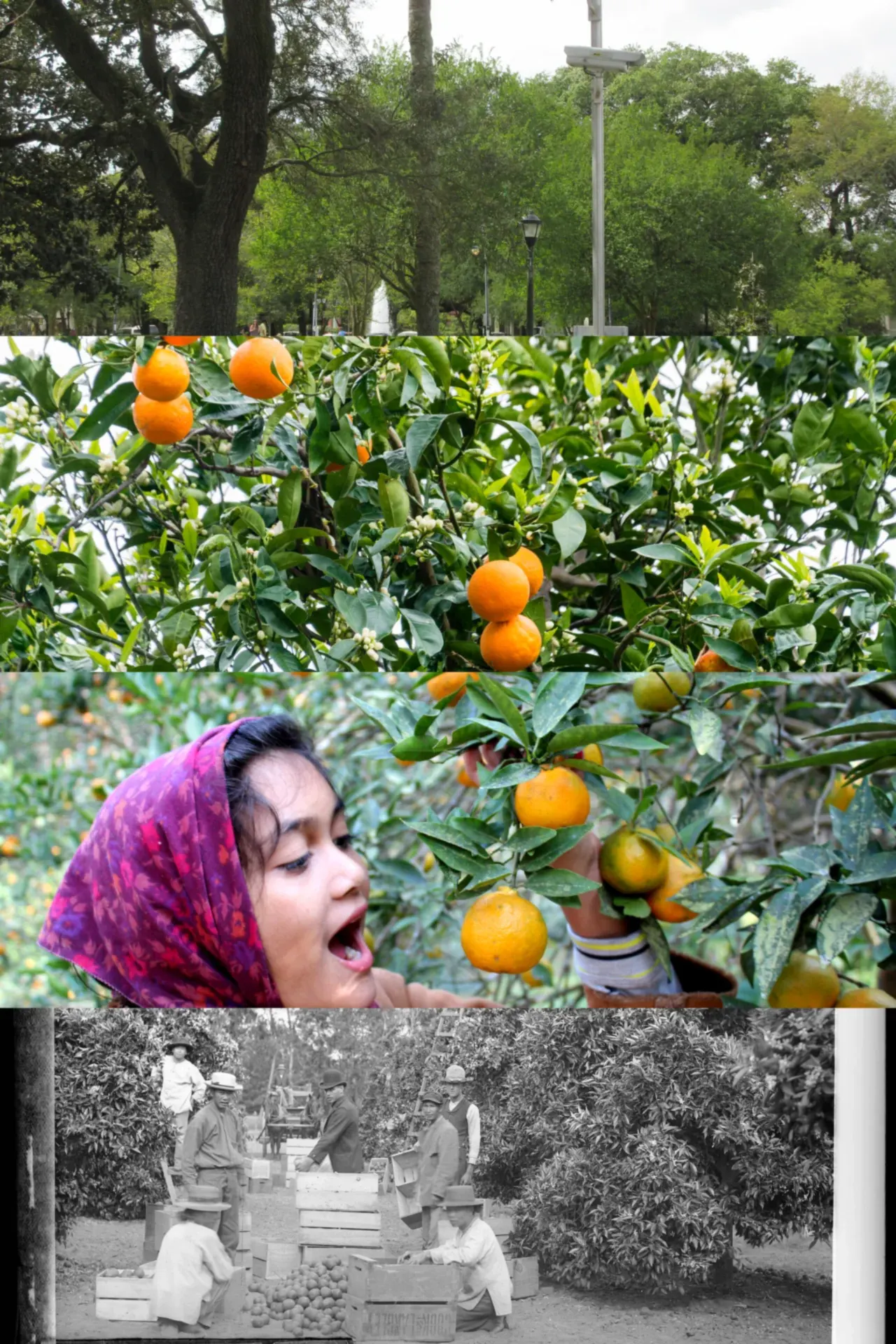
How to plant and grow orange tree, step by step
Step 1 — Time it right
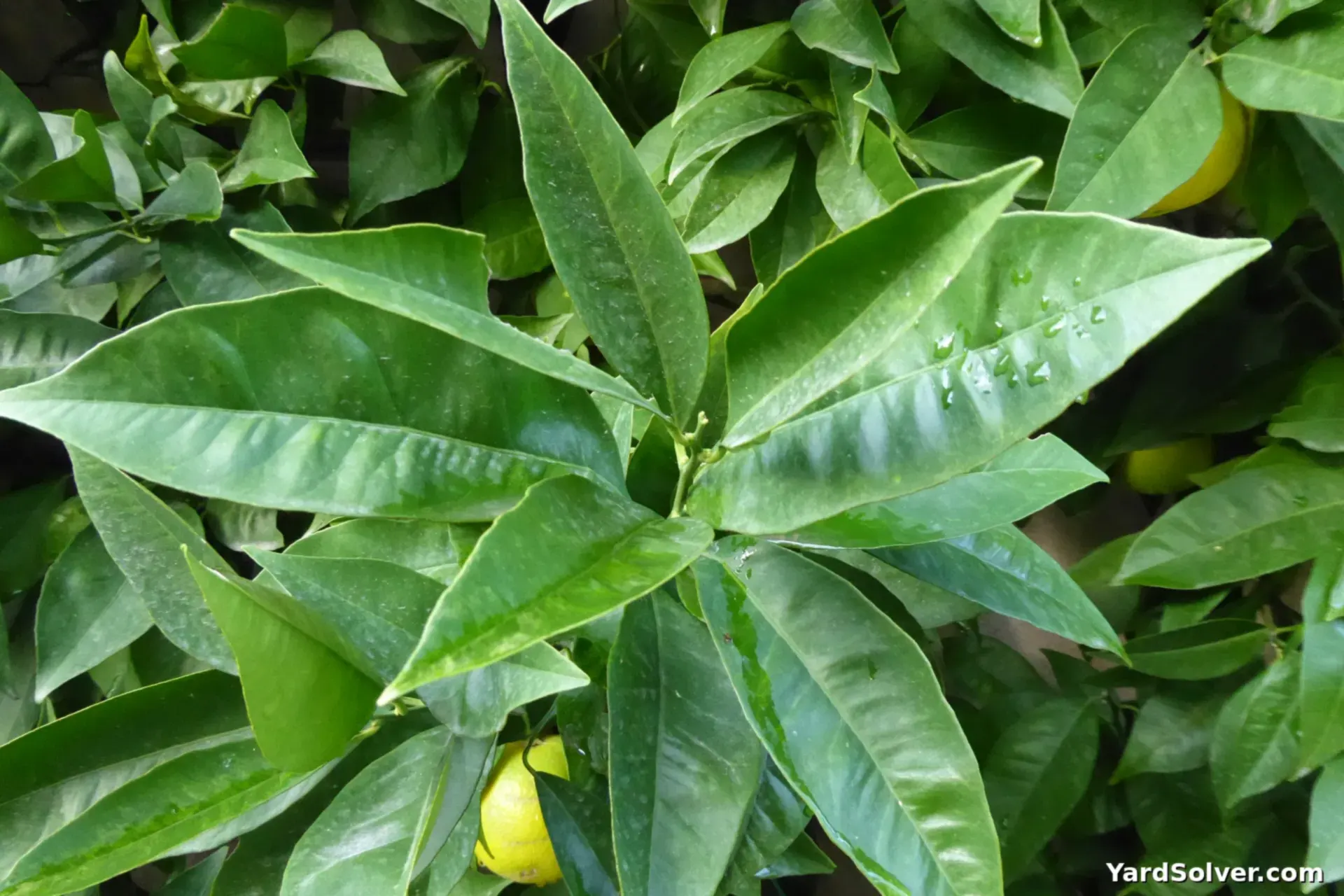
Plant in spring after frost danger passes — in the ground in zones 9–11, or in a large pot for indoor wintering. Plant container trees at any frost-free point in spring so roots establish before summer heat; in hot districts, late-afternoon shade for the first summer helps a young tree. Check your district's citrus rules before buying — some regions restrict citrus movement to slow serious diseases.
Step 2 — Prepare the spot
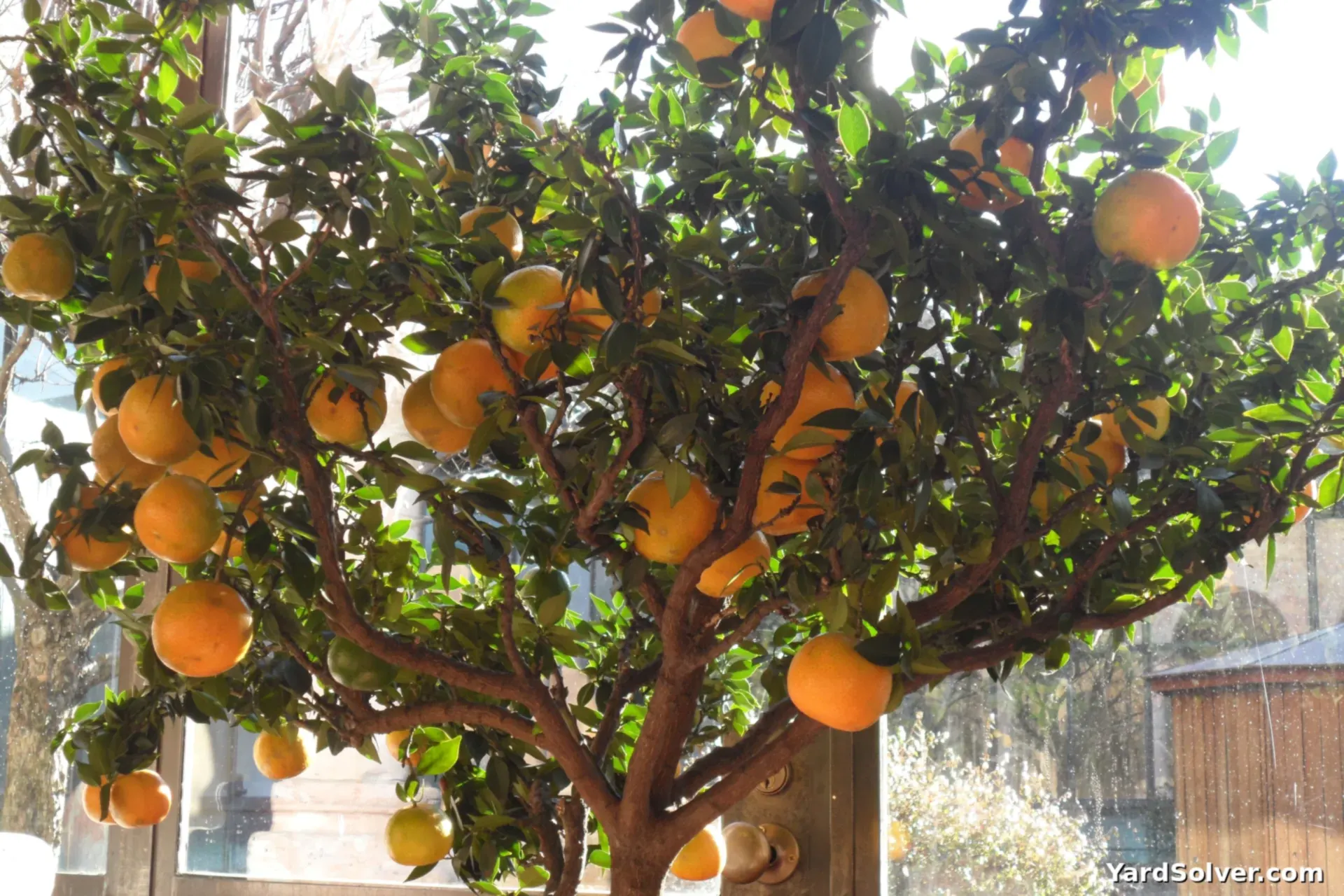
Sun: Full sun. Well-drained, sandy loam in full sun. In pots, a citrus mix in a pot with drainage holes. Work out how much you need with the Garden Mix Calculator or the Raised Bed Soil Calculator. Oranges do best around pH 6.0–7.0 in soil that drains freely after heavy rain; a tree sitting in wet clay declines slowly with yellowing leaves. In pots, raise the container on feet so drainage holes never sit in a saucer of water.
Step 3 — Plant it
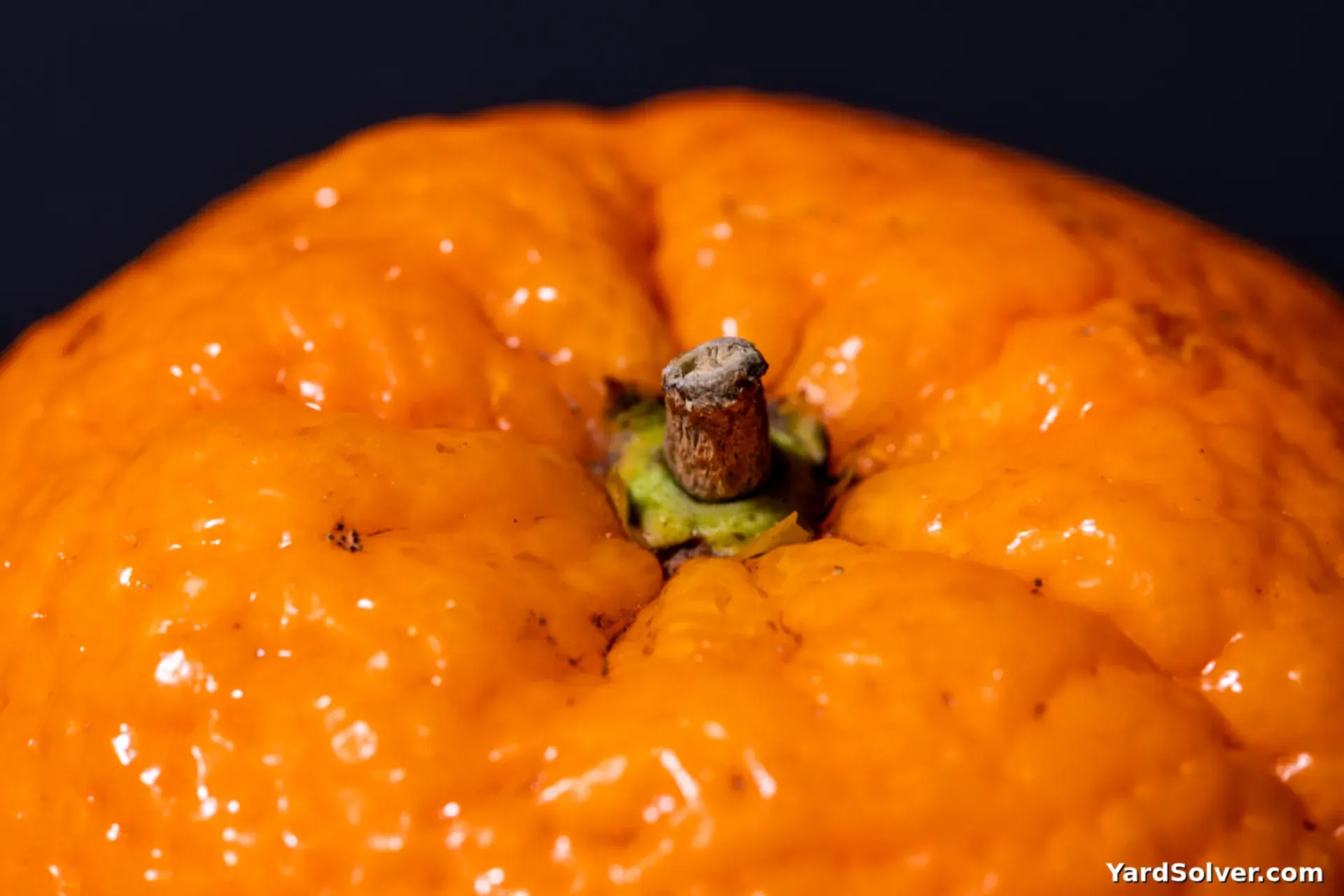
Set the tree at nursery depth with the graft above the soil, water deeply and mulch — keeping mulch off the trunk. The Plant Spacing Calculator turns that spacing into trees-per-plot. Water in with several gallons to settle the mix around the roots and remove air pockets, then mulch 3–4 in deep out to the drip line. Keep that mulch a hand's width from the trunk — bark tight against citrus bark invites collar rot.
Step 4 — Water and feed
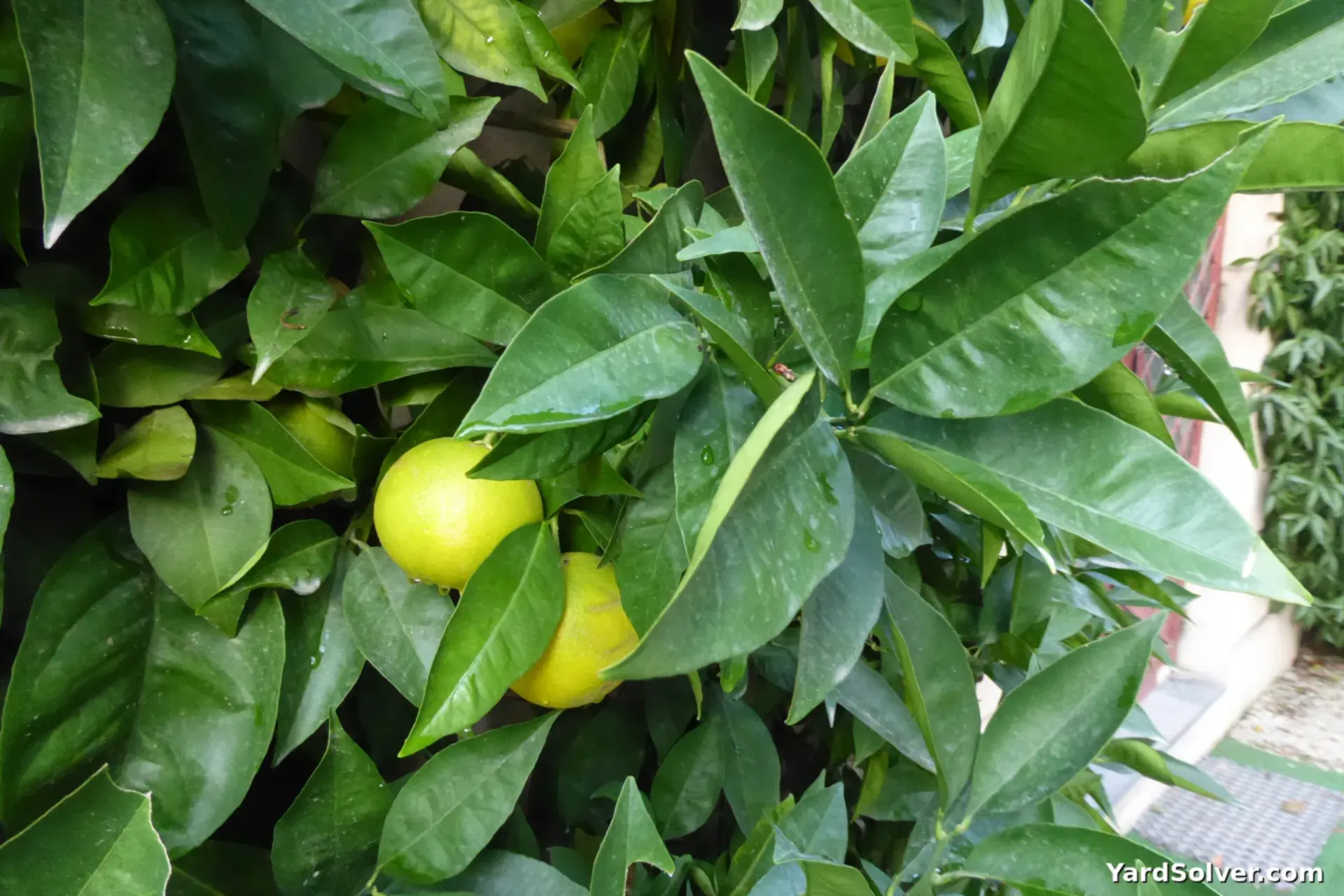
Water: Regular, deep. Feed with a citrus fertilizer through the growing season — oranges are hungry trees. The Fertilizer Calculator turns a plot size into the right amount. A young tree needs modest feed in its first year; from year 2–3, split the citrus fertilizer into three applications — early spring, late spring and midsummer are the usual pattern. Count on growth of roughly 1 ft a year on a well-fed young tree, slowing as cropping begins.
Step 5 — Care and the problems to watch for
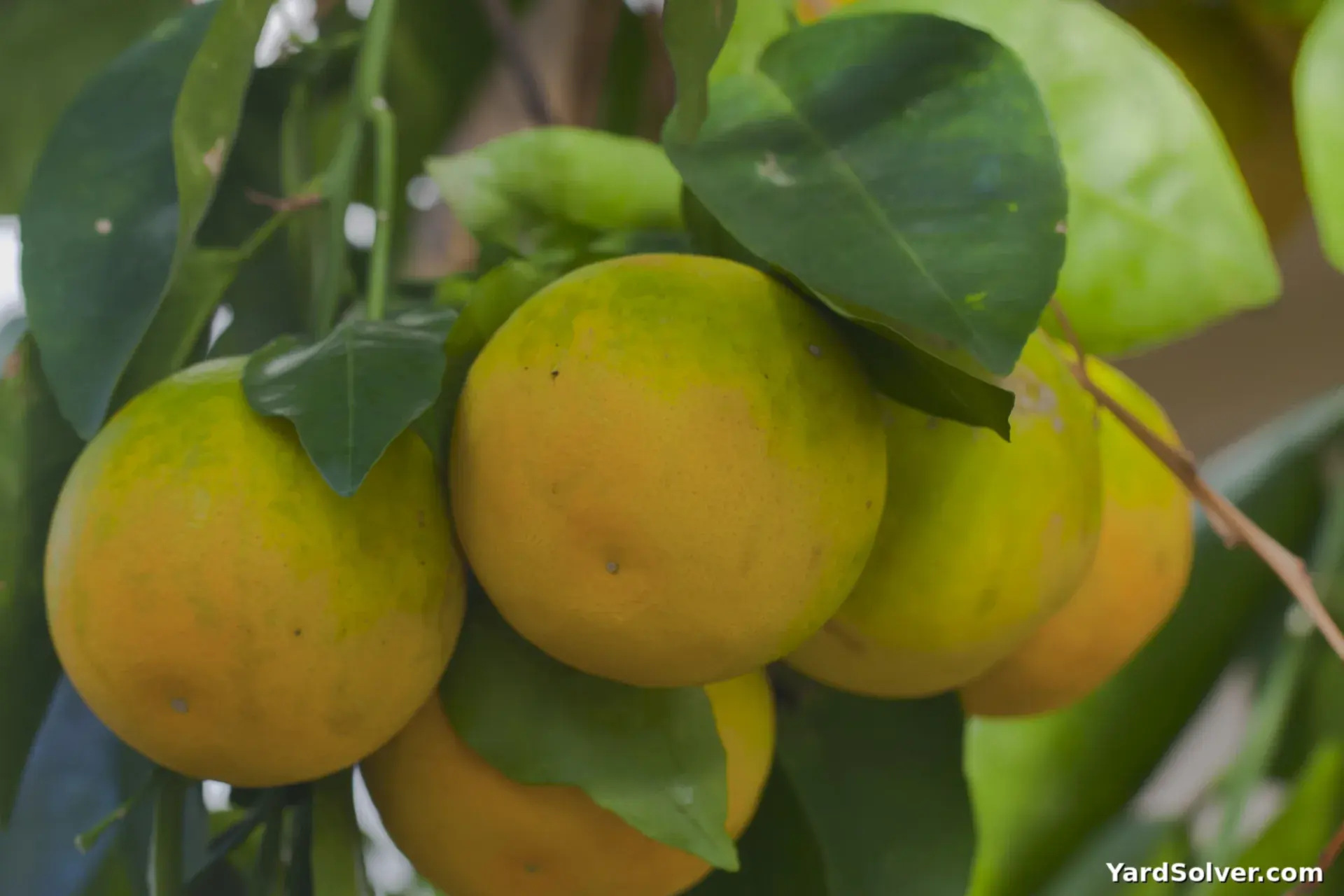
Cold — oranges are damaged below about 28 °F; bring pot trees in before frost. Aphids and scale — check leaf undersides, especially on indoor trees. Fruit drop — a natural June drop thins the crop; heavy drop means drought stress. Prune oranges lightly: remove dead wood, crossing branches and suckers below the graft, and let the skirt of foliage stay low, because fruit forms on the outer canopy. Leaf drop after moving a pot tree indoors is usually a light-and-dry-air protest — a brighter spot and gradual moves in spring and fall prevent most of it.
Step 6 — Harvest
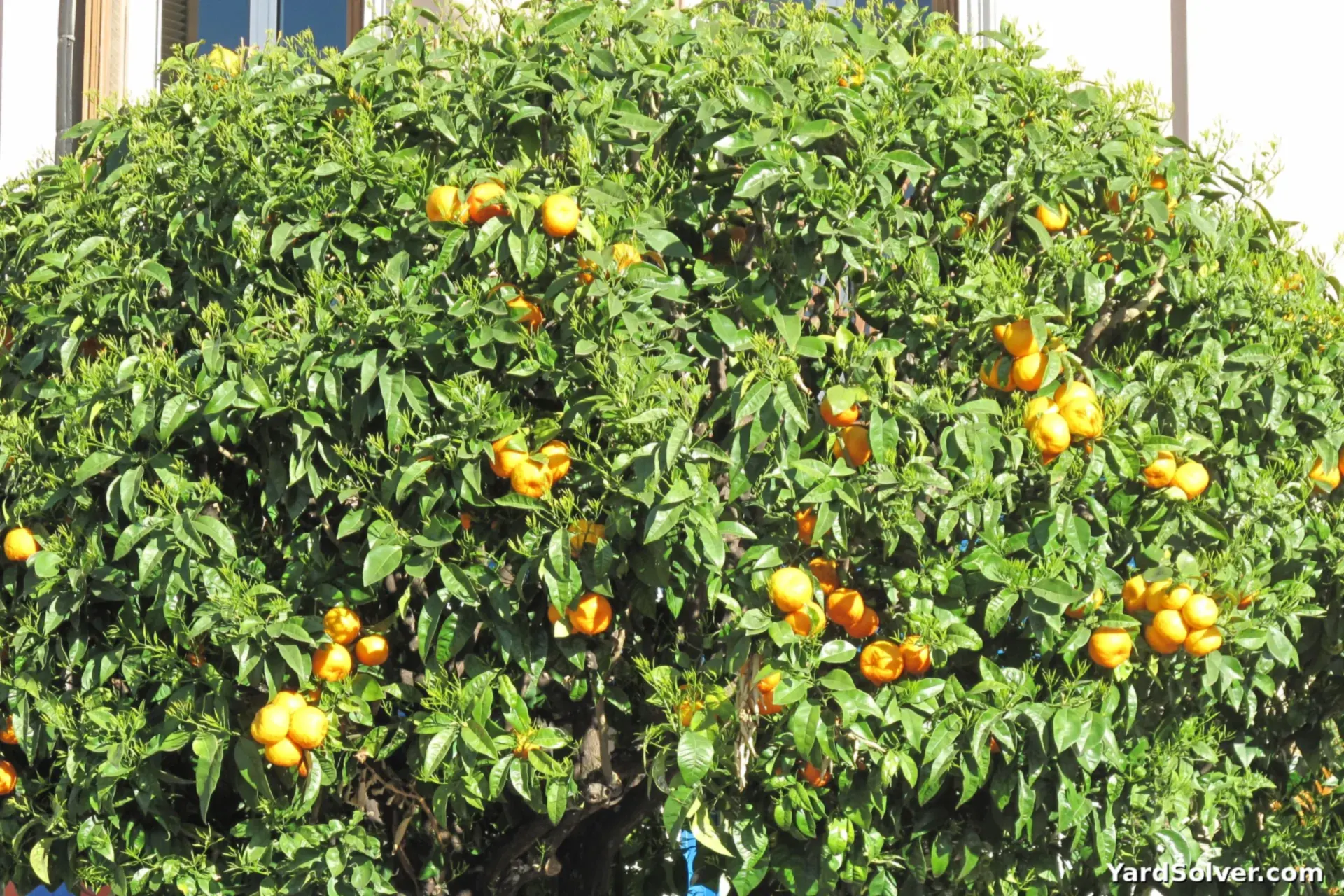
First fruit in 3–5 years. Taste is the test: colour can lag in warm climates, so sample one fruit before picking the crop. Navel oranges ripen in winter and are ready when fully coloured, heavy and fragrant; Valencia ripens later and can hang into summer, even regreening slightly while fully ripe inside. A mature in-ground tree in a warm district can carry well over a hundred fruit — pick with clippers, never by pulling, to avoid tearing the rind button.
📅 Your personal Orange Tree schedule
This schedule runs from the day your orange tree was planted, not from a printed calendar, because a young tree's needs change fast in its first three years. It lays out the three split feeds of the growing season, the winter move for pot trees, and the taste-first harvest checks for navels in winter or Valencias hanging into summer.
Varieties worth growing
| Variety | Colour | Why gardeners like it |
|---|---|---|
| Washington Navel | Orange | The classic seedless winter orange |
| Valencia | Orange | The summer juice orange — hangs on the tree for months |
| Cara Cara | Pink-orange | A navel with pink flesh and berry notes |
| Blood Orange (Moro) | Red-fleshed | Deep red flesh in cool-night climates |
Good for you — and take care
Benefits
- Winter fruit when the garden is bare
- Rich in vitamin C and folate
- Blossom perfume fills a garden
- Evergreen and handsome all year
Take care
- Navel oranges are seedless and ripen in winter; Valencia types ripen in summer.
- Pot trees need bright light indoors and a check for scale in winter.
- Colour is not ripeness — a ripe orange can still have green patches in warm climates.
Problems to watch for
- Cold — oranges are damaged below about 28 °F; bring pot trees in before frost.
- Aphids and scale — check leaf undersides, especially on indoor trees.
- Fruit drop — a natural June drop thins the crop; heavy drop means drought stress.
A little history — and one good fact
Sweet oranges come from China — a cross of pomelo and mandarin grown for thousands of years — and travelled west with Portuguese traders in the 1500s. The word orange travelled even further: it traces back through Arabic and Persian to Sanskrit.
Fun fact: An orange tree can live and fruit for over 100 years — there are trees in Europe still cropping that were planted in the 1700s.
Keep going
Guides: How to Harden Off Seedlings · How to Read a Seed Packet
Calculators: Plant Spacing Calculator · Seed Calculator · Fertilizer Calculator · Garden Mix Calculator
Plan it: Garden Planner · Planting Calendar · Companion Planting Chart · Seed Box
More citrus: Lemon Tree · Lime Tree · Grapefruit Tree
← Back to the Plant Library · Get your personal planting dates
Feeding an orange tree by age: a worked schedule
Citrus feeding mistakes are usually about timing, not product: one heavy dose in spring burns roots and pushes soft growth, while the same amount split three ways feeds steadily. Use a citrus fertilizer and always follow your product's label rate — this table shows the pattern and how total amounts grow with the tree:
| Tree age | Applications per year | Timing | Pattern |
|---|---|---|---|
| Year 1 | 2–3 light applications | Late spring and midsummer | Quarter-strength doses while roots establish |
| Years 2–3 | 3 applications | Early spring, late spring, midsummer | Half the mature rate, split evenly across the three dates |
| Year 4 onward | 3 applications | Early spring, late spring, midsummer | Full label rate for the tree's canopy size, split evenly; none after late summer in frost-prone districts |
| Potted trees, any age | Little and often | Every 4–6 weeks, spring to late summer | Half-strength liquid citrus feed, because pot watering leaches nutrients |
Water the tree the day before feeding and again after, and spread granular feed under the canopy out to the drip line — never in a pile against the trunk. Late feeding in cold districts pushes tender growth that the first frost then burns.
Questions people ask
When do I plant an orange tree?
Plant in spring after frost danger passes — in the ground in zones 9–11, or in a large pot you winter indoors.
How far apart do I space orange trees?
Space trees 12–20 ft apart. Sun: full sun.
When will my orange tree fruit?
First fruit in 3–5 years. Navels ripen in winter; Valencia types ripen in summer.
Why do my oranges split on the tree?
Splitting follows uneven water: a dry spell then heavy watering swells the flesh faster than the rind can stretch. Deep, regular watering and a thick mulch even out soil moisture, and thin-rinded navel types split most in hot, dry falls.
Why is my ripe orange still green outside?
Orange rind colours in response to cool nights, not ripeness. In warm and tropical districts fruit can be fully sweet while still greenish — judge by taste, weight and fragrance, and never wait for colour that the climate will not provide.
An orange tree in a pot is a four-season guest: out for the summer sun, in before the first cold night
The sweet orange (Citrus sinensis) is a subtropical tree that cannot take frost, so in cold-winter gardens it lives the container life: the brightest summer spot outdoors, then a move inside to a cool, bright room before nights turn cold. That twice-yearly move is the whole secret — citrus kept indoors year-round in dim, centrally heated air slowly defoliates and declines.
Indoors, the enemies are dry air, overwatering in low light, and scale insects on the leaves. The watering rule flips with the seasons: generous when growing in summer sun, sparing in the winter rest, always with sharp drainage. Feeding is a summer job too, with a citrus or high-nitrogen feed while growth is active. Fruit follows flowers that set in spring; a tree may take a few seasons to settle into cropping after a move.
The worked example: a potted tree summered outdoors, watered and fed in growth and kept cool and bright all winter, typically flowers and fruits reliably. The same tree kept on a dim windowsill in warm dry air typically drops its leaves and its fruit — with container citrus, winter quarters decide the crop.
Sources
Key facts on this page — timing, spacing and care — cross-checked against Citrus sinensis — Wikipedia — background on the sweet orange and its cultivation.
Related page
Read next: Best Vegetables for Containers: Pots, Soil & Watering.
Comments & ratings
No comments yet.
Be the first to share your experience.