
Plant Library · Fruits · By Faizan Ahmad
Updated November 17, 2026
🔶 How to Grow Persimmon Tree
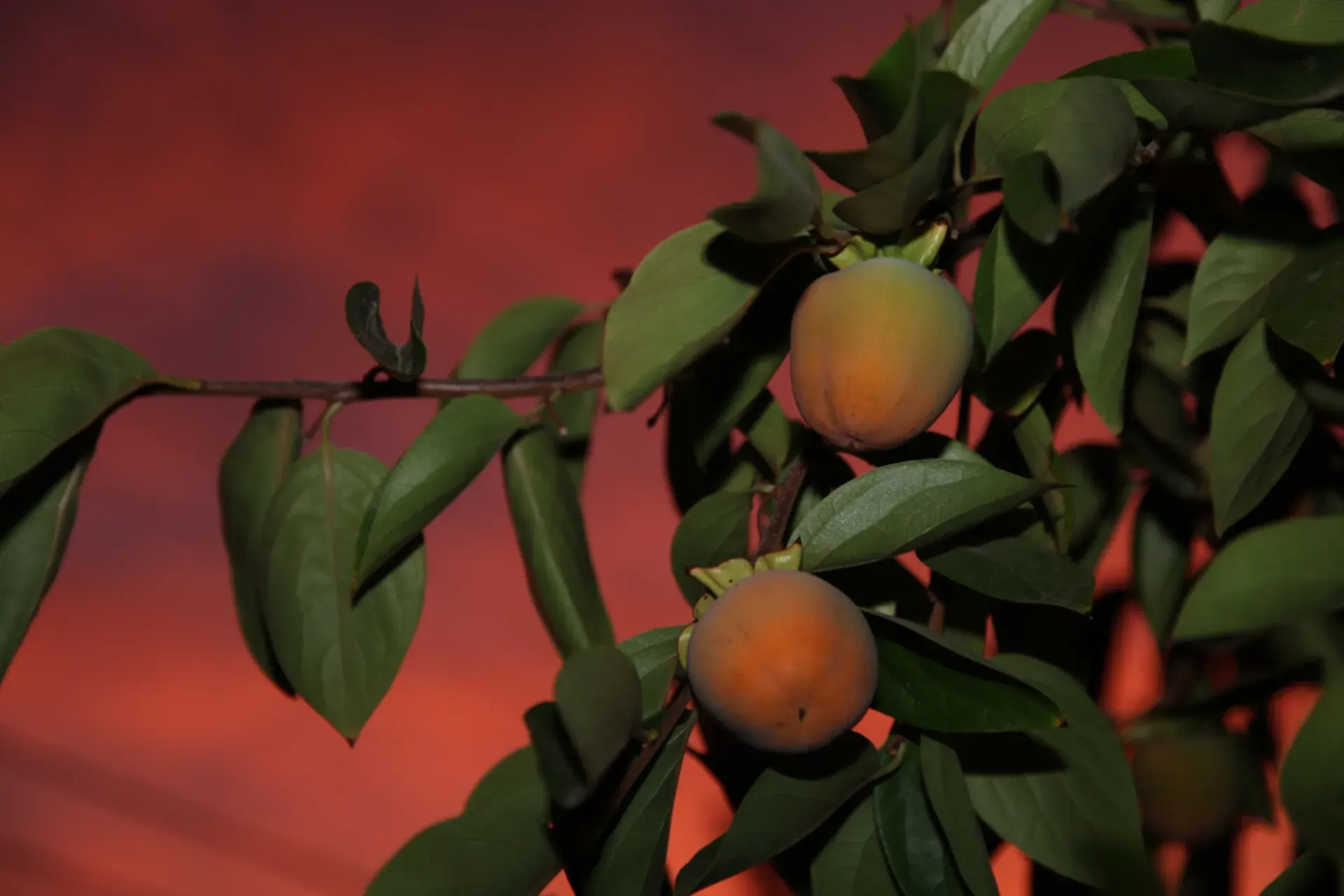
Persimmons are the orchard's late show: glossy orange fruit hanging on bare branches in fall, when everything else is done. American persimmons are hardy to zone 4–5 and must be completely soft before eating — an unripe one is famously mouth-puckering. Asian persimmons (zone 7+) include non-astringent types you can eat crisp like an apple. Trees grow 15–20 ft and fruit in 3–5 years.
Grow Persimmon Tree with us — step by step
Persimmon growing divides into one decision — astringent or non-astringent — and then mostly patience: these are tough, low-trouble trees that fruit best when fed lightly and left unpruned beyond shaping. The steps below keep that decision front and centre. Tell us your planting date and the page builds your schedule from it, covering the careful first waterings, the hands-off feeding this tree prefers, and the autumn weeks when fruit colours and softens.
Step 1 — today: Plant your Persimmon Tree today: dig a hole twice as wide as the root ball, handle the taproot gently, backfill, water deeply and mulch. Full sun, drained soil.
Persimmon Tree at a glance
Spacing: 15–20 ft in · Seed depth: As in the pot
Sun: Full sun
Water: Regular, deep, especially while young
Harvest: First fruit in 3–5 years
Timing counts from your average last spring frost — get your own dates in the Planting Calendar. Guidance follows standard extension-service practice for Canada and the US.
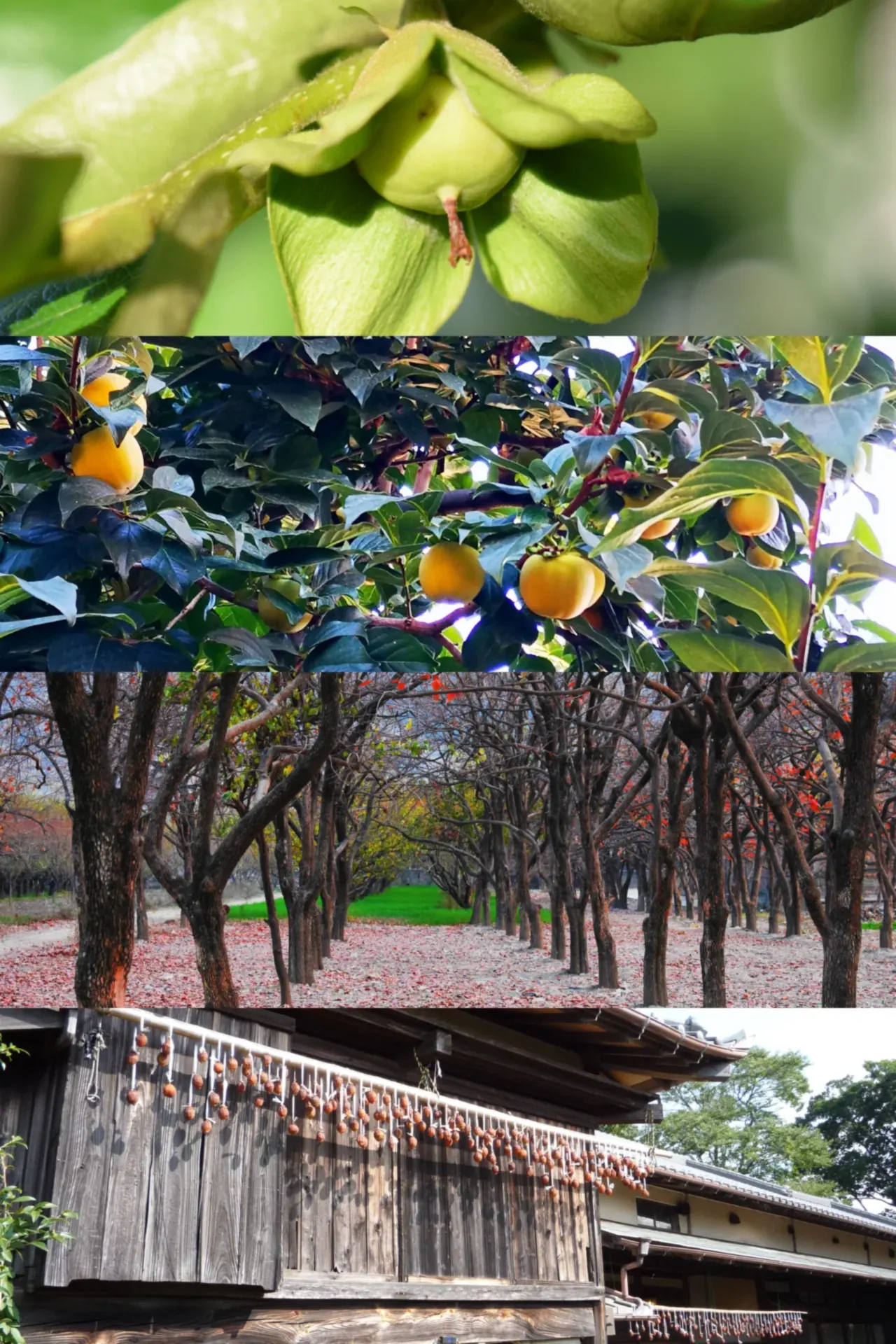
How to plant and grow persimmon tree, step by step
Step 1 — Time it right
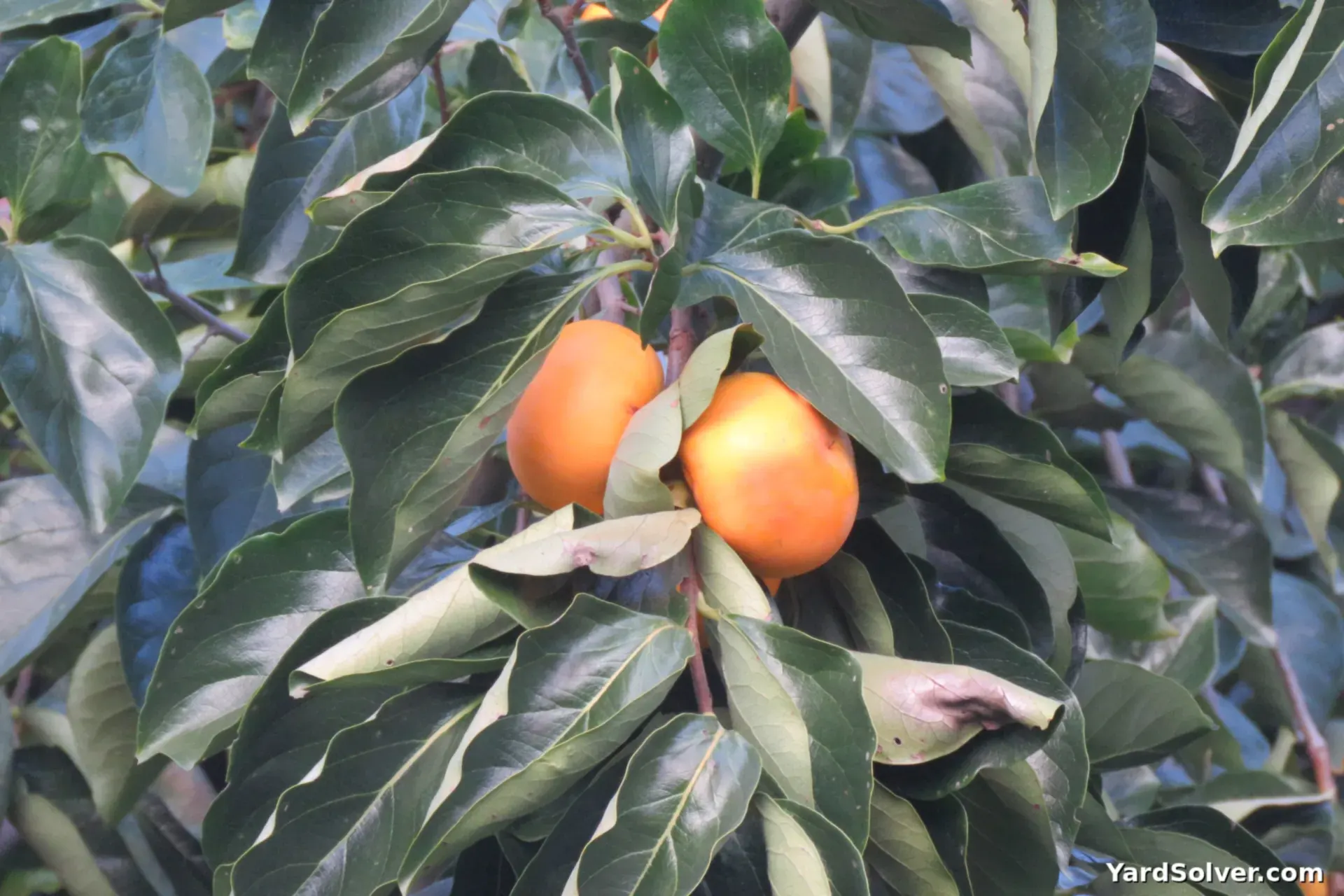
Plant in spring after frost danger passes. Asian types need zone 7+; American types survive zone 4–5 winters. Buy grafted trees of a named variety whenever you can — seedling persimmons take far longer to fruit and vary wildly in quality. Asian persimmons are usually hardy to about 0 °F once established, while American types shrug off considerably colder winters but grow into much larger trees.
Step 2 — Prepare the spot
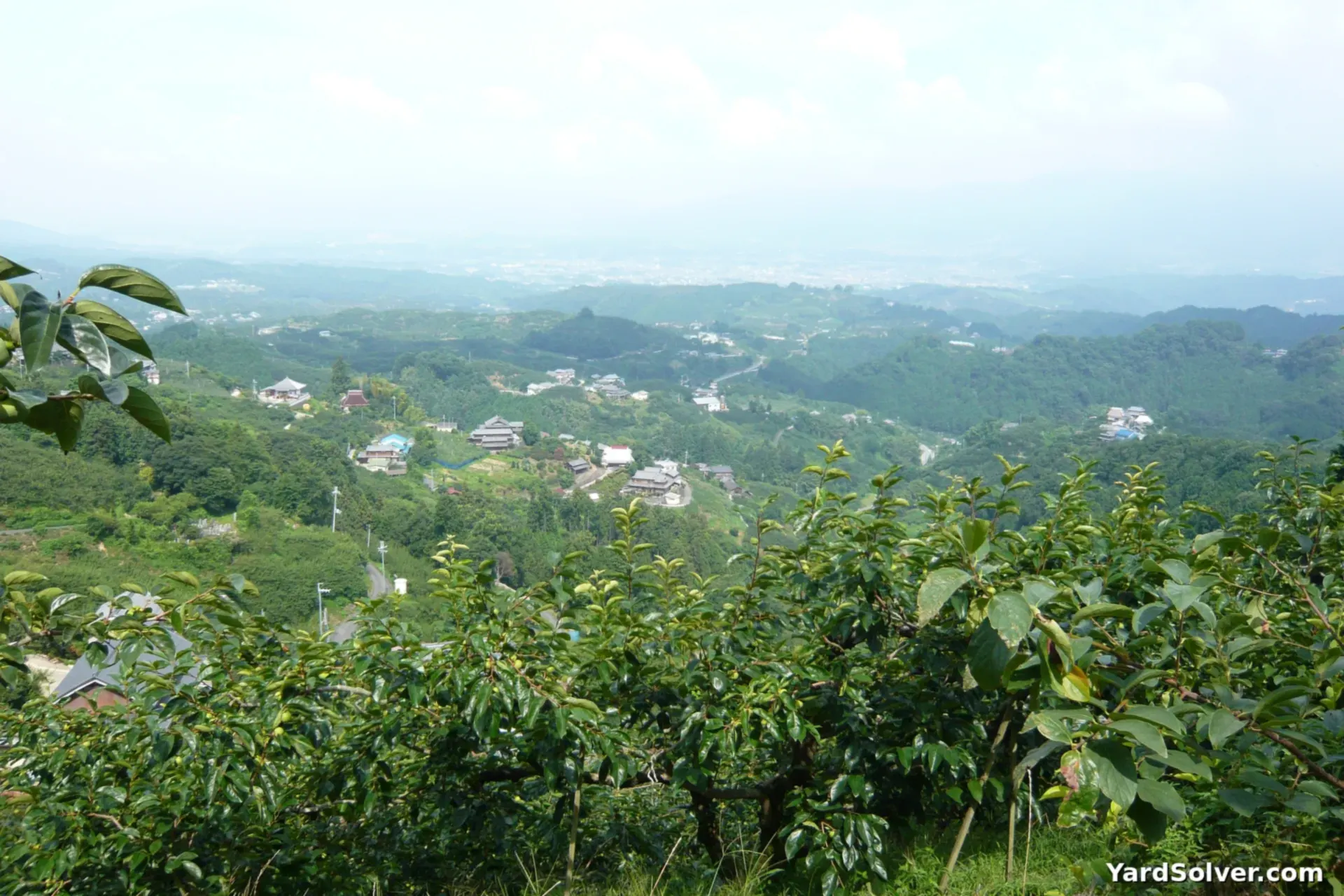
Sun: Full sun. Well-drained loam in full sun. Persimmons are deep-rooted and drought-tolerant once established, but hate wet feet while young. Work out how much soil you need with the Garden Mix Calculator or the Raised Bed Soil Calculator. Give Asian trees 15–20 ft of space and American types 25–35 ft; both resent transplanting once the taproot is disturbed, so choose the permanent spot carefully. A site that warms early in spring suits them, though very early budbreak can expose blossom to late frost in cold districts.
Step 3 — Plant it
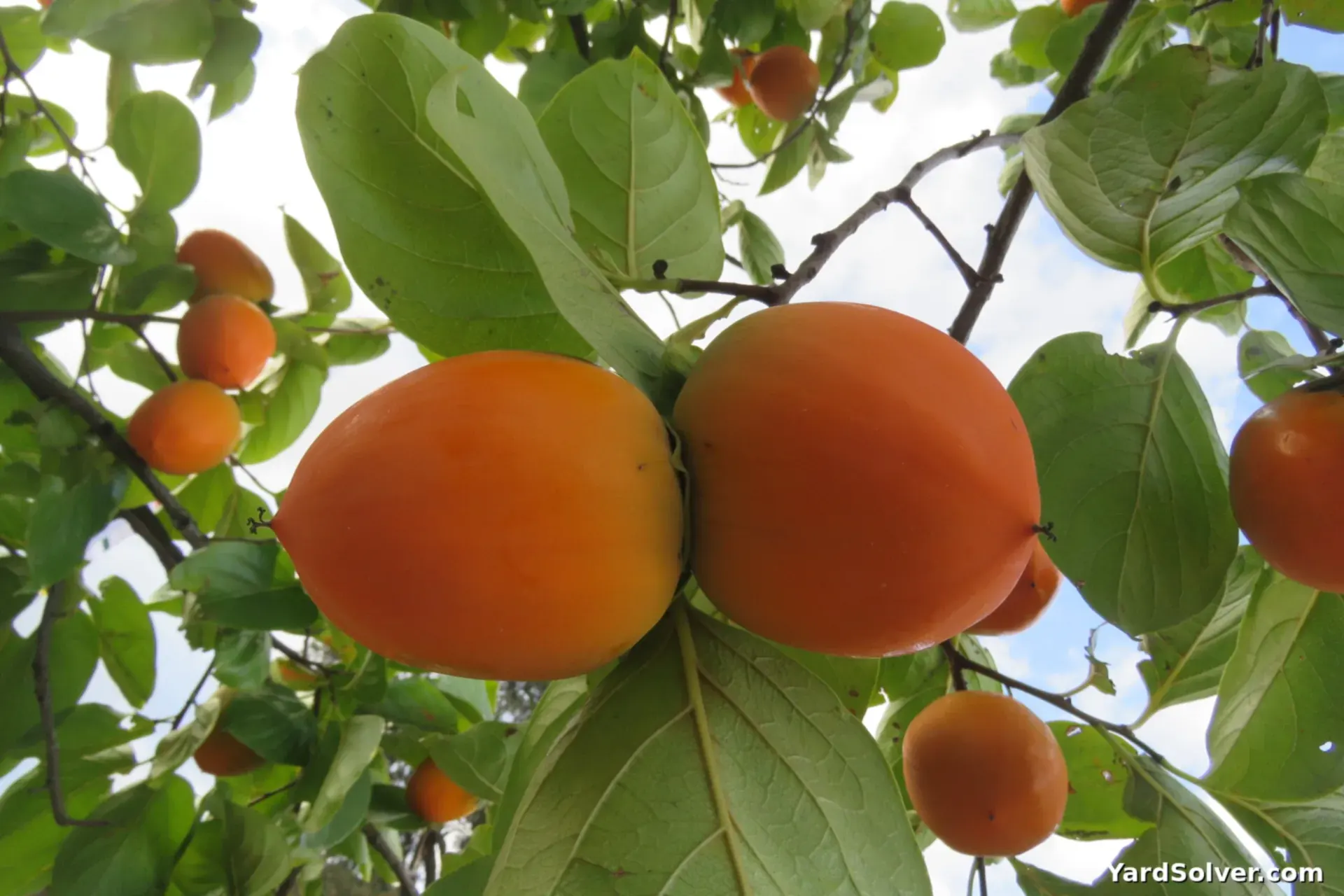
Dig a hole twice as wide as the root ball — persimmons have a long taproot, so handle the root ball gently — backfill, water deeply and mulch. The Plant Spacing Calculator turns that spacing into trees-per-plot. Water the root ball thoroughly before planting, keep it intact as you set the tree, and firm the backfill in stages to remove air pockets around the taproot. A temporary stake for the first season helps on windy sites, tied loosely so the trunk still flexes and thickens.
Step 4 — Water and feed
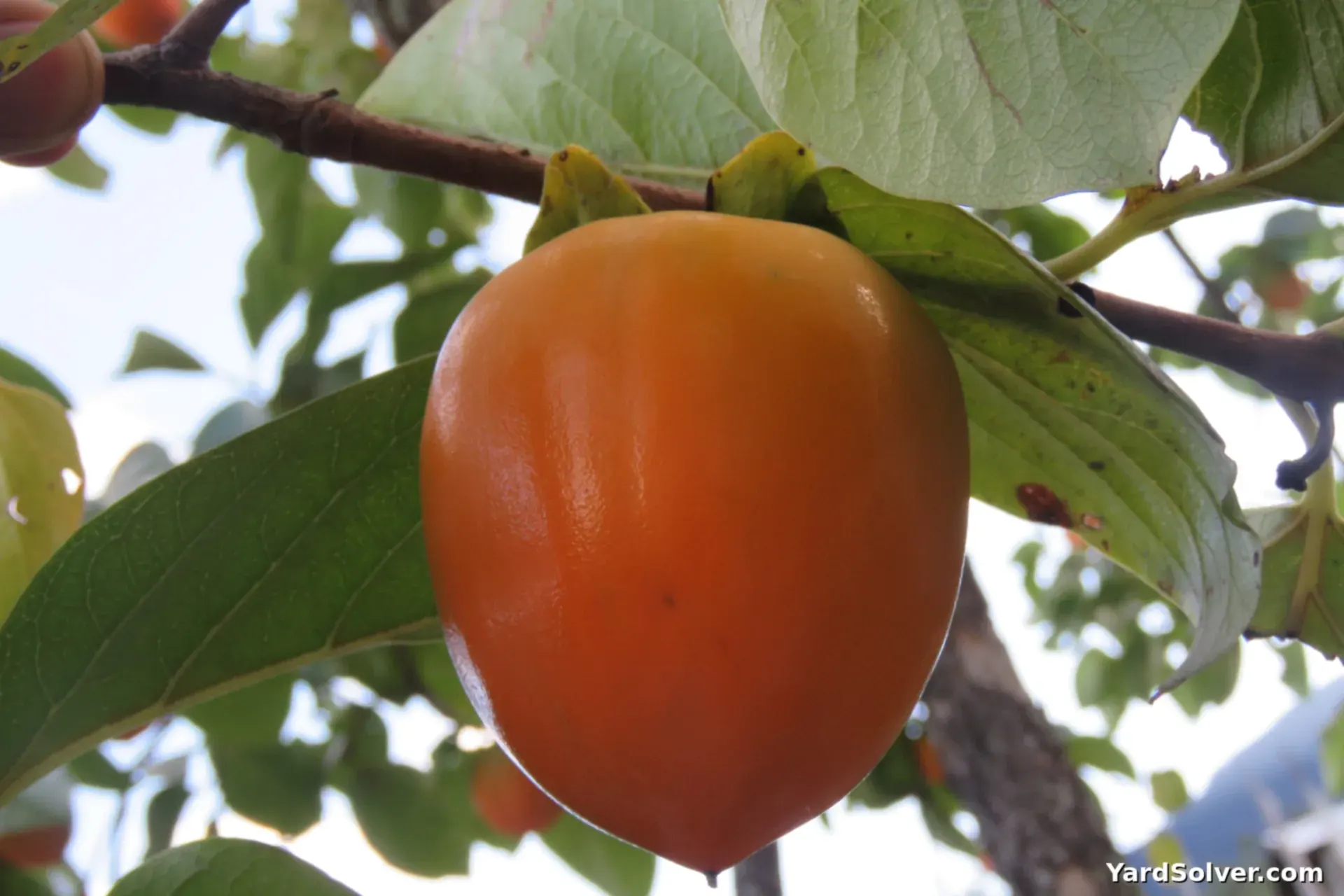
Water: Regular, deep, especially while young. Feed very lightly, if at all — over-fed persimmons drop their fruit. A compost mulch is enough. The Fertilizer Calculator turns a plot size into the right amount. Resist the urge to feed a young persimmon into fast growth — soft, sappy growth drops fruit and can die back in winter. If growth is truly weak (under about 1 ft a year on a young tree), a single light spring application is enough; otherwise compost mulch alone is the feeding programme.
Step 5 — Care and the problems to watch for
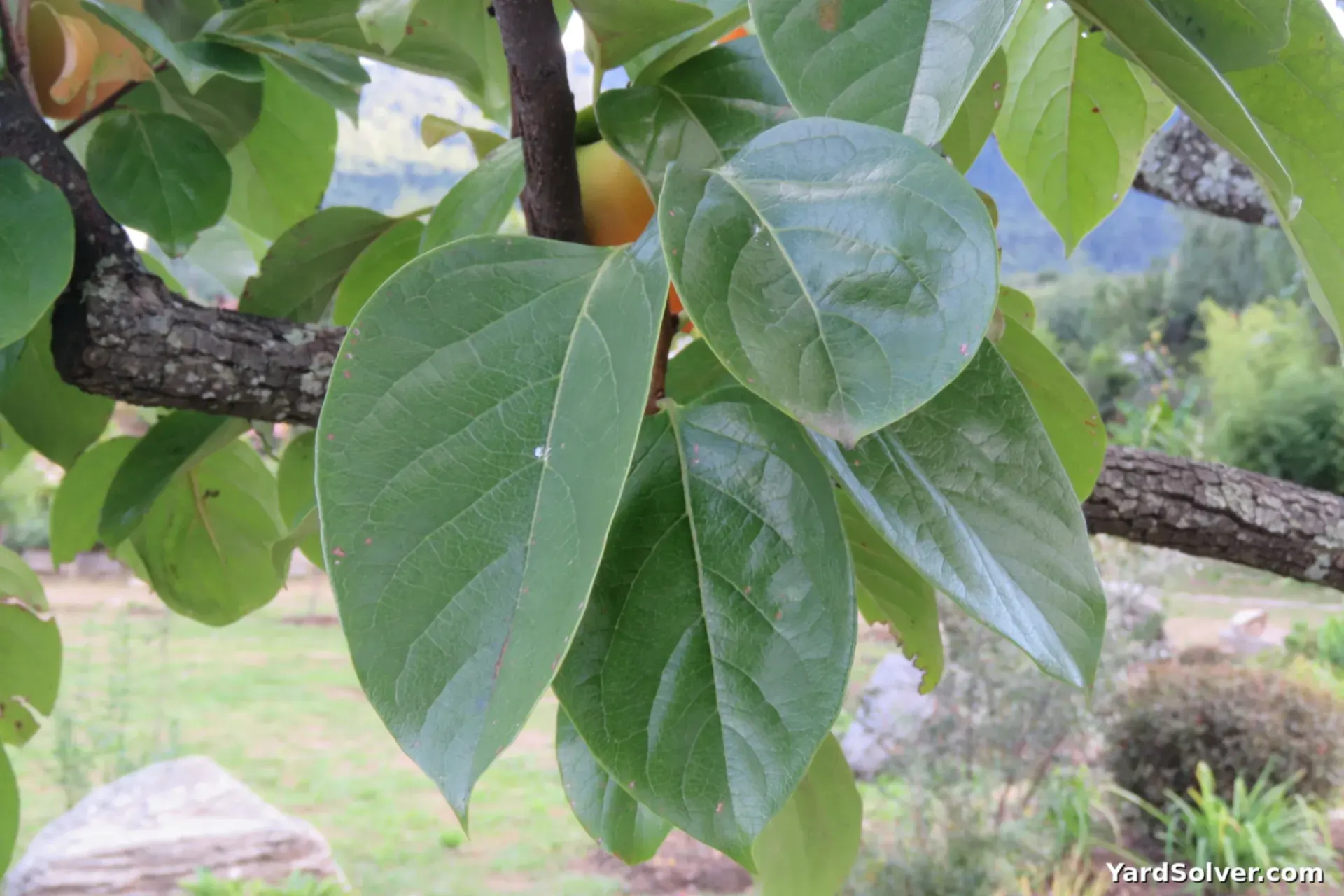
Fruit drop — young trees drop fruit until they mature; light feeding and steady water help. Unripe astringency — an unripe astringent persimmon is inedible; wait until it is jelly-soft. Few pests — persimmons are one of the lowest-trouble fruit trees there are. Young trees commonly drop much of their fruit in early summer for the first few years; this settles as the tree matures and is rarely a fault you can fix. Squirrels and birds take ripe fruit quickly, so pick astringent types at full colour and finish softening them indoors, out of reach.
Step 6 — Harvest
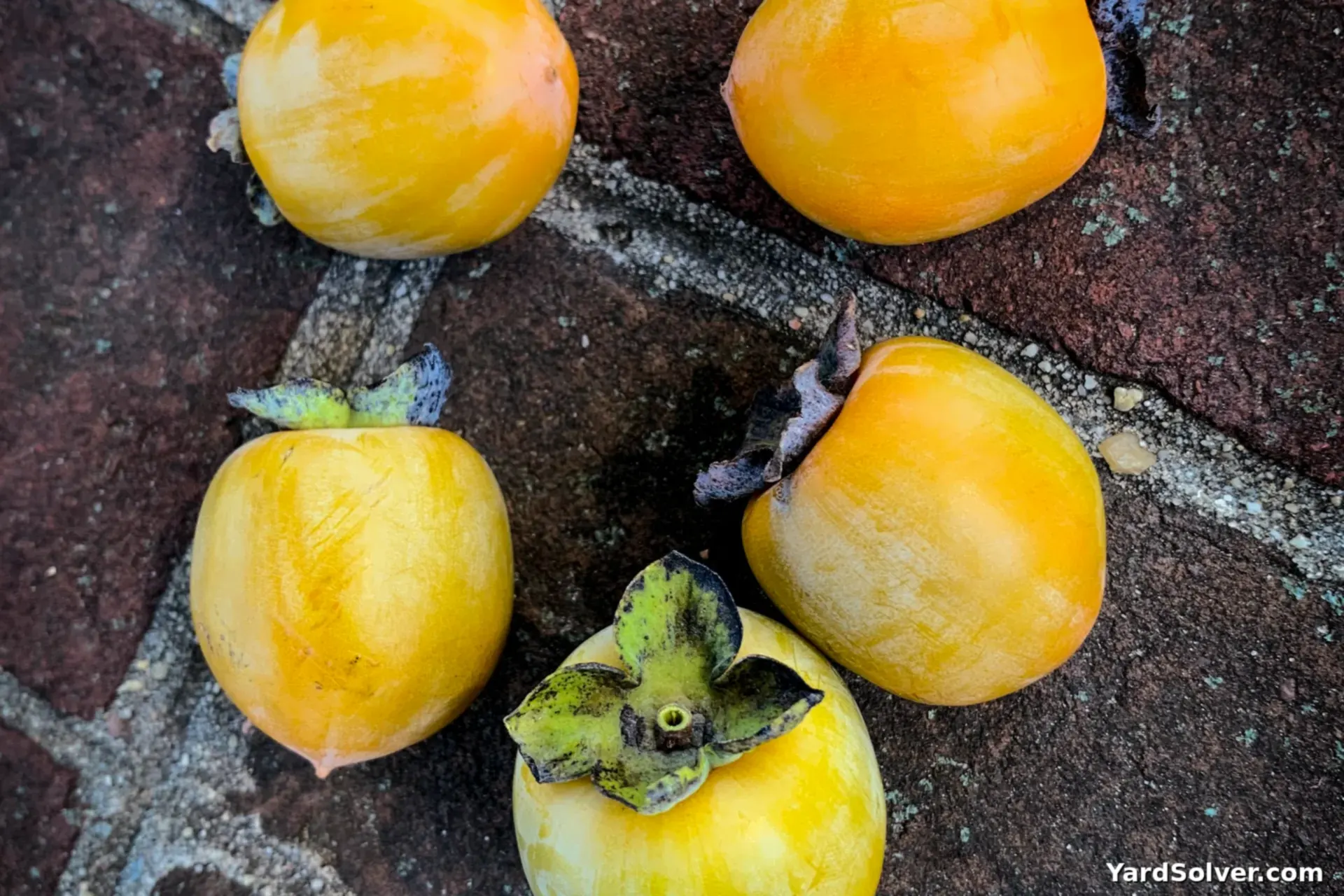
First fruit in 3–5 years. Pick astringent types when fully coloured and let them soften indoors; eat non-astringent types crisp, straight off the tree. Non-astringent types such as Fuyu are eaten crisp like an apple once fully coloured, while astringent types such as Hachiya must soften until jelly-like before the mouth-drying tannins disappear. A mature Asian tree can carry 100 lb or more of fruit in a good year, so prop heavily laden branches before they split.
📅 Your personal Persimmon Tree schedule
Persimmon work is light but seasonal, and this schedule counts it from the day your tree went in. It keeps the early deep waterings on track while the taproot settles, reminds you to feed lightly or not at all in spring, and flags the autumn colour watch — picking astringent fruit hard and orange, and non-astringent fruit crisp, at exactly the right stage.
Varieties worth growing
| Variety | Colour | Why gardeners like it |
|---|---|---|
| Fuyu | Orange | The famous non-astringent Asian type — eat it crisp |
| Hachiya | Orange | Astringent until jelly-soft, then honey-sweet — the baking type |
| Meader | Orange | A self-fertile American persimmon, hardy to zone 4 |
| Prok | Orange | A large-fruited American type with few seeds |
Good for you — and take care
Benefits
- Fruit ripens late, when the orchard is otherwise empty
- Almost no pests or diseases
- Beautiful fall colour and winter silhouette
- American types are very cold-hardy
Take care
- Astringent types must be fully soft-ripe — almost jelly — before eating.
- Non-astringent Asian types (like Fuyu) can be eaten crisp.
- Feed lightly: over-feeding makes the tree drop fruit.
Problems to watch for
- Fruit drop — young trees drop fruit until they mature; light feeding and steady water help.
- Unripe astringency — an unripe astringent persimmon is inedible; wait until it is jelly-soft.
- Few pests — persimmons are one of the lowest-trouble fruit trees there are.
A little history — and one good fact
The Asian persimmon has been grown in China for over 2,000 years and is a national fruit of Japan. The American persimmon is native to the eastern US, where Indigenous peoples dried it for winter food long before orchards existed.
Fun fact: An unripe persimmon is so astringent that one bite can pucker your mouth for minutes — ripe, the same fruit tastes like honey and apricot.
Keep going
Guides: How to Harden Off Seedlings · How to Read a Seed Packet
Calculators: Plant Spacing Calculator · Seed Calculator · Fertilizer Calculator · Garden Mix Calculator
Plan it: Garden Planner · Planting Calendar · Companion Planting Chart · Seed Box
More fruit trees: Fig Tree · Apple Tree · Pear Tree
← Back to the Plant Library · Get your personal planting dates
Ripening astringent persimmons indoors, step by step
Astringent persimmons such as Hachiya are picked hard and fully coloured, then softened indoors where birds and squirrels cannot beat you to them. The tannins that make an unripe fruit inedible break down as the flesh turns to jelly — here is the reliable routine:
| Step | What to do | Timing and signs |
|---|---|---|
| 1. Pick | Clip fruit with a short stalk when fully orange, still hard | Colour first, softness later — fruit picked green never ripens well |
| 2. Bag | Place fruit in a paper bag or lidded box with a ripe apple or banana | The ripe fruit gives off ethylene gas that speeds softening |
| 3. Wait | Keep at room temperature, checking daily | Usually about 3–7 days; the skin turns deep orange and slightly translucent |
| 4. Test | The fruit is ready when it feels like a filled water balloon and yields to the gentlest squeeze | If it still feels firm anywhere, it will still be astringent — wait |
| 5. Use or store | Eat within a day or two, scoop the pulp and freeze it in portions | Frozen pulp keeps for months for baking and smoothies; whole ripe fruit also freezes well |
A shortcut for a single fruit: freezing a fully coloured astringent persimmon solid, then thawing it, also removes astringency. Never serve an astringent persimmon on guesswork — one firm bite is a mistake nobody repeats.
Questions people ask
When do I plant a persimmon tree?
Plant in spring after frost danger passes. Asian types need zone 7+; American types are hardy to zone 4–5.
How far apart do I space persimmon trees?
Space trees 15–20 ft apart. Sun: full sun.
When will my persimmon tree fruit?
First fruit in 3–5 years. Astringent types must be fully soft before eating; non-astringent types can be eaten crisp.
Why does my persimmon tree drop its fruit?
Young persimmons drop fruit heavily for their first few years — it is the tree rationing a crop it cannot yet carry, and it settles with age. Overfeeding, drought stress and deep shade make dropping worse; light feeding, steady water while young and patience cure most cases.
What is the difference between Fuyu and Hachiya persimmons?
Fuyu is non-astringent: eat it crisp and fully coloured, straight off the tree. Hachiya is astringent: picked hard and fully orange, it must soften indoors until jelly-soft before eating, when it becomes one of the sweetest fruits in the garden.
Persimmons hang like lanterns after leaf fall — and the astringent kinds must be fully soft before they are food
Persimmons come in two temperaments. Astringent varieties (and the American persimmon, Diospyros virginiana) are mouth-puckering until they ripen to a jelly-soft, translucent state, when they become honey-sweet; non-astringent Asian types (Diospyros kaki, such as Fuyu) can be eaten crisp like an apple. Knowing which kind you have — before the first bite — is the first skill of growing them.
The tree itself is undemanding and ornamental: glossy summer leaves, strong autumn colour, and fruit that hangs on bare branches into winter, feeding birds after it feeds the household. It tolerates a wide range of soils, needs little pruning beyond shaping, and most Asian varieties are self-fertile. Patience is required at the start — young trees are slow — and protection from deer pays where they browse.
The worked example: an astringent tree's fruit left to soften fully on the counter typically eats like apricot jam. The same fruit bitten a week early is an unforgettable lesson in tannin — with persimmons, ripeness is not a preference, it is the recipe.
Sources
Key facts on this page — timing, spacing and care — cross-checked against NC State Extension Plant Toolbox — Diospyros kaki — culture and care requirements and Persimmon — Wikipedia — background on persimmons and their types.
Related page
Read next: Edible Landscaping Ideas (A Front Yard That Feeds You).
Comments & ratings
No comments yet.
Be the first to share your experience.