
Plant Library · Fruits · By Faizan Ahmad
Updated November 17, 2026
🍐 How to Grow Pear Tree
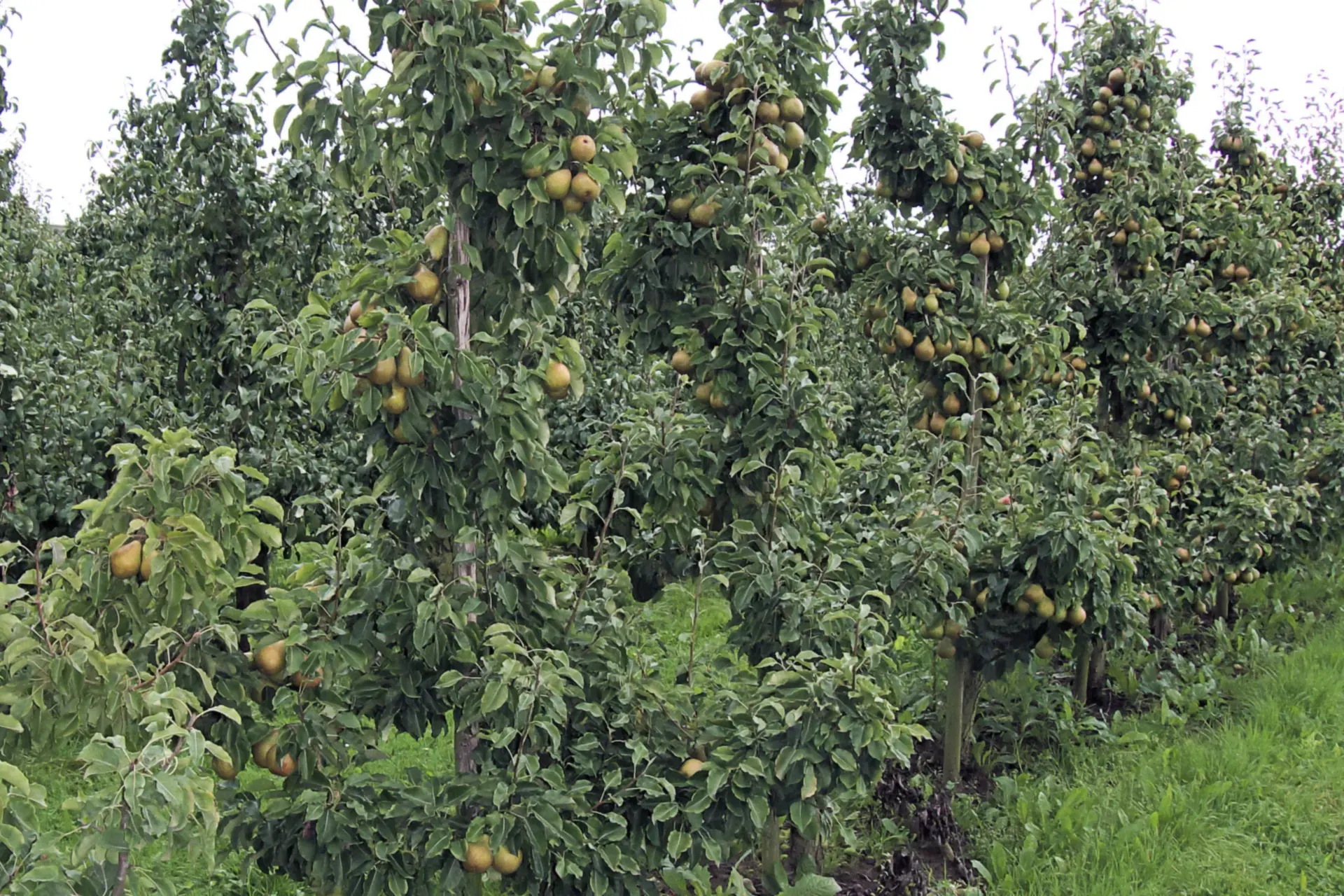
Pears are the patient gardener's fruit: slower to start than peaches — 3–6 years to the first real crop — but a healthy tree can live and fruit for 50 years or more. Most varieties need a pollination partner. And pears break the usual rule: you pick them hard and green, and ripen them indoors, because a pear ripened on the tree is gritty in the middle.
Grow Pear Tree with us — step by step
Pears reward a different patience from other fruit trees: planted for decades, pruned gently, and picked hard so they can ripen indoors. The steps below cover choosing a pollination partner, keeping fire blight out, and judging the exact day a pear should leave the branch. Enter your planting day here and we will lay out a personal pear schedule from it, season by season.
Step 1 — today: Plant your Pear Tree today: dig a hole twice as wide as the root ball, set the graft union 2–3 in above the soil line, backfill, water deeply and mulch. Full sun, and a pollination partner nearby.
Pear Tree at a glance
Spacing: 15–20 ft in · Seed depth: As in the pot
Sun: Full sun
Water: Regular, deep, especially while young
Harvest: First fruit in 3–6 years
Timing counts from your average last spring frost — get your own dates in the Planting Calendar. Guidance follows standard extension-service practice for Canada and the US.
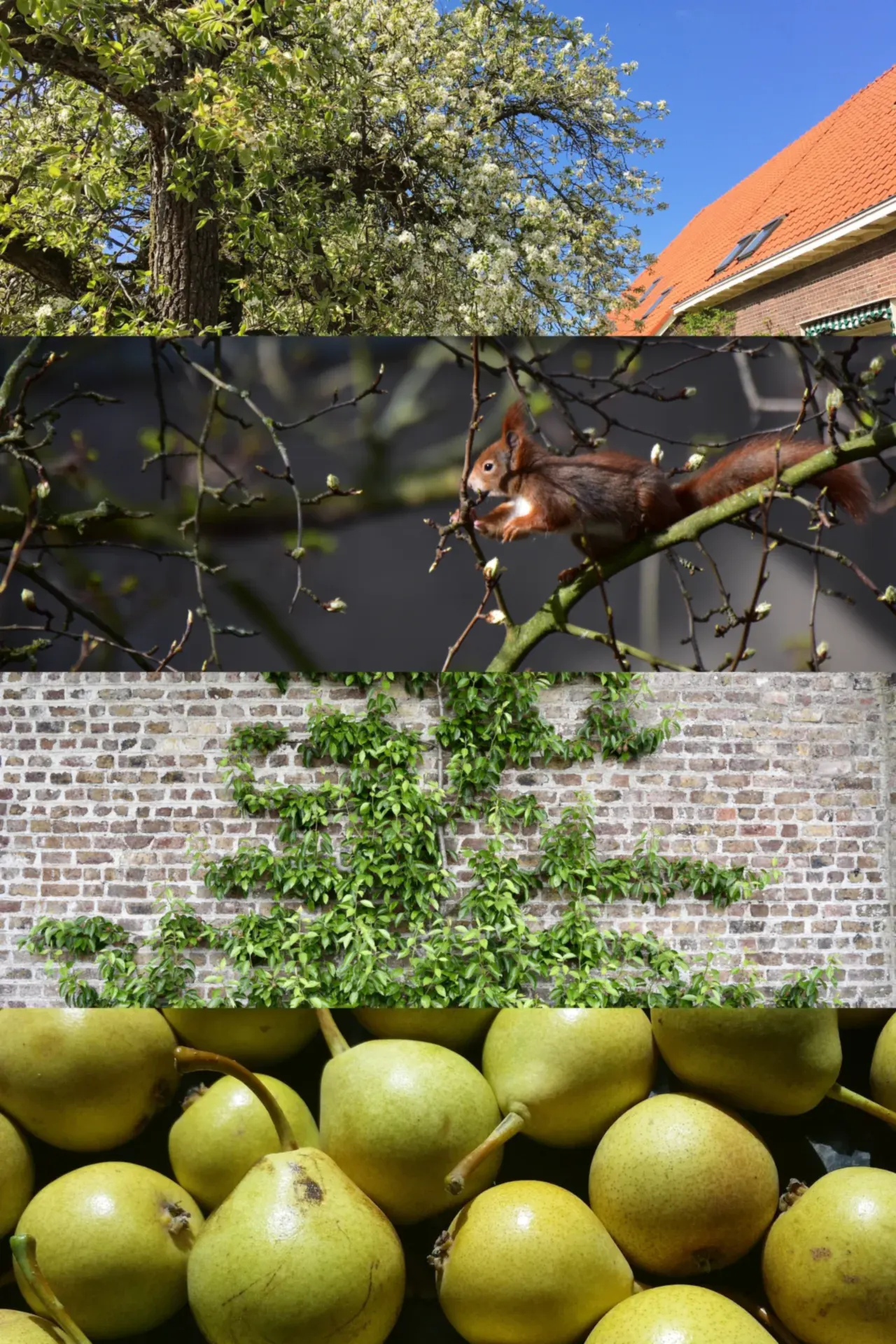
How to plant and grow pear tree, step by step
Step 1 — Time it right
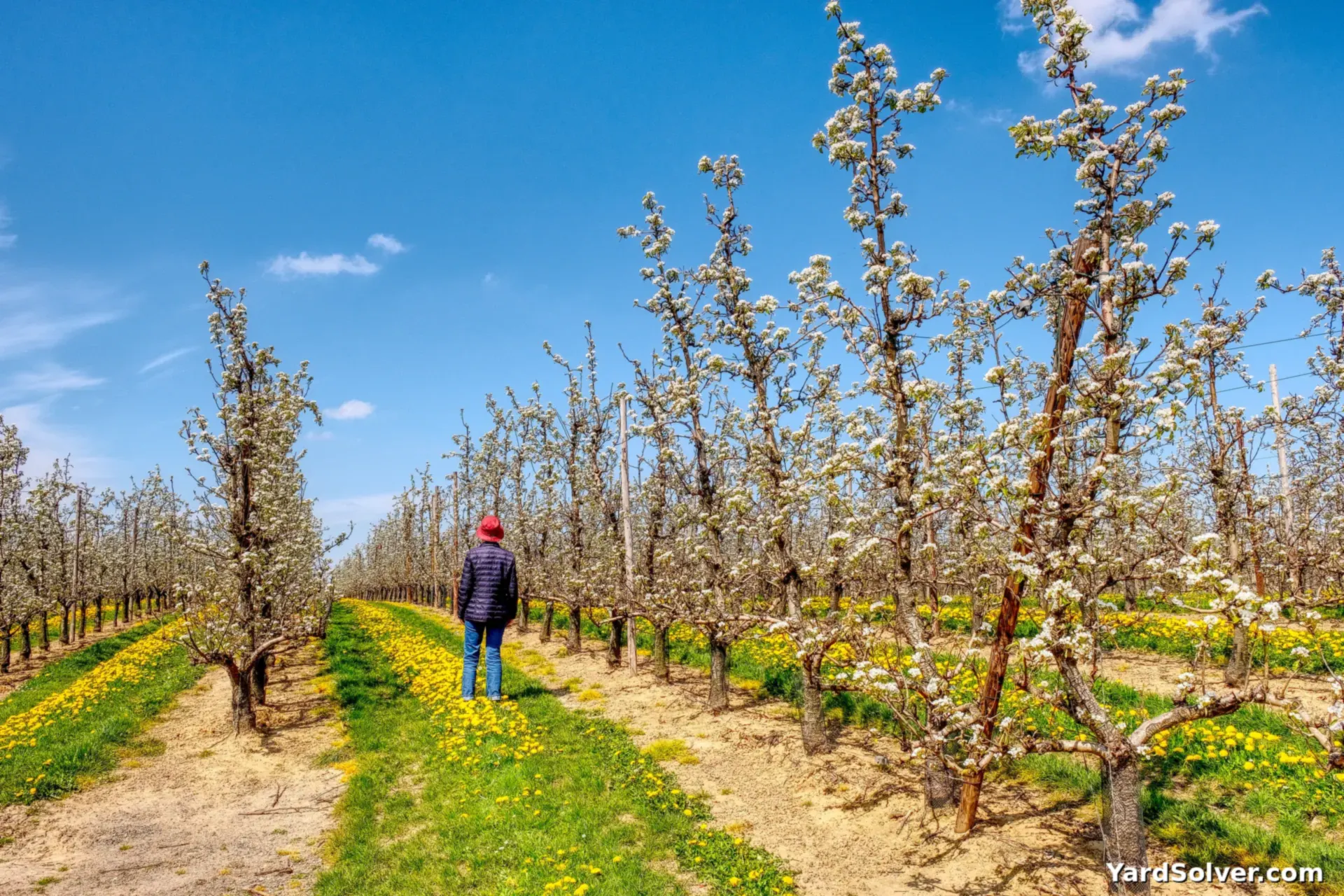
Plant bare-root trees in early spring, or container trees in spring or fall. Pears bloom a little later than peaches, which helps in frost-prone gardens. Most varieties need a pollination partner. Plant bare-root pears as early in spring as the soil can be dug — they break bud early and resent moving once leaves open. Most European varieties need roughly 200 to 600 chill hours, so match the variety to your winters.
Step 2 — Prepare the spot
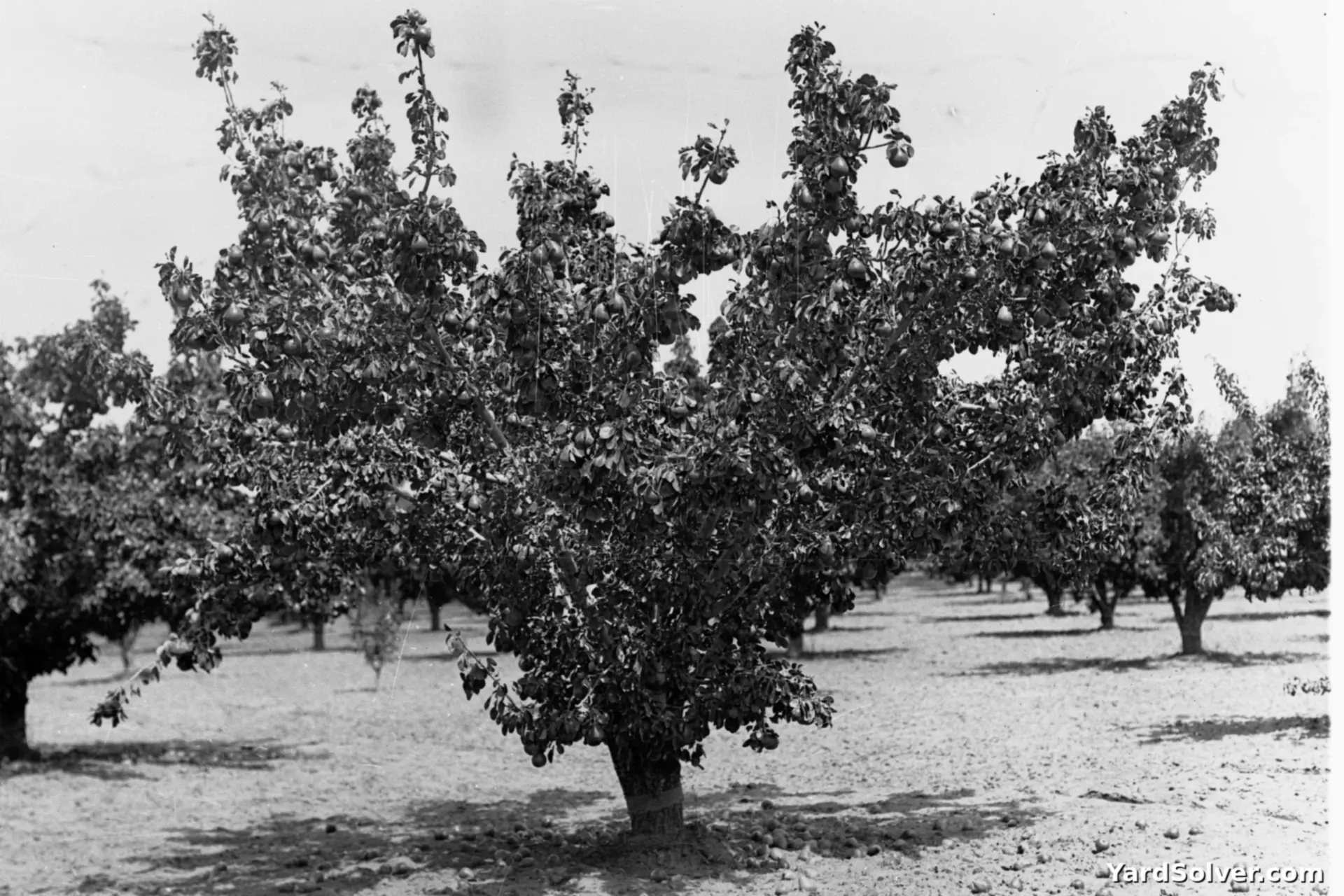
Sun: Full sun. Well-drained loam in full sun. Pears tolerate heavier soil than peaches but still dislike sitting in water. Work out how much soil you need with the Garden Mix Calculator or the Raised Bed Soil Calculator. Pears on quince rootstock need better soil and permanent staking but crop in a smaller space; seedling rootstocks make full-size, long-lived trees. Keep the spot at least 15 ft from buildings and other trees.
Step 3 — Plant it
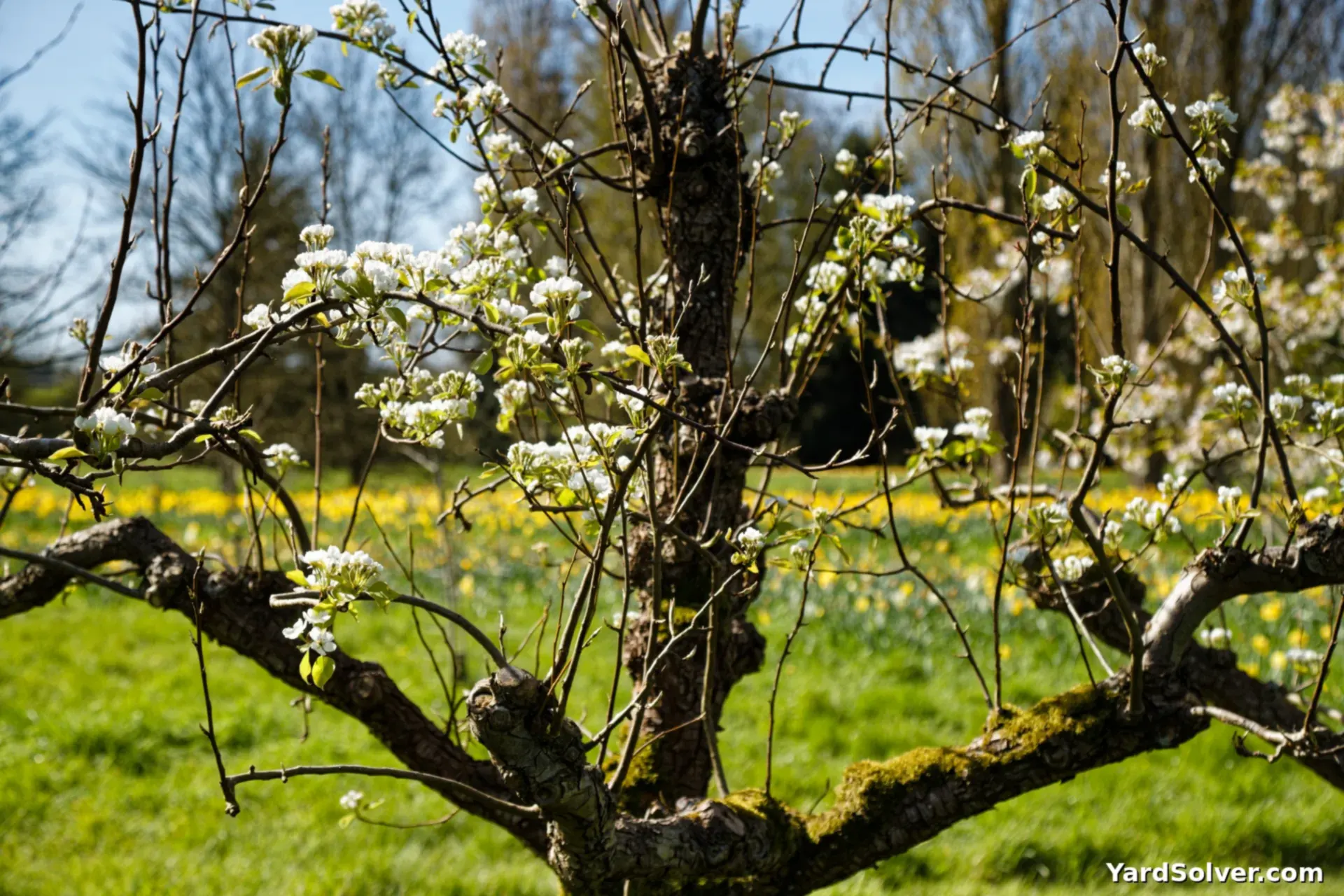
Dig a hole twice as wide as the root ball, set the graft union 2–3 in above the soil line, backfill, water deeply and mulch. The Plant Spacing Calculator turns that spacing into trees-per-plot. Head a bare whip back to about 24 to 30 in to force the first scaffolds where you want them. Pears grow upright and narrow, so spread young scaffolds to roughly 45 degrees with pegs or weights in the first summer.
Step 4 — Water and feed
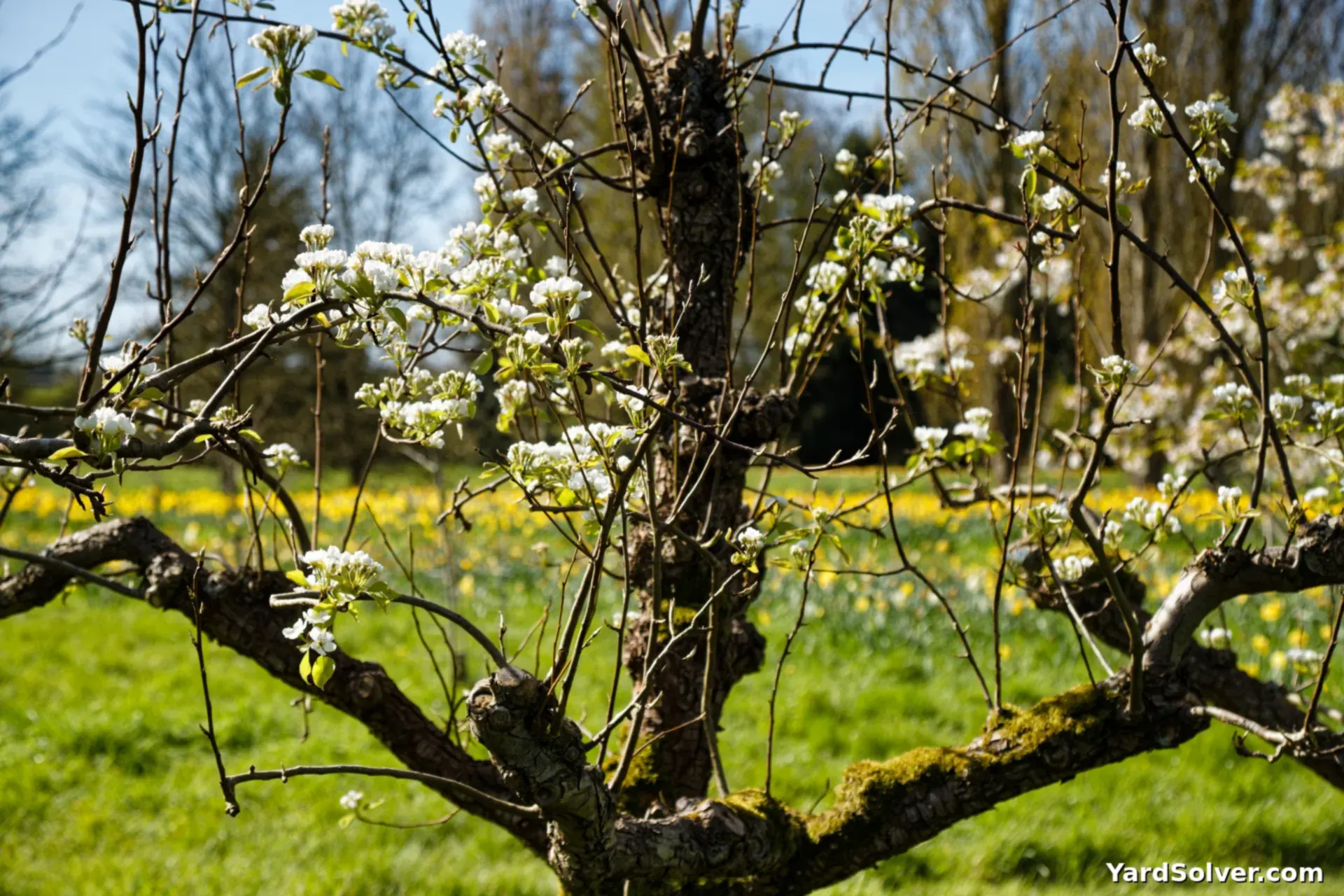
Water: Regular, deep, especially while young. Feed in spring, modestly — over-fed pears grow soft, sappy wood that invites fire blight. The Fertilizer Calculator turns a plot size into the right amount. Pears colour their leaves early in autumn when thirsty — a useful drought signal before fruit suffers. Aim for 12 to 18 in of new growth a year on a young tree; much more means excess nitrogen and fire blight risk.
Step 5 — Care and the problems to watch for
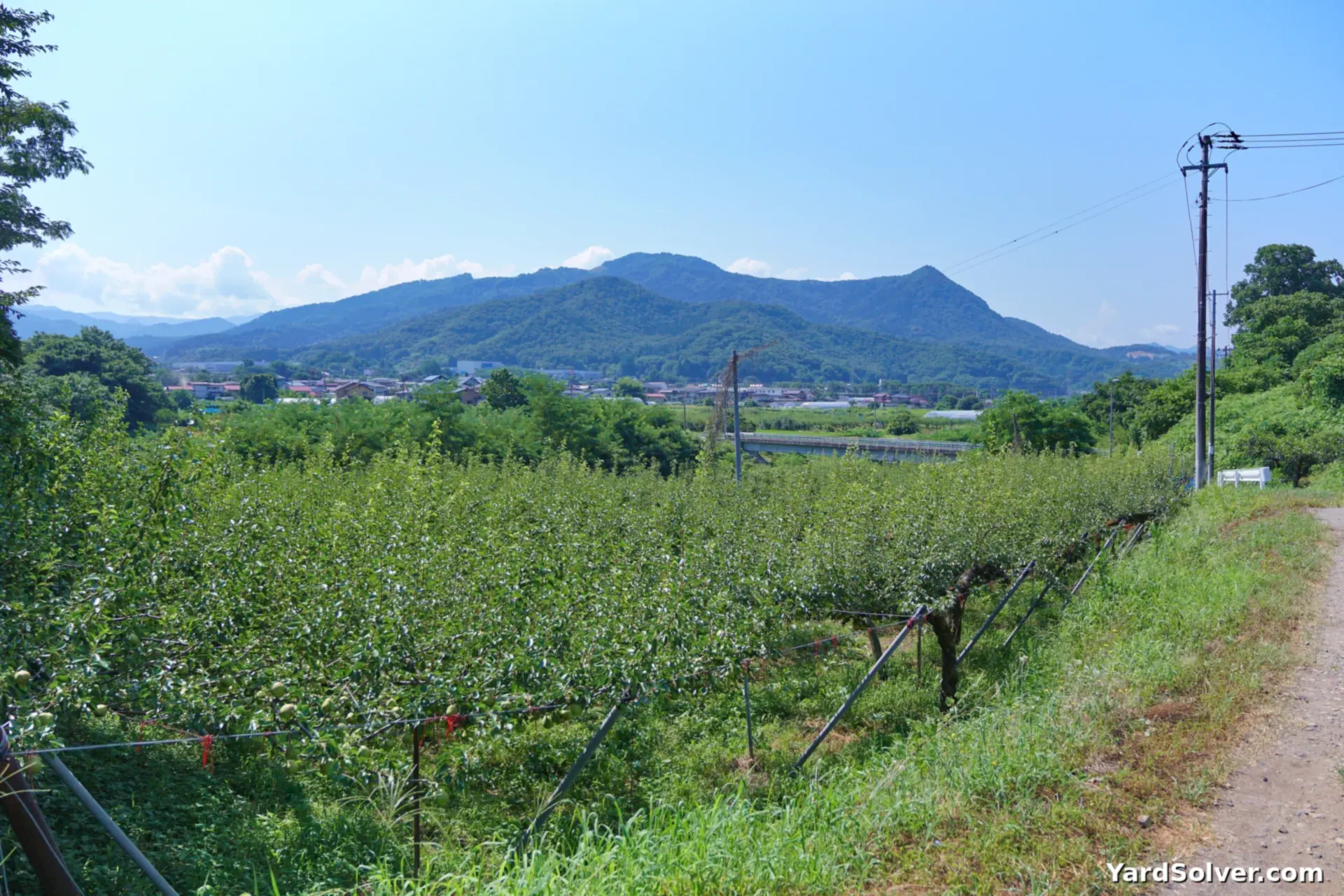
Fire blight — blackened, scorched-looking shoot tips; prune out infected wood well below the damage, disinfecting tools between cuts. Pear scab — dark spots on fruit in wet springs; clean up fallen leaves. Codling moth — the same worm as in apples; hang traps and pick up fallen fruit. Thin in June to one pear per cluster, about one fruit every 6 to 8 in; unthinned pears stay small and can push the tree into alternate-year cropping. Cut fire blight strikes at least 12 in below the damage.
Step 6 — Harvest
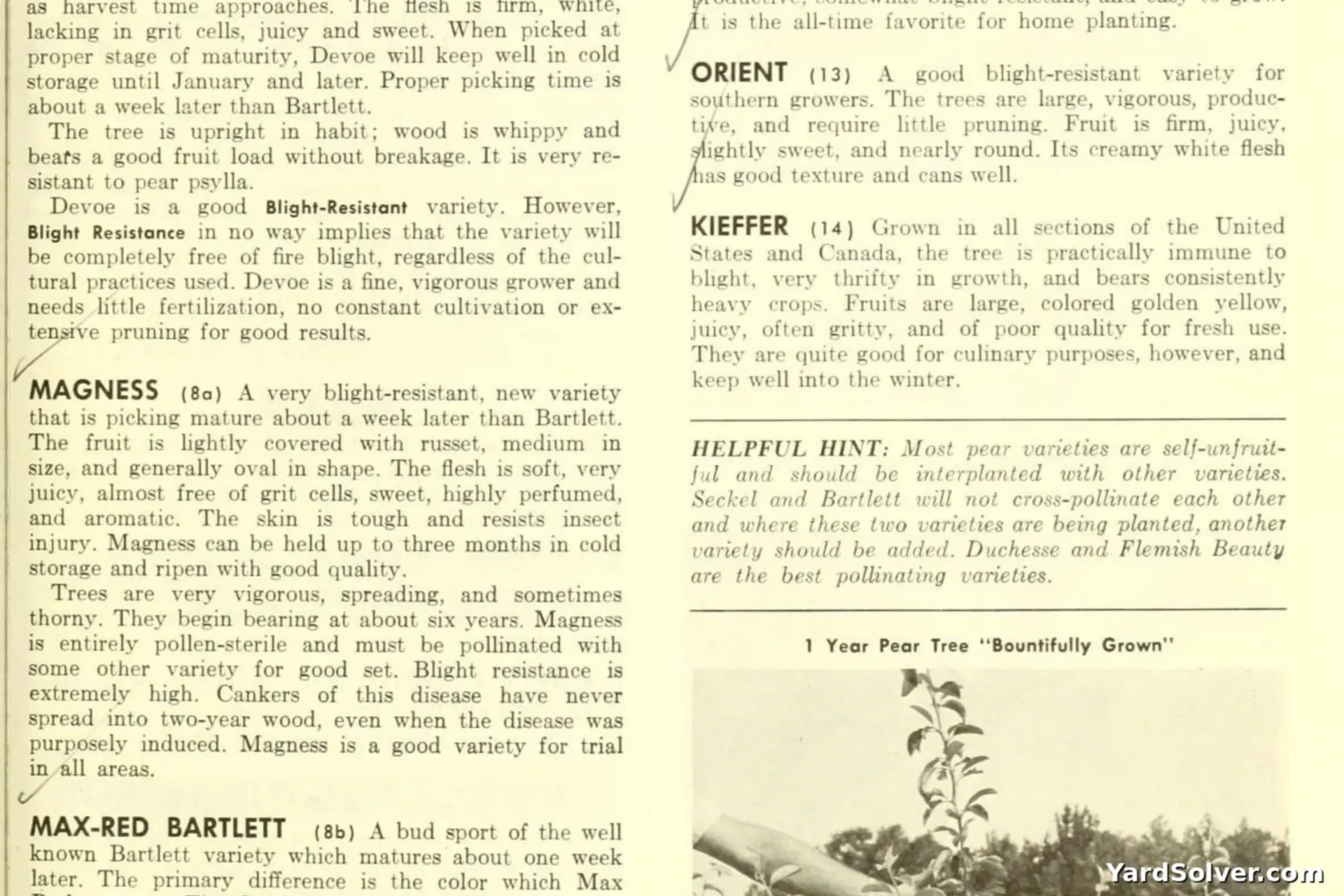
First fruit in 3–6 years. Pick when the fruit has reached full size but is still hard and green, then ripen indoors until the neck yields to gentle pressure. Use the lift-and-twist test: a pear that parts from the spur with a gentle upward lift is ready, however green it looks. Ripen indoors and eat when the flesh below the stem yields — tree-ripened pears go gritty at the core.
📅 Your personal Pear Tree schedule
A pear tree settles in slowly and crops for decades, so this schedule counts from your planting day through training, thinning and harvest seasons. Day 0 is the day your tree went in the ground.
Varieties worth growing
| Variety | Colour | Why gardeners like it |
|---|---|---|
| Bartlett (Williams) | Green-yellow | The classic eating pear — sweet and aromatic |
| Conference | Green-brown | Reliable, heavy-cropping, partly self-fertile |
| Hosui (Asian) | Golden-brown | Crisp and juicy like an apple — ripens on the tree |
| Moonglow | Yellow | Bred for fire-blight resistance |
Good for you — and take care
Benefits
- One of the longest-lived fruit trees — 50+ years
- Picked hard, pears ripen perfectly indoors
- European or Asian types — two very different fruits
- Fewer pests than apples in most gardens
Take care
- Most pears need a pollination partner — a different variety flowering at the same time.
- Pick pears hard and green; ripen at room temperature until the neck yields to gentle pressure.
- Prune lightly — heavy pruning triggers fire-blight-prone growth.
Problems to watch for
- Fire blight — blackened, scorched-looking shoot tips; prune out infected wood well below the damage, disinfecting tools between cuts.
- Pear scab — dark spots on fruit in wet springs; clean up fallen leaves.
- Codling moth — the same worm as in apples; hang traps and pick up fallen fruit.
A little history — and one good fact
Pears were grown by the Romans, who had dozens of varieties, and perfected in French and Belgian gardens in the 1700s and 1800s — the age that gave us Bartlett (Williams) and Conference. Asian pears, crisp like apples, were bred separately in China and Japan.
Fun fact: Pears ripen from the inside out — by the time the outside feels soft, the middle may already be mush, which is why they are picked hard.
Keep going
Guides: How to Harden Off Seedlings · How to Read a Seed Packet
Calculators: Plant Spacing Calculator · Seed Calculator · Fertilizer Calculator · Garden Mix Calculator
Plan it: Garden Planner · Planting Calendar · Companion Planting Chart · Seed Box
Good companions: Chives · Clover
Keep apart: Black Walnut — see the Companion Planting Chart for the full picture.
More fruit trees: Apple Tree · Peach Tree · Persimmon Tree
← Back to the Plant Library · Get your personal planting dates
Pear pruning and thinning calendar, year by year
Pears resent hard pruning and reward a light, regular touch. These are the jobs that matter.
| When | Job |
|---|---|
| Planting day | Head back a whip; set scaffolds; stake quince rootstocks |
| Years 1 to 3 | Spread branches toward 45 degrees; keep cuts minimal |
| Each late winter | Remove dead and crossing wood; keep every cut small |
| Each June | Thin to one fruit per cluster, about every 6 to 8 in |
| Mature trees | Renew the oldest fruiting wood gradually |
Keep to that light rhythm and a pear tree will crop for decades.
Questions people ask
When do I plant a pear tree?
Plant bare-root trees in early spring, or container trees in spring or fall.
How far apart do I space pear trees?
Space trees 15–20 ft apart. Sun: full sun.
When will my pear tree fruit?
First fruit in 3–6 years. Most varieties need a pollination partner, and pears are picked hard and ripened indoors.
Why does my pear tree flower but set no fruit?
The commonest cause is pollination: most European pears need a different variety flowering at the same time within about 50 ft, and cold, wet bloom weather keeps bees home even then. Check that your two varieties actually overlap in bloom.
Why are my pears hard and gritty even when they look ripe?
European pears ripen from the inside out and must be picked hard, then ripened indoors; left on the tree they go brown and gritty at the core first. Many varieties improve after one to two weeks in the fridge, then finish at room temperature.
Pears are picked hard and ripened indoors: a pear ripe on the tree is usually already past its best inside
Most European pears (Pyrus communis) ripen from the inside out, so a fruit left to soften on the branch turns gritty and brown-cored before the outside looks ready. The harvest rule is therefore counter-intuitive and reliable: pick pears while they are still hard but full-sized, when they part from the branch with a gentle lift-and-twist, then ripen them indoors over days, checking the neck — ripe when it yields slightly by the stem.
The tree itself wants patience of a different kind: pears are slow to come into bearing, long-lived once they do, and pruned more lightly than apples, keeping a central leader and removing crossing wood in winter. Fire blight is the serious disease — blackened, shepherd's-crook shoots in spring are cut out well below the damage with disinfected tools. Most varieties need a different pear nearby for pollination.
The worked example: fruit picked hard at full size and ripened on the counter typically eats buttery and clean. The same fruit left to ripen on the tree typically eats gritty with a brown core — with pears, the picking date is the flavour.
Sources
Key facts on this page — timing, spacing and care — cross-checked against NC State Extension Plant Toolbox — Pyrus communis — culture and care requirements and Pyrus communis — Wikipedia — background on the common pear and its cultivation.
Related page
Read next: How to Prune Fruit Trees in Winter (Without Ruining Fruit).
Comments & ratings
No comments yet.
Be the first to share your experience.