
Guides · Indoor flowers · Published November 20, 2026 · By Faizan Ahmad
How to Force Paperwhites Indoors: Flowers in 4–6 Weeks, No Chilling Needed
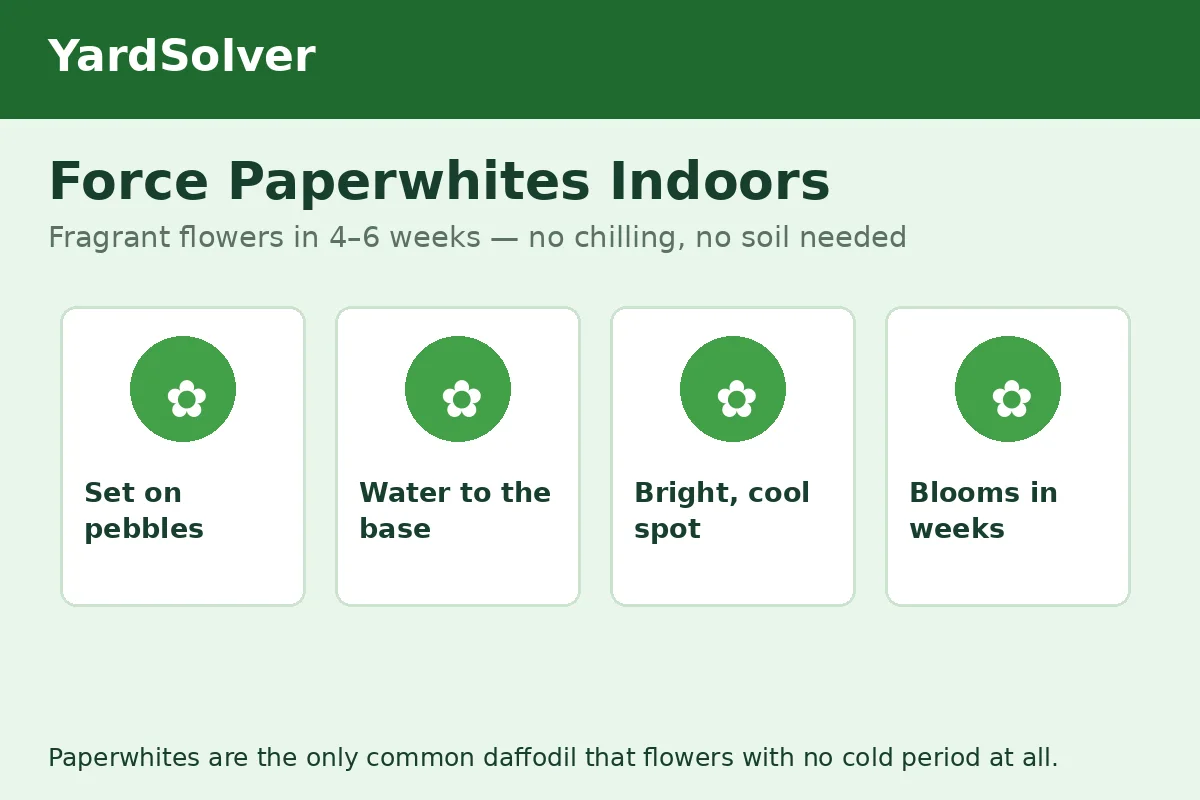
To force paperwhites indoors, set firm bulbs on pebbles with the water just touching their base, put them somewhere bright and cool, and expect fragrant flowers in about 4 to 6 weeks — with no chilling period and no soil at all. Paperwhites (Narcissus tazetta) are the forgiving exception among daffodils: the flower is already formed inside the bulb, so warmth, water and light are all it asks for. That makes a bowl planted on November 20 a realistic Christmas display, and a bowl planted in early December a January one — which is why this is the single easiest winter flower project for Canadian and northern-US homes, where the garden itself is asleep under snow. This guide covers both growing methods, the planting-date maths, the varieties worth choosing, and the research-backed fix for the one classic failure: tall stems that flop. If you want a second, larger indoor bulb alongside them, our companion guide How to Force Amaryllis Bulbs runs on the same count-backwards logic.
The short answer, on one card
Container: any watertight bowl or a pot with drainage. Pebble method: 5 cm (2 in) of pebbles, bulbs nestled pointed-end up and touching shoulders, water held just at the base of the bulbs — never over them. Soil method: tips just above the potting mix, watered lightly. Place: brightest light you have, in a cool room (15–18°C / 60–65°F is ideal). Timing: flowers in 4–6 weeks; plant a fresh bowl every 2 weeks for a rolling display. Flop fix: maximum light, a cooler room, a tall glass vase — or the Cornell alcohol method below.
Why paperwhites need no winter (and tulips do)
Most spring bulbs — tulips, hyacinths, ordinary daffodils — will not flower until they have logged weeks of cold, which is why forcing them means months in a fridge or a cold frame first. Paperwhites come from mild Mediterranean winters and skip that requirement entirely: Canadian grower guidance puts them in the small "no chilling at all" group alongside amaryllis, flowering 3–5 weeks from planting in a warm room. The practical consequence is worth stating plainly as a quotable rule: paperwhites are the only common daffodil you can take from a shop bag to a flowering bowl in a single step. In cold climates they are also a one-season display — outdoors they are hardy only to about Zone 8, so in Canada and the northern US the honest plan is to enjoy the flowers and compost the spent bulbs, rather than budgeting effort on replanting them.
Method 1 — Pebbles and water (the classic, and the best for watching roots)
What you need
Firm, heavy paperwhite bulbs (soft or mouldy bases will rot, not flower); a shallow watertight bowl, dish or tall glass vase; clean pebbles, gravel or glass beads; and water. Three to five bulbs fill a 15 cm (6 in) container in the crowded arrangement that looks best and helps the stems hold each other up.
The steps, in order
1. Fill the container with about 5 cm (2 in) of pebbles. 2. Set the bulbs on top, pointed end up, close together, and wedge more pebbles around them until they stand firm with their tips showing. 3. Add water until it just touches the base of each bulb. This is the one measurement that decides success: roots grow down into water happily, but a bulb sitting submerged rots. 4. Keep the water at that level, checking every few days — a growing bowl drinks faster than you expect. 5. Place it in the brightest spot available; a cool room near a bright window beats a warm, dim corner on both stem strength and flower life. Roots show within days and green shoots follow in the first week.
Method 2 — Potting in soil (sturdier stems, tidier finish)
Fill a pot that has drainage holes with ordinary potting mix, set the bulbs with their pointed tips just above the surface, packed close, and water lightly. Keep the mix barely moist, never soggy. Soil-grown paperwhites stand a little sturdier than water-grown ones and the pot can go straight onto a table without a drip worry, which is why growers who sell or gift them usually choose this method. Everything else — light, cool room, 4–6 weeks — is identical. Whichever method you choose, keep the bowl away from ripening fruit and heating vents: warmth and ethylene gas both shorten the display.
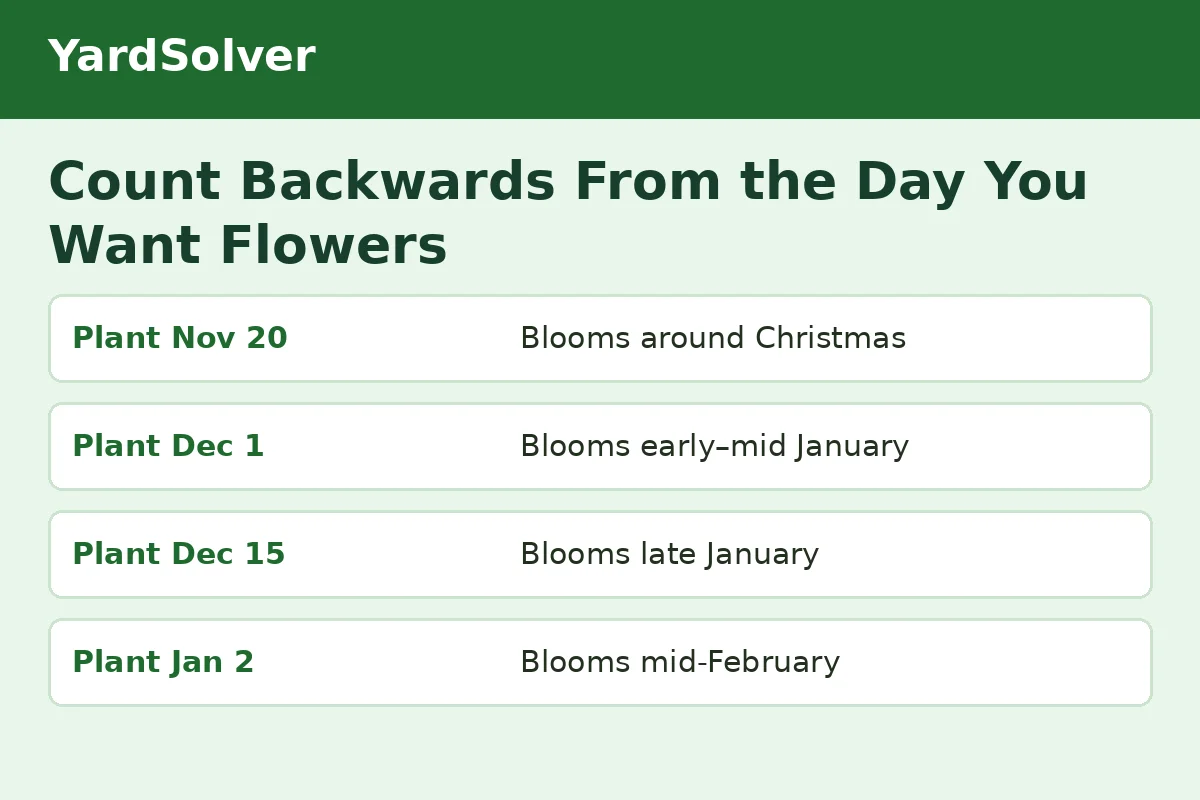
Timing: count backwards from the day you want flowers
| Plant on | Expect flowers | Good for |
|---|---|---|
| November 20 | Around Christmas | Holiday table, gifts started now |
| December 1 | Early to mid-January | Beating the post-holiday slump |
| December 15 | Late January | A second, staggered bowl |
| January 2 | Mid-February | Valentine's-season flowers |
Warm rooms run fast and cool rooms run slow, so treat the table as a centre estimate, not a promise: the same bowl can flower a week early at 21°C (70°F) or a week late at 15°C (60°F). The reliable strategy is succession — plant a small bowl every two weeks from late November to January and something is always in bud. Once buds appear, moving the bowl to the coolest bright spot you have stretches the flowering display noticeably, because heat is what rushes a paperwhite through its bloom.
Varieties: strong scent, soft scent, and colour
| Variety | Flowers | Scent | Choose it if |
|---|---|---|---|
| 'Ziva' | White, the classic | Strong — the most perfumed common variety | You want the full paperwhite fragrance |
| 'Grand Soleil d'Or' | Golden yellow | Sweet, moderate | You want colour instead of white |
| 'Erlicheer' | Double white clusters | Sweet | You want a fuller, rose-like flower |
| 'Wintersun' | White and soft yellow | Lighter | Strong scent bothers someone in the house |
Fragrance is the one genuine divide with paperwhites: in a small room 'Ziva' can be overpowering, which is a variety problem, not a growing problem — switch variety rather than abandoning the project. All paperwhites are toxic if eaten, so keep bowls where curious pets cannot graze the leaves.
The flop problem — and the Cornell fix that actually works
Paperwhites grown in dim light and warm rooms stretch into 45–50 cm (18–20 in) stems that cannot hold their flower clusters, and the bowl tips or sprawls. Prevention comes first: the brightest light you can offer and a cool room produce naturally shorter, sturdier growth. The second defence is physical — a tall glass cylinder contains the stems, and a ring of twine or a decorative support works in a wide bowl. The third is the famous one, and it is real research rather than folklore: Cornell University's Flower Bulb Research Program found that replacing the water with a 4–6% alcohol solution once the green shoot is 2.5–5 cm (1–2 in) tall makes paperwhites about one-third shorter, with flowers just as large and long-lasting. In kitchen measures, that is 1 part 80-proof (40%) spirit — gin, vodka or similar — to 7 parts water; rubbing alcohol must be diluted further to land in the same range. Two cautions from the same research: never use beer or wine (their sugars damage the plants), and more is not better — above about 10% alcohol, growth problems begin.
After flowering: the honest ending
Cut the spent flower stalks, and accept the extension consensus: bulbs forced in water have spent their stored energy and will not flower again indoors. In Zones 8 and warmer they can be planted out; everywhere colder, compost them and buy fresh bulbs next fall — they are inexpensive precisely because they are grown for this single display. Keep the routine in your winter rhythm alongside the rest of the indoor season: our Houseplant Winter Care guide covers the established plants that do carry over, and Best Low-Light Indoor Plants lists the foliage plants that thrive in the same dim rooms where paperwhites need the brightest spot you have.
Keep going
Pair this bowl with the bigger bulb in How to Force Amaryllis Bulbs, keep the rest of the indoor garden alive with Houseplant Winter Care, and plan the outdoor season with the December Garden Checklist and January Garden Checklist.
Sources
The 4–6% alcohol method, the 1-part-spirit-to-7-parts-water dilution, the one-third height reduction and the warnings against beer, wine and over-10% solutions follow Cornell University's Flower Bulb Research Program, Pickling Your Paperwhites. The no-chilling grouping, the 3–5 week flowering window and the pebble and soil methods follow the Canadian grower guidance at Gardenworks — Care Guide for Indoor Blooms. Variety scent notes ('Ziva' strongest, 'Wintersun' lighter) reflect standard nursery descriptions of those cultivars.
Questions people ask
How long do paperwhites take to bloom indoors?
About 4 to 6 weeks from planting in a typical room — closer to 3–5 weeks in a warm, bright spot and 6 weeks in a cool one. Count backwards from the date you want flowers: a bowl planted on November 20 is a Christmas display, and one planted December 1 flowers in early to mid-January.
Do paperwhites need soil?
No. Paperwhites flower happily with no soil at all, set on pebbles with the water just touching the base of the bulb — the bulb carries the food for one flowering inside itself. Soil growing works equally well and gives slightly sturdier stems, but it is a preference, not a requirement.
Why are my paperwhites flopping over?
Flopping is stretched growth: too little light and too much warmth make long, soft stems. Move the bowl to your brightest, coolest spot, support the stems with a tall vase or a twine ring, and next time try the Cornell method — a 4–6% alcohol solution instead of water once shoots are 1–2 inches tall, which shortens stems by about a third.
Can I keep paperwhites for next year?
Indoors, no — bulbs forced in water have spent their stored energy and will not flower again, and extension guidance treats them as a single display to compost afterwards. Only in Zone 8 and warmer can spent bulbs be planted outdoors with any expectation of future flowers.
Are paperwhites poisonous to pets?
Yes — like other narcissus, paperwhites are toxic if eaten, and the bulb is the most concentrated part. Grow them on a shelf or counter pets cannot reach, and move the bowl if a cat starts chewing the leaves.
How many bulbs do I need for one bowl?
Three to five bulbs for a 15 cm (6 in) container, set close enough to touch shoulders. Crowding is deliberate: a full bowl looks better and the stems support each other, which also reduces flopping.
Comments & ratings
No comments yet.
Be the first to share your experience.