
Guides · Seed starting · Published November 20, 2026 · By Faizan Ahmad
Seeds That Need Cold Stratification: The Fridge Method and the Full List
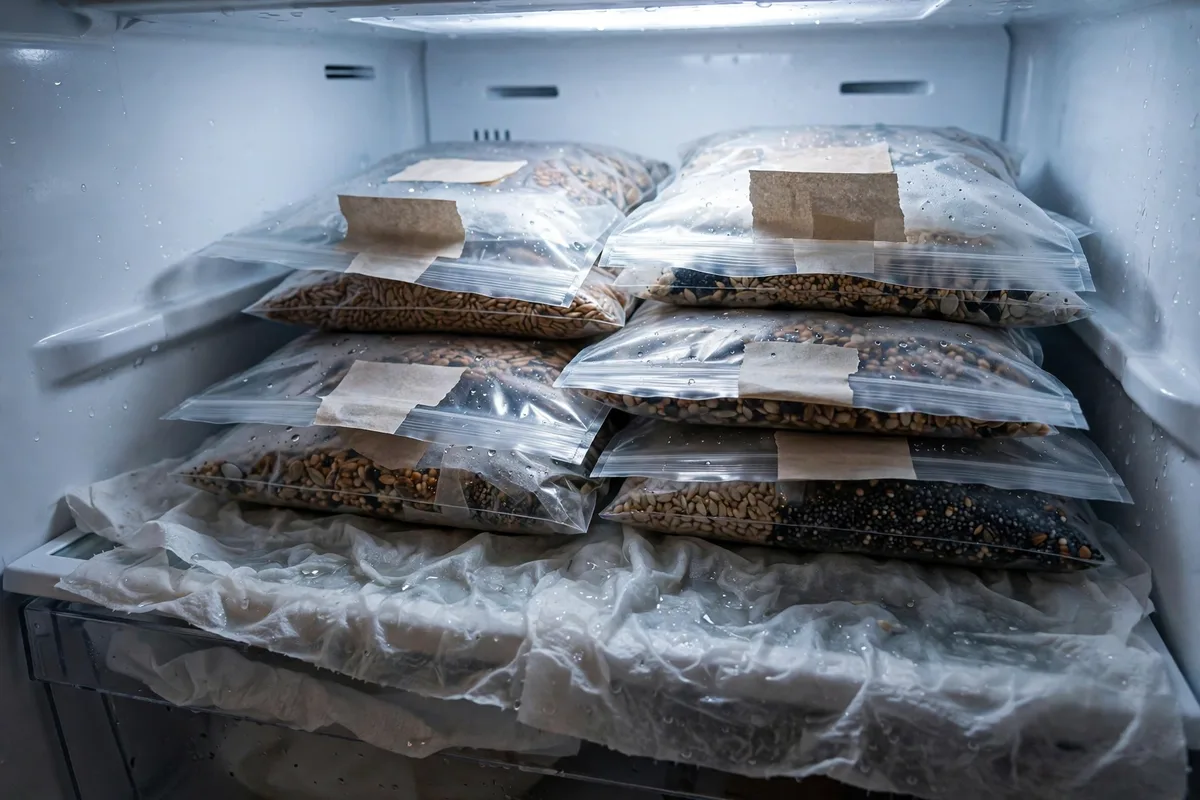
Seeds that need cold stratification — milkweed, coneflower, lavender, lupine, clematis and most tree and shrub seed — will not germinate reliably until they have spent weeks in cold, moist conditions, typically 30–90 days at 34–41°F (1–5°C). The cold is not a preference; it is a lock built into the seed, evolved so that a perennial sown by autumn does not germinate into the first mild week of winter and die. Gardeners open the lock two ways: sow outdoors and let winter do it (the winter-sowing method), or simulate winter in the refrigerator. This guide gives the full list with durations, the fridge method step by step, the two mistakes that ruin it, and the seeds — nearly all vegetables and annuals — that must never be stratified at all.
The short answer, on one card
Which seeds: milkweed (30–60 days), coneflower (30–60), lavender (30–45), lupine (21–35, scarify first), clematis (30–90), delphinium (14–30), apple (60–90), cherry (90–120), maple (60–150). The method: seed in moist — never wet — sand, vermiculite or paper towel, sealed in a labelled bag, in the fridge at 34–41°F, checked weekly. Never stratify: tomatoes, peppers, beans, lettuce and the other vegetables and annuals — cold does them no good and delays them by the whole stratification period.
Why the lock exists — and why skipping it fails quietly
Stratification is the seed's calendar. A milkweed seed ripening in October carries chemical inhibitors that only a sustained cold, moist period breaks down; until they are gone, the embryo stays dormant no matter how warm and wet the seed tray is. Sow unstratified perennial seed indoors in spring and the failure is quiet and confusing: nothing comes up, or a lonely seedling appears in week six, and the gardener blames the seed company for what is actually a missing winter. The species that carry the lock are the ones whose natural cycle demands it — perennials, trees and shrubs of cold-winter climates, whose seed falls in autumn and must wait for spring. Species from frost-free climates, and the annuals bred from them, never evolved the lock, which is why the vegetable garden mostly ignores this whole guide. When a seed packet says "requires cold stratification" or "sow in autumn", this is the process it is naming — and the fridge simply compresses the winter into a bag you can schedule.
The list: who needs the cold, and for how long
| Seed | Cold period | Notes |
|---|---|---|
| Milkweed | 30–60 days | The monarch plant; erratic without its month of cold |
| Coneflower (echinacea) | 30–60 days | Germination transforms after stratification |
| Lavender | 30–45 days | Then warmth and light; slow even done right |
| Lupine | 21–35 days | Scarify or soak first — the coat is the second lock |
| Clematis | 30–90 days | Varies by species; patience is the method |
| Delphinium | 14–30 days | The shortest common stratification |
| Apple and pear pips | 60–90 days | For fun and rootstocks — seedlings never match the parent |
| Cherry and plum stones | 90–120 days | Crack the stone's shell gently first for cherry |
| Maple | 60–150 days | The longest common lock; species vary widely |
| Black-eyed Susan | ~30 days | Benefits clearly though not always listed as required |
The plant pages carry the rest of each plant's story once the seed wakes: Milkweed, Echinacea, Lavender and Lupine. Durations are ranges because seed lots vary — when in doubt, take the middle of the range and sow on the date the count ends, not before.
The fridge method, step by step
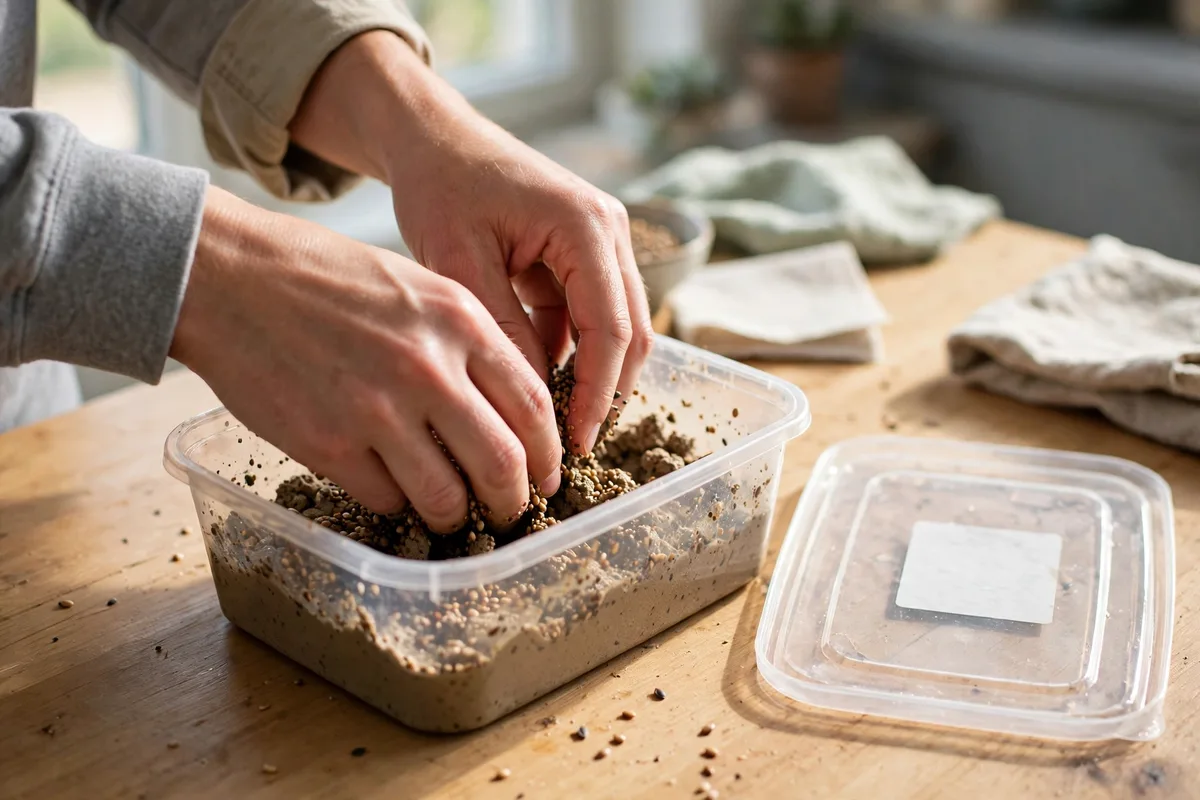
Step 1 — Choose the medium. Moist sand, vermiculite, or folded paper towel all work; the medium's only jobs are to hold moisture against the seed and let you see what is happening. Step 2 — Moisten, do not wet. This is the step the whole method stands on: dampen the medium until it holds together but releases no water when squeezed. Excess moisture is the leading cause of stratified seed rotting or moulding in the bag. Step 3 — Mix and seal. Stir the seed through the medium (or lay it on the towel), seal it in a plastic bag or lidded container with a little air inside, and label it with the seed, the date it went in, and the date it comes out — the label is written now because in six weeks nobody remembers. Step 4 — Refrigerate at 34–41°F (1–5°C). A normal fridge's main compartment is right; the freezer is not stratification, it is storage, and it does not count. Step 5 — Check weekly. Open the bag, look for mould (a light fuzz on a seed or two: remove them, air the bag, re-seal; heavy mould: the medium was too wet — restart drier) and for early sprouters, which happen in long stratifications: any seed that germinates in the fridge gets potted immediately, whenever it appears. Step 6 — Sow on the end date. Bring the bag out, sow the seed at its normal depth into trays or pots, and give it the warmth and light of a normal spring sowing — the winter has already happened, as far as the seed is concerned. Count quantities with the Seed Calculator before the bags go in; stratified seed is too valuable to run short in March.
The outdoor alternative: let winter do it
The fridge is the controlled method; the garden is the original one. Seed of hardy perennials sown in pots or jugs outdoors in late autumn stratifies itself through the real winter — the method our Winter Sowing Guide and the milk-jug method set out in full. Choose the fridge when the seed is expensive, the quantity small, or the timing critical (a 30-day stratification started in January lands the seed ready for a February indoor sowing, weeks ahead of the outdoor pots). Choose winter sowing when the seed is plentiful and the species forgiving. Both beat the third option — sowing unstratified seed in spring and waiting for a germination that the seed's own chemistry has forbidden. Whichever route you take, the January indoor list in What Seeds to Start Indoors in January is where the stratified perennials rejoin the ordinary seed calendar once their cold is served.

The two mistakes, and the never-list
Mistake one: wet instead of moist. A dripping medium grows mould and rots seed in a sealed cold bag; if you can squeeze water out of it, wring it out before the seed goes in. Mistake two: no end date. Stratification is a counted period, not a storage method — seed left in the fridge for twice its period can sprout in the bag, exhaust itself, or rot, and unlabelled bags are how a careful gardener ends up sowing mystery seed in April. And the never-list, stated plainly: do not stratify vegetables and annual flowers — tomatoes, peppers, beans, peas, lettuce, squash, zinnias, marigolds and their kin carry no cold lock, gain nothing from the fridge, and lose the entire stratification period from their season. The one borderline case worth knowing is the herb garden: parsley and some umbellifers germinate a little more evenly after a short cold spell, but it is a nudge, not a requirement, and their seed is better spent on an early sowing. Put the audit dates in the Garden Planner — stratification started on a planned date is a crop; stratification started "sometime in winter" is a hope.
Counting backwards: when to start each bag
Stratification is scheduled backwards from the sowing date, and January is when the arithmetic happens. Work three examples. Milkweed for a mid-March indoor sowing: 45 days of cold (the middle of its 30–60 range) means the bag goes into the fridge at the end of January. Coneflower for the same sowing: the same 45-day choice, the same end-of-January start — the two bags can share a shelf and a checking day. A cherry stone for spring: 90–120 days means it should already be in — started in November or December for a March-April sowing — and a stone started in January simply lands its sowing in May, which is fine, provided the label says so and nobody "rescues" it early. The pattern is the planner's pattern: pick the sowing date from the plant's needs, subtract the cold period, and the start date falls out. Gardeners who start stratification "when they remember" discover in March that the seed remembers nothing — it just counts cold days, and it is still counting. Write both dates on the bag, put the end date in the Garden Planner, and the fridge becomes what it should be: not a mystery shelf, but the first shelf of the seed-starting station.
Keep going
Write the stratification start and end dates into the Garden Planner the day the bags go in — the end date is the whole point of the label.
Go deeper with the Winter Sowing Guide and Winter Sowing in Milk Jugs for the outdoor method, What Seeds to Start Indoors in January for where stratified seed rejoins the calendar, and the plant pages for Milkweed, Echinacea and Lupine.
Sources
Method and durations follow InsideGrown — How to Stratify Seeds in the Fridge the Right Way (34–41°F / 1–5°C; moist not wet; milkweed and coneflower 30–60 days, maple 60–150, cherry 90–120, clematis 30–90, lupine about 3–5 weeks with scarification; vegetables and annuals must not be stratified) and the feature reference at Savvy Gardener — Seed Stratification.
Questions people ask
What does cold stratification mean?
It is the cold, moist period some seeds must experience before they will germinate — the simulation of winter. The seed carries chemical inhibitors that only sustained cold (typically 34–41°F / 1–5°C) while moist breaks down. Without it, milkweed, coneflower, lavender and most tree seed sit dormant in a warm seed tray indefinitely.
Which seeds need cold stratification?
Mostly perennials, trees and shrubs of cold-winter climates: milkweed (30–60 days), coneflower (30–60), lavender (30–45), lupine (21–35, scarified), clematis (30–90), delphinium (14–30), apple (60–90), cherry (90–120) and maple (60–150). Vegetables and annual flowers do not need it and should never be stratified.
Can I stratify seeds in the freezer?
No. Stratification needs cold, not frozen — 34–41°F (1–5°C), the temperature of a normal refrigerator. The freezer is for long-term dry seed storage; frozen moist seed in a stratification bag can be damaged, and frozen time does not count toward the cold period.
What happens if my stratifying seeds go mouldy?
A light fuzz on one or two seeds: remove them, air the bag briefly, and re-seal — the cause is almost always a medium that was wet rather than moist. Heavy mould through the bag means restarting with a drier medium. Checking the bags weekly is how you catch it at the light stage.
Is winter sowing the same as stratification?
Winter sowing is stratification done by the weather: seed sown in pots or jugs outdoors in late autumn gets its cold period naturally and germinates as spring warms. The fridge method gives the same result on a controlled schedule, which suits expensive seed, small quantities and precise sowing dates.
What if a seed sprouts inside the fridge bag?
Pot it up immediately, whenever it happens — it has completed its cold requirement and declared itself ready. This is common in longer stratifications and is the other reason for the weekly check: a sprouted seed left in the bag exhausts itself in the dark.
Comments & ratings
No comments yet.
Be the first to share your experience.