
Guides · Growing Wisdom · Light & Shade · Published November 22, 2026 · By Faizan Ahmad
Vegetables That Grow in 3–4 Hours of Sun
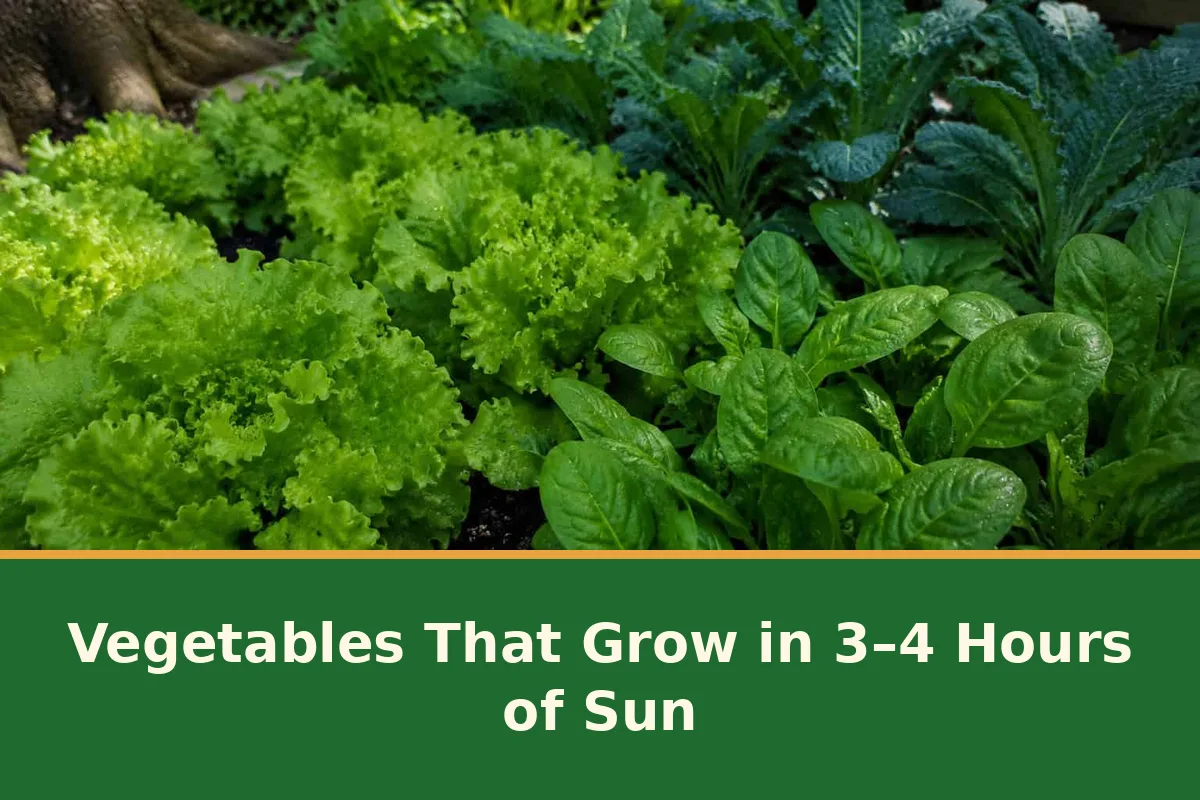
With only 3–4 hours of direct sun, you can grow a genuinely productive garden — as long as you plant what the light can pay for. Leaf crops are the full producers: lettuce, spinach, kale, Swiss chard, collards, arugula and Asian greens, which Iowa State University Extension lists as succeeding on three to four hours of sun. Roots and brassicas give smaller, slower harvests, and fruiting crops — tomatoes, peppers, squash — should not be planted there at all. This guide sorts every common vegetable by what it actually does at 3–4 hours, and shows how to win back light you didn't know you had.
Growing in 3–4 hours of sun at a glance
- The rule of the shade garden: you eat leaves in shade, roots in part sun, and fruit in full sun.
- Full producers at 3–4 hours: leaf lettuce, spinach, kale, Swiss chard, collards, arugula and Asian greens — Iowa State University Extension lists these as succeeding on 3–4 hours of direct sun.
- Half producers: beets, radish, kohlrabi, carrots, broccoli and peas — real harvests, smaller and slower.
- Don't plant them here: tomatoes, peppers, cucumbers, squash, melons and corn. Below six hours they grow leaves and disappointment.
- The bonus: shade delays bolting, so greens often taste better and crop longer here than in a hot sunny bed.
Step 1 — Measure your sun before you blame it
Most "shade problems" are measurement problems. A bed that feels dark at breakfast may collect four solid hours at midday, and a bed that seems bright in May sits in tree shadow by July, when the canopy fills in and the sun rides higher. So count properly: on a clear day near the summer solstice, check the bed every hour and mark sun or shade; add up only the hours of direct sun — bright dappled light under a high tree counts for leaf crops, but call it half an hour, not a full one. YardSolver's Sun & Shadow Calculator guide walks through mapping a whole yard's shadows across the season, and it is worth doing once: the map usually reveals that the garden has more usable light than its owner feared — just not where the tomatoes were planted. Note, too, when your hours fall. Three to four hours that include midday are worth more than the same count at dawn and dusk, and morning sun with afternoon shade is the kindest pattern of all for greens: it dries dew (less disease) and spares lettuce the afternoon heat that triggers bolting.
Step 2 — Plant the leaf crops: the true shade performers
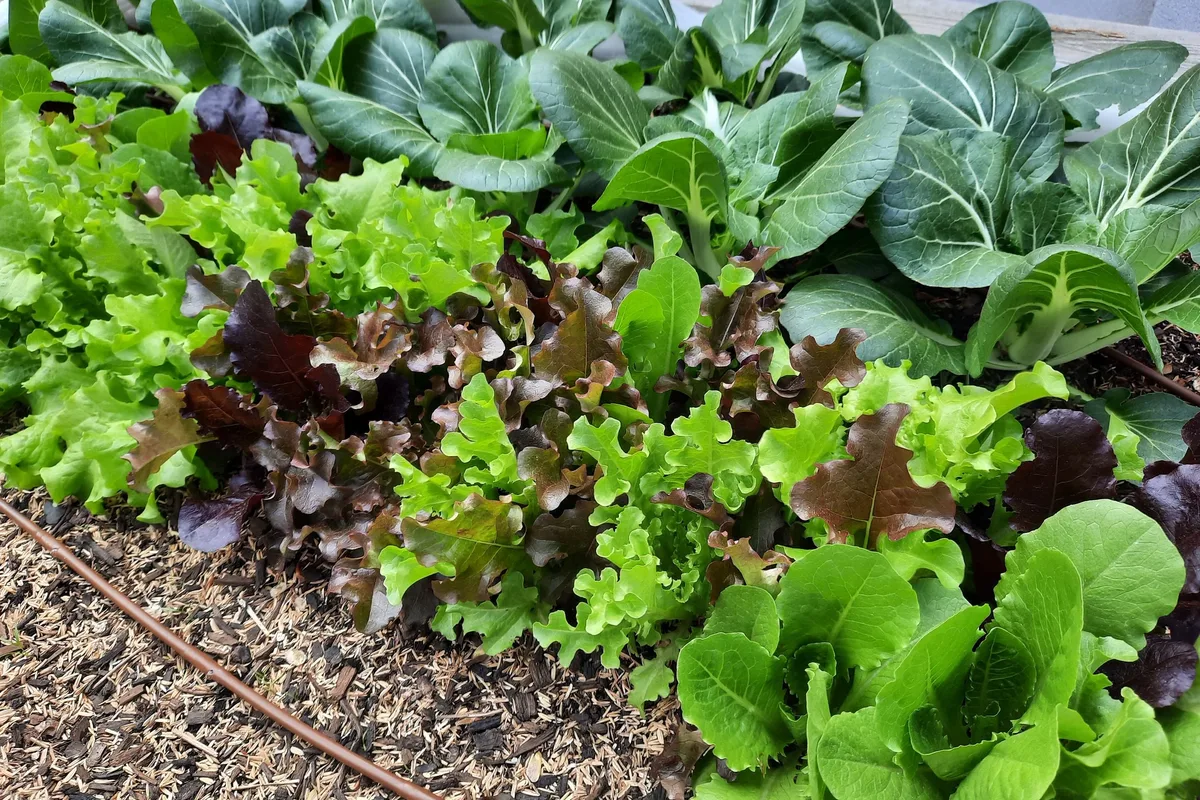
Leaf crops are the answer because of simple economics: the part you eat is the leaf itself, and a leaf can be picked at almost any size. The plant never has to fund flowers, fruit and seeds — the most light-expensive work a plant does. Iowa State University Extension's guidance is the benchmark: leaf lettuce, spinach, collards, Swiss chard and kale can be grown successfully with three to four hours of direct sun. University of Maryland Extension adds that leafy greens produce with 3–4 hours of direct sun or 6–8 hours of filtered light. Expect growth roughly a third slower than the packet promises, and compensate the way the Succession Planting Guide teaches: sow little and often, and harvest cut-and-come-again so each plant pays you for months.
| Crop | At 3–4 hours of sun | Shade note |
|---|---|---|
| Lettuce (leaf types) | Full producer | The shade champion; shade delays bolting. Choose loose-leaf over heading types |
| Spinach | Full producer | Actively prefers cool shade in summer |
| Kale | Full producer | Slower, same flavour; crops into frost |
| Swiss chard | Full producer | One sowing, months of leaves |
| Arugula | Full producer | Milder and less peppery grown in shade |
| Asian greens (bok choy, tatsoi, mizuna) | Full producer | Fast even in low light; bok choy also sits in the 2–4 hour band in extension lists |
| Collards & mustard greens | Full producer | Named in the Iowa State 3–4 hour list |
| Herbs: parsley, cilantro, chives, mint | Full producer | Cilantro bolts less in shade — a real advantage. Mint only in a pot; it escapes |
Step 3 — Roots and brassicas: worth it, with smaller returns
The second division stores its harvest underground or in a head, and that costs more light — but not full-sun light. Iowa State lists radishes, kohlrabi, beets, cauliflower and broccoli as possibilities for partial shade, and the RHS list agrees, adding baby carrots and peas. Read "possibilities" honestly: at 3–4 hours these crops grow, and you will eat them, but roots size up slowly and smaller, broccoli heads come in modest, and peas pod lightly. Push them toward the brighter end of the bed, give them the midday hours if the bed's sun is split, and choose fast, small varieties — round carrots, baby beets, sprouting broccoli. Green onions and leeks belong here too: unglamorous, nearly unkillable, and content in part shade. What this group needs from you is patience and moisture — shade beds dry slower, which helps, but tree roots compete hard for water, so a shaded bed under a tree often needs more watering, not less.
Step 4 — Don't waste the bed on fruiting crops
This is the step that saves a season. Tomatoes, peppers, chillies, eggplant, cucumbers, zucchini and all squash, melons and sweet corn need six to eight-plus hours; below that they do not fruit meaningfully no matter what you feed them. In a 3–4 hour bed they grow pale, leggy, disease-prone plants and a handful of fruit that never ripens — and they occupy the space for the whole summer doing it. If the shaded bed is your only ground, the fruiting crops go in pots on the sunniest square metre you own — a driveway edge, a south step, the balcony (the Balcony Vegetable Gardening guide is built around exactly this light maths) — and the bed becomes what it wants to be: a salad factory. A small-fruited cherry tomato in a big pot is the one borderline exception worth trying at 5–6 hours; at 3–4, do not.
Step 5 — Steal back light without moving the garden
Finally, work the edges. Reflect: a white fence or wall behind the bed, or a sheet of pale mulch, bounces real light into the leaves — gardeners underestimate how much a bright wall adds. Prune: lifting a tree's canopy (removing the lowest branches) turns hard shade into the high, dappled shade leaf crops love, and it is the single biggest upgrade most shade gardens ever get. Move the pots: containers on a wheeled stand can chase the sun patch across a patio as the season shifts. Feed the soil, not the plant: shaded plants grow slower, so rich, compost-heavy soil matters more, not less — never push nitrogen to force growth, which just makes soft, slug-worthy leaves. And use the shade you have: in hot climates, 3–4 hours is not a limitation but a tool — the same bed that frustrates a tomato grower in June grows spinach in August, when every sunny bed's spinach has bolted. Gardeners with too much sun buy shade cloth (see Shade Cloth for the Vegetable Garden); you were given it free.
Keep going
Measure it: Sun & Shadow Calculator guide · Shade cloth for the vegetable garden · Balcony vegetable gardening
Read next: Succession planting guide · Best vegetables to grow in containers
Questions people ask
What vegetables can grow with only 3–4 hours of sun?
Leaf crops: leaf lettuce, spinach, kale, Swiss chard, collards, arugula and Asian greens such as bok choy, plus herbs like parsley, cilantro and chives. Iowa State University Extension lists leaf lettuce, spinach, collards, chard and kale as succeeding on three to four hours of direct sun. Roots and brassicas manage with smaller harvests; fruiting crops do not produce meaningfully.
Can tomatoes grow in 4 hours of sun?
Not usefully. Tomatoes need six to eight or more hours to fruit well; at four hours plants grow leggy and yields collapse. If a bed only gets 3–4 hours, grow the tomato in a large pot on your sunniest spot instead and fill the bed with greens.
Is morning or afternoon sun better for a shade garden?
Morning sun with afternoon shade is the kindest pattern for greens: it dries dew, which reduces disease, and spares lettuce and spinach the afternoon heat that makes them bolt. Hours that include midday are worth the most of all.
Do vegetables grow slower in shade?
Yes — roughly a third slower than seed-packet timings is a fair expectation, and roots size up smaller. Compensate by sowing little and often, harvesting leaf crops cut-and-come-again, and keeping the soil rich and evenly moist.
A salad garden is not a failed vegetable garden
Somewhere along the way, "real" vegetable gardening got defined by tomatoes — the one crop a shaded garden cannot have. Measured by what actually reaches the table, a well-run 3–4 hour bed is a serious food garden: salads from May to October, cooking greens in quantity, herbs all season, and roots and peas as a bonus. Many gardeners with full sun would trade their bolted, bitter July lettuce for a shaded bed's sweet August leaves without a second thought.
The honest reframe is to plant the garden the light describes, not the one the seed catalogue describes. Count your hours, fill the bed with the leaf crops that extension services — not optimists — certify for 3–4 hours, put the one tomato in a pot in the sun patch, and the "shade problem" turns out to have been a planting problem all along.
Sources
Crop-by-light guidance follows GreenConserve — Vegetables That Grow in Shade, summarising Iowa State University Extension and RHS lists, and The More One Sows — Vegetables for Shade: Sun-Hours Chart, which compiles Iowa State, Illinois, UC and Clemson extension figures by crop. The filtered-light figures follow University of Maryland Extension as reported by Live to Garden — Vegetables That Grow in Shade.
Related page
Read next: Sun & Shadow Calculator: Map Your Garden's Light Before You Plant.
Comments & ratings
No comments yet.
Be the first to share your experience.