
Plant Library · Vegetables · By Faizan Ahmad
Updated November 17, 2026
🍃 How to Grow Spinach
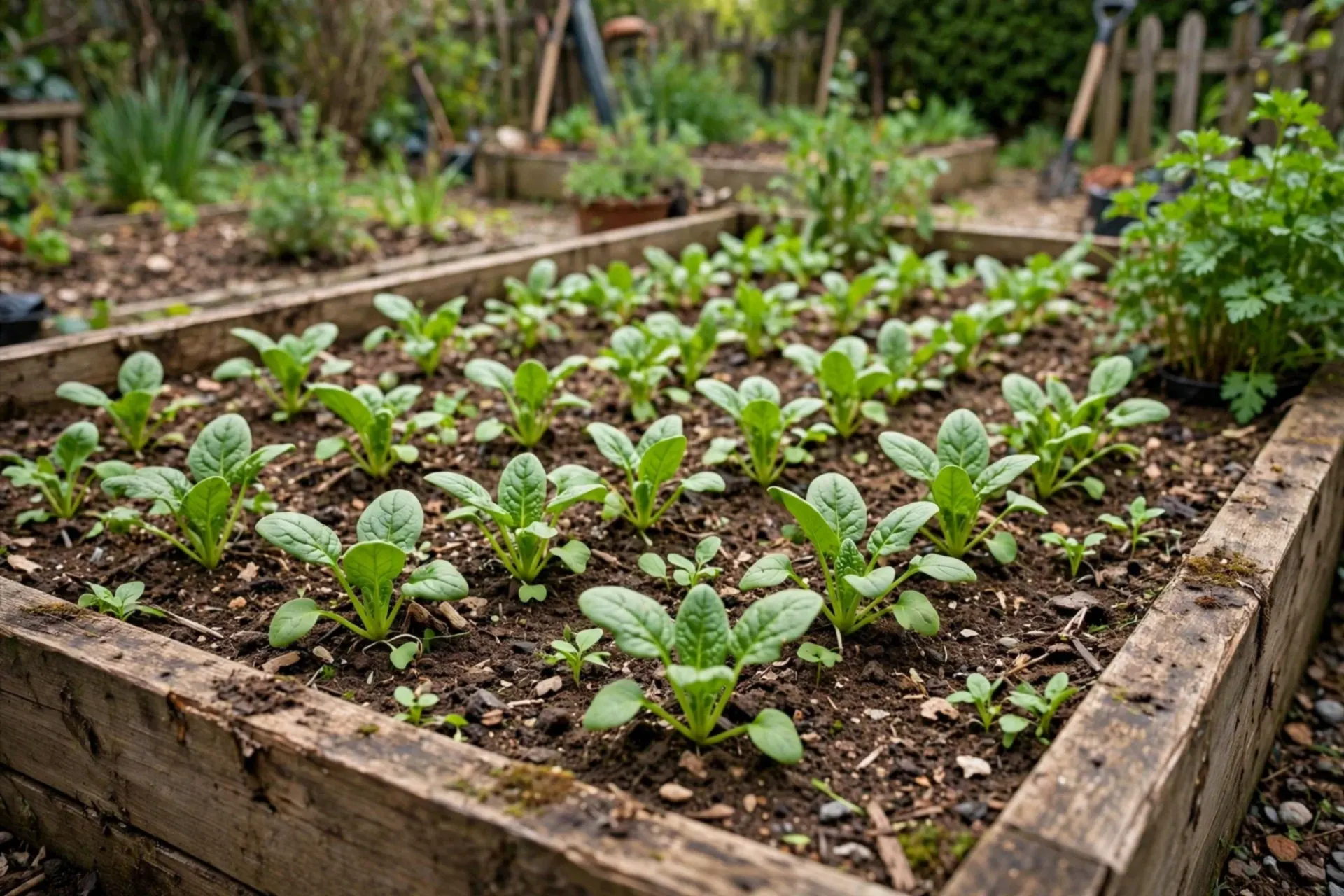
Spring and fall crop; summer heat makes it bolt. Spinach is a spring and fall crop: direct sow about 5 weeks before your last frost — summer heat makes it bolt and turn bitter, so give it part shade as days warm up.
Grow Spinach with us — step by step
Spinach is a cool-weather sprinter that bolts the moment summer arrives, so success is mostly timing: sow early, sow again in fall, and pick fast. This guide covers succession sowings, spacing that keeps leaves clean, and the varieties that hold longest. Put your sowing day in here and we will count out a personal spinach schedule from it, picking window included.
Step 1 — today: Sow your Spinach seeds today: 1/2 in deep, spaced 4–6 in apart, in part shade in summer. Water the row in well and keep it moist while seeds sprout.
Spinach at a glance
Sow outdoors: 5 weeks before last frost
Spacing: 4–6 in · Seed depth: 1/2 in
Sun: Part shade in summer
Water: Regular
Harvest: 40–50 days
Timing counts from your average last spring frost — get your own dates in the Planting Calendar. Guidance follows standard extension-service practice for Canada and the US.
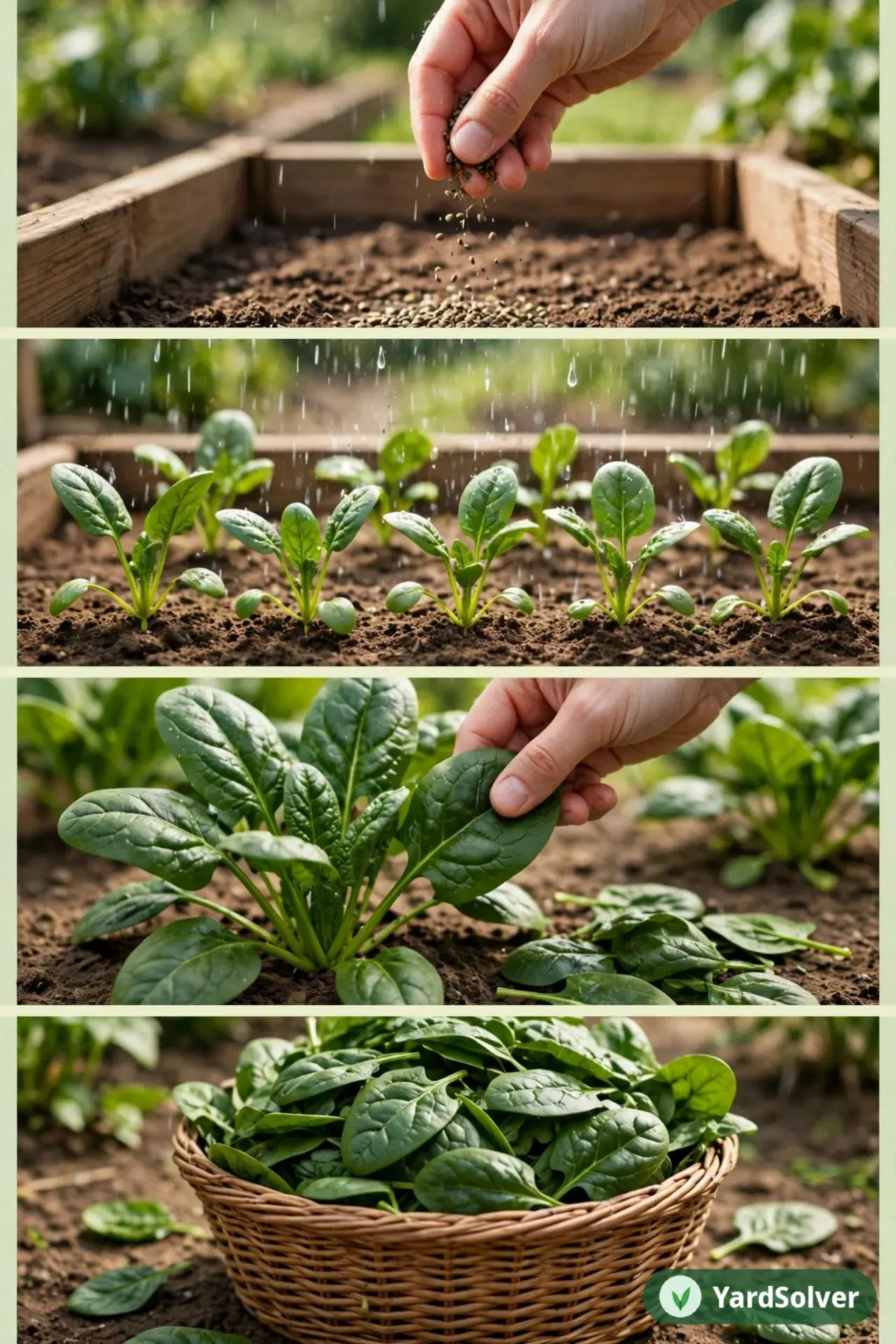
How to plant and grow spinach, step by step
Step 1 — Time it right
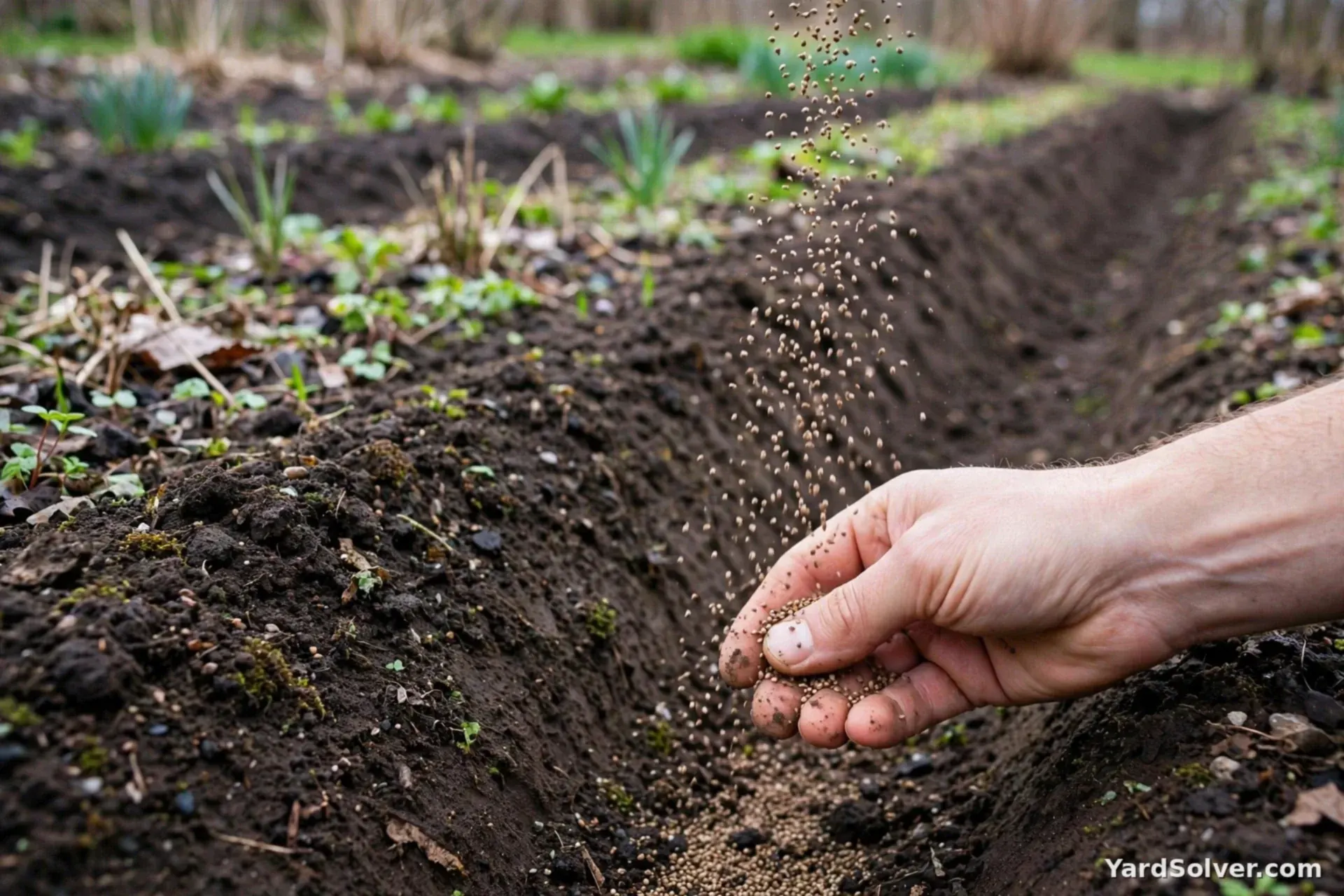
Sow outdoors: 5 weeks before last frost. All dates count from your average last spring frost — the Planting Calendar turns them into real dates for your garden. Spinach is a spring and fall crop: direct sow about 5 weeks before your last frost — summer heat makes it bolt and turn bitter, so give it part shade as days warm up. Spinach germinates best in cool soil, roughly 45 to 60 F, and slowly or not at all in warm ground — one reason fall sowings often beat spring ones. Past about 14 hours of daylight, plants bolt whatever the temperature.
Step 2 — Prepare the spot
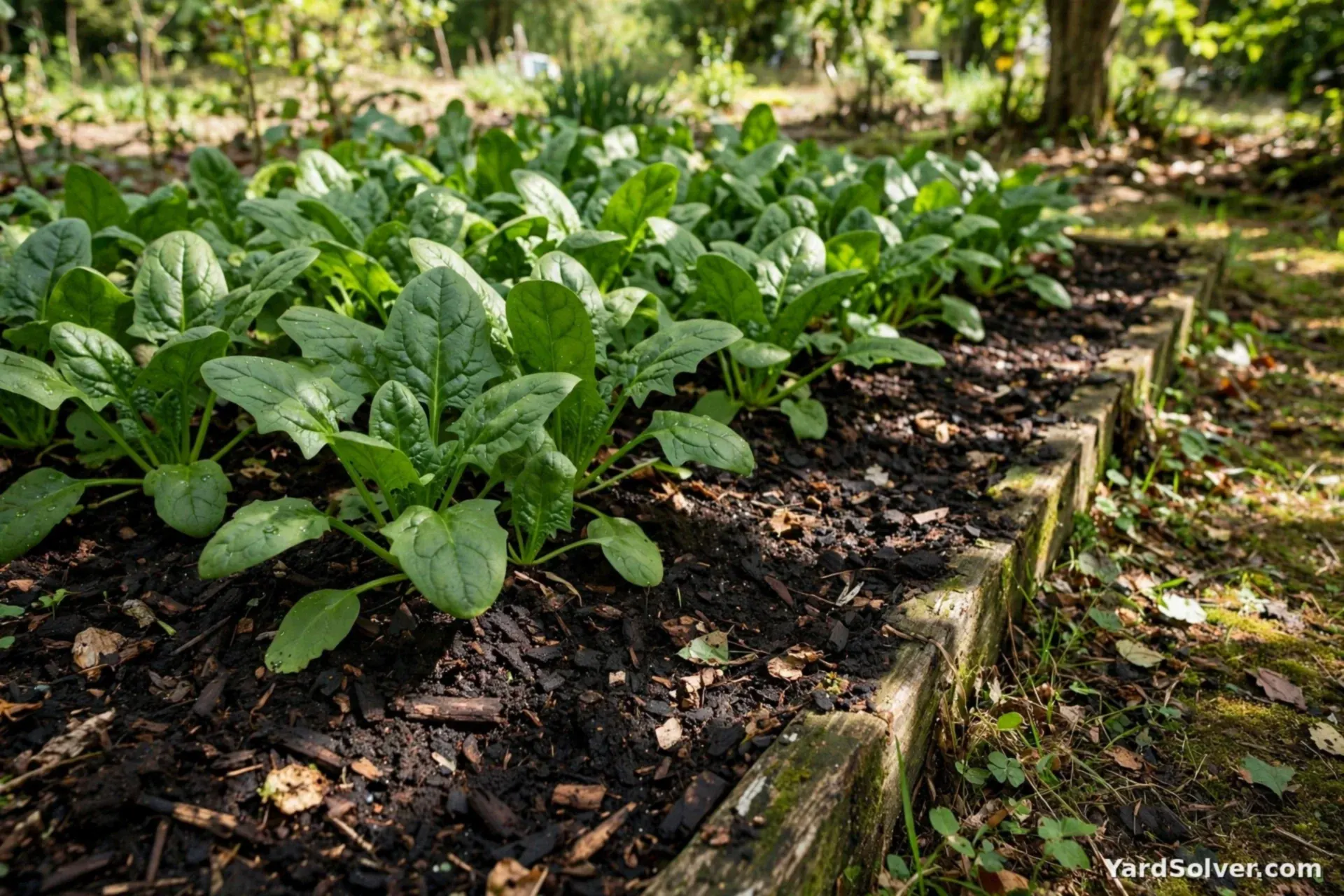
Sun: Part shade in summer. Moist, compost-rich soil that never fully dries out. Leafy crops are fast and shallow-rooted, so little-and-often water beats occasional soaking. Work out how much you need with the Garden Mix Calculator or the Raised Bed Soil Calculator. Spinach wants nitrogen more than most leafy crops: work in compost plus a nitrogen-rich feed before sowing, because a hungry crop is a yellow, bitter one. Below pH 6.0 it sulks; 6.5 to 7.5 gives the fastest, sweetest growth.
Step 3 — Sow and plant out
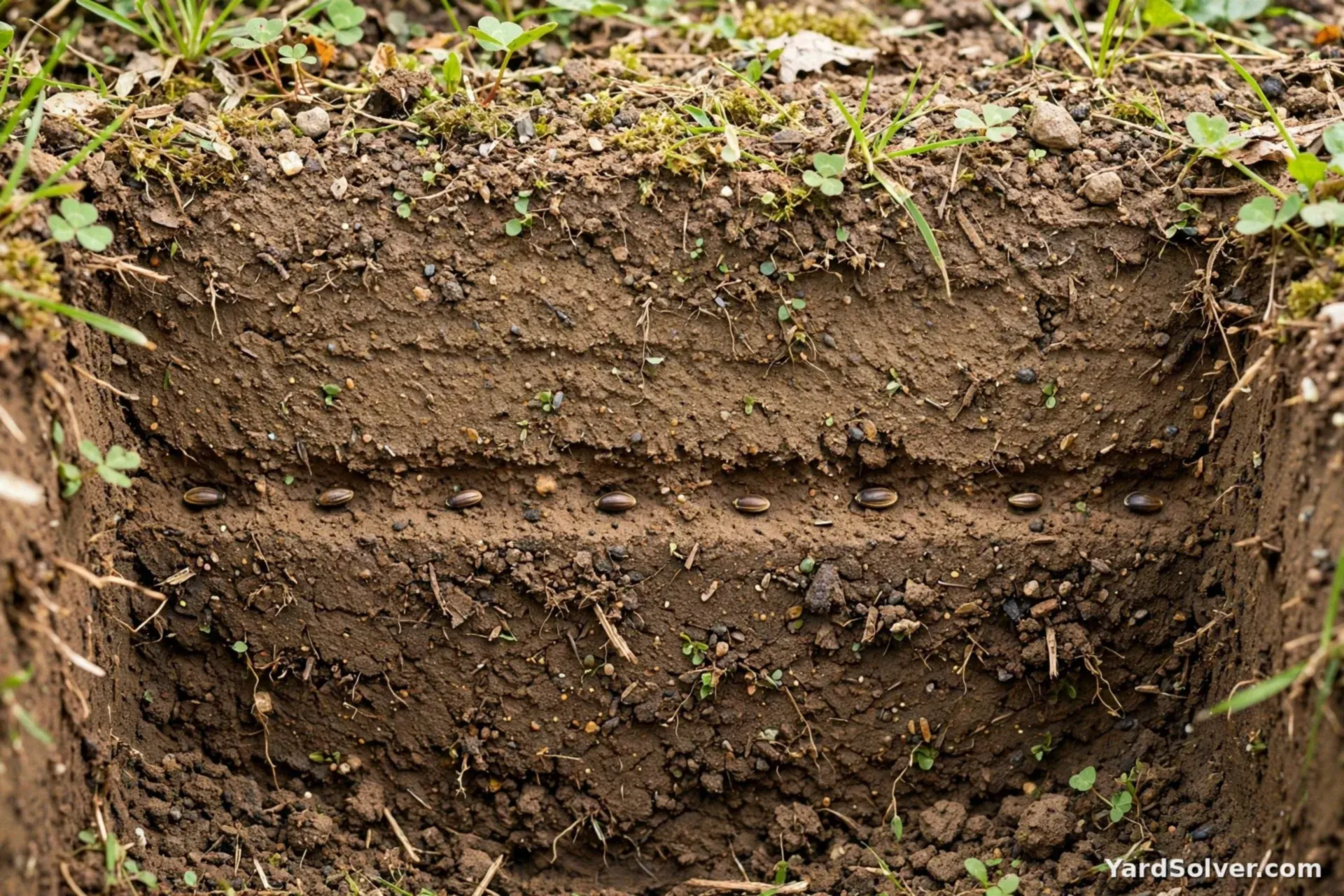
Sow directly where they will grow, 5 weeks before last frost, 1/2 in deep and 4–6 in apart (thin seedlings to that spacing once they are up). The Seed Calculator works out how much seed a bed needs. Sow a little thick and thin in two passes, eating the thinnings as baby leaves from about 3 in tall. Final spacing of 4 to 6 in in rows 12 in apart gives 8 to 12 pickable leaves per plant.
Step 4 — Water and feed
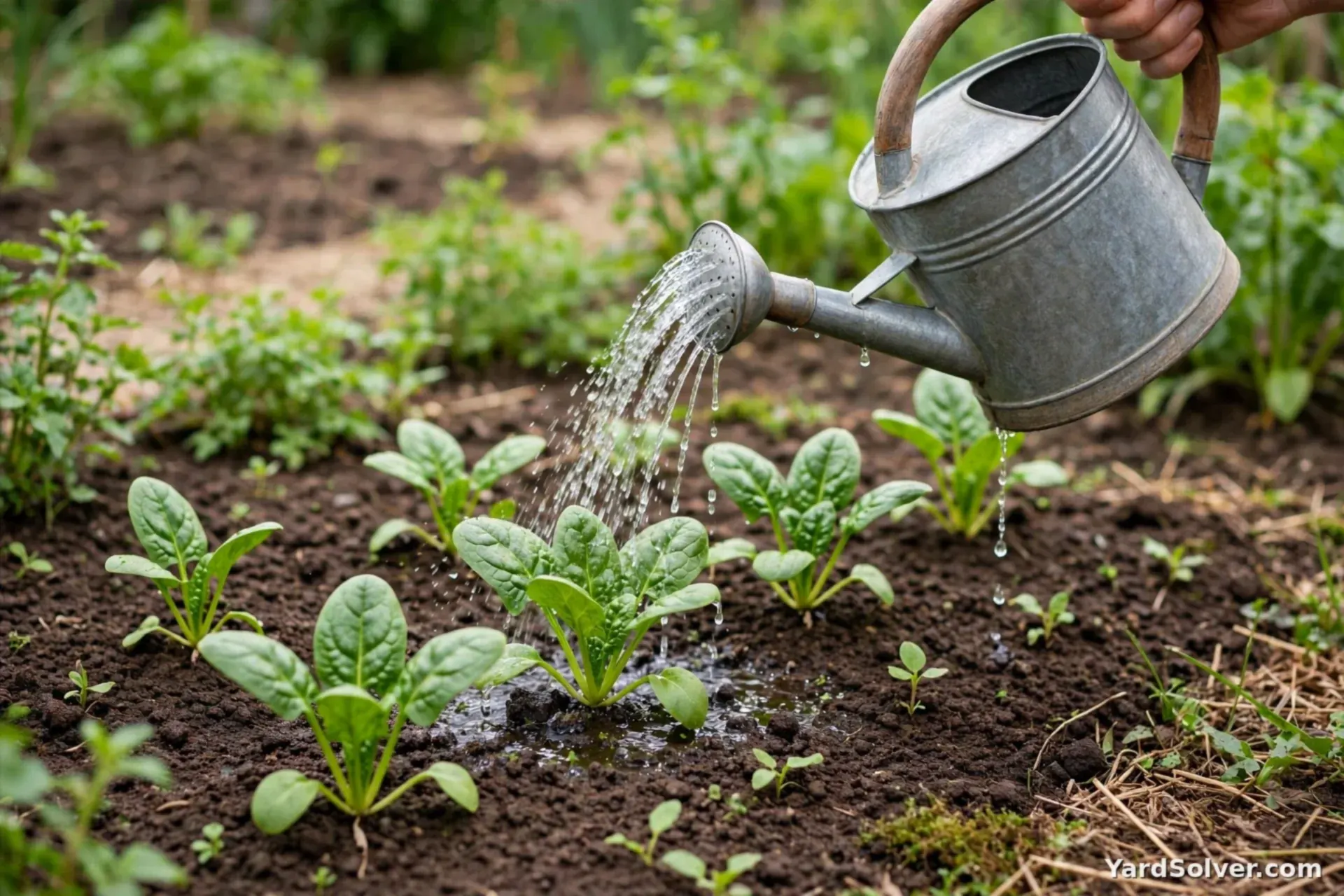
Water: Regular. The Fertilizer Calculator turns a bed size into the right amount. Roots sit in the top few inches, so the bed should never dry at the surface — little and often is the rule. A nitrogen side-dressing three weeks after sowing, as plants bulk up, separates a modest row from a generous one.
Step 5 — Care and the problems to watch for
- Bolting in warm or long days — sow spring and fall crops instead of summer ones.
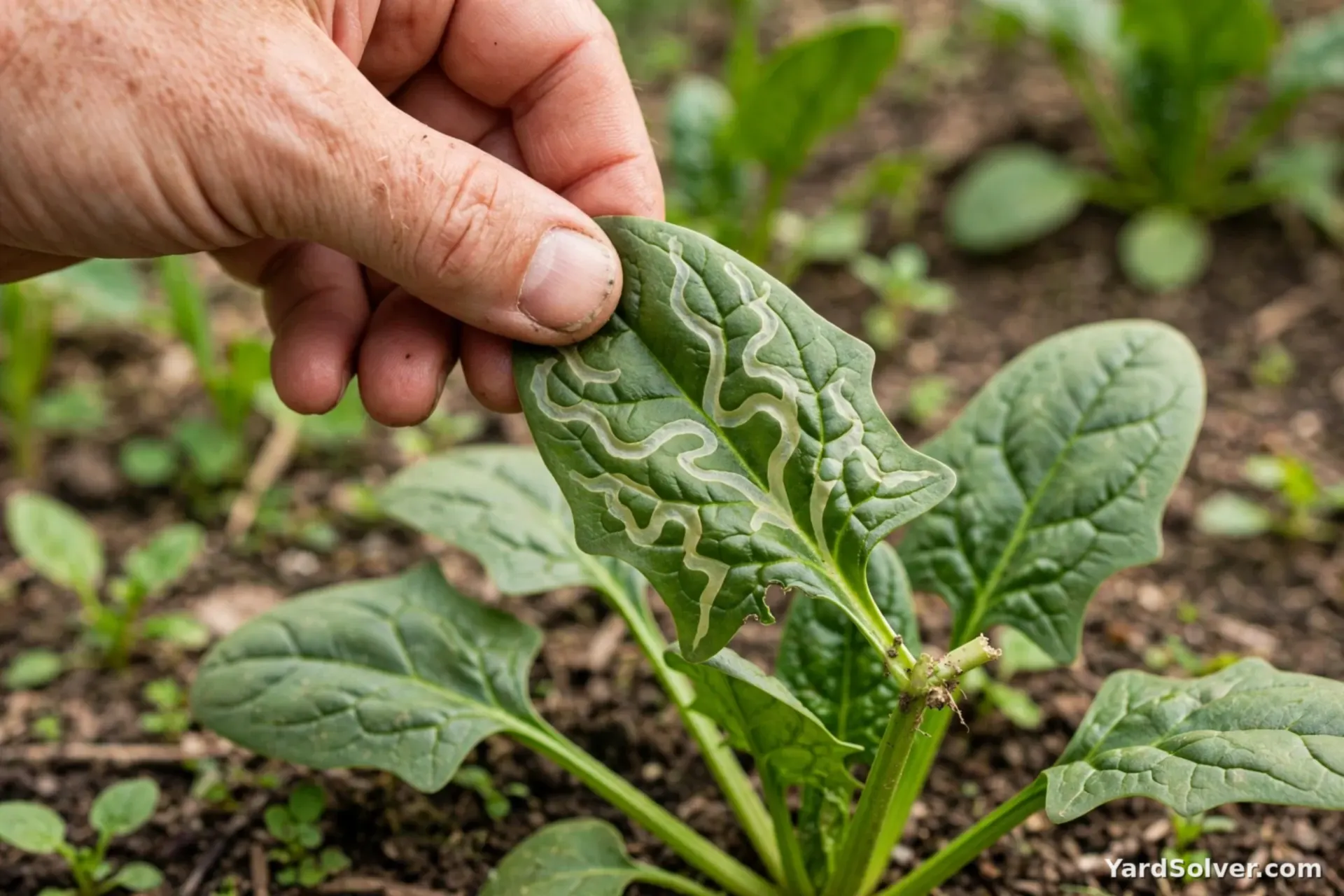
- Leaf miners — pale tunnels in leaves; pick off affected leaves.
- Downy mildew — yellow patches with grey mould beneath; space for airflow.
Take care: Spinach is high in oxalates, so people who are prone to kidney stones are often advised to limit it. Some people taking blood-thinning medicine are told to keep leafy-greens intake steady because of the vitamin K.
Aphids colonise the undersides where a hose jet misses, so lift leaves and check weekly; strong water early beats any spray later. Pick off leafminer-tunnelled leaves promptly and cover spring sowings with mesh.Step 6 — Harvest
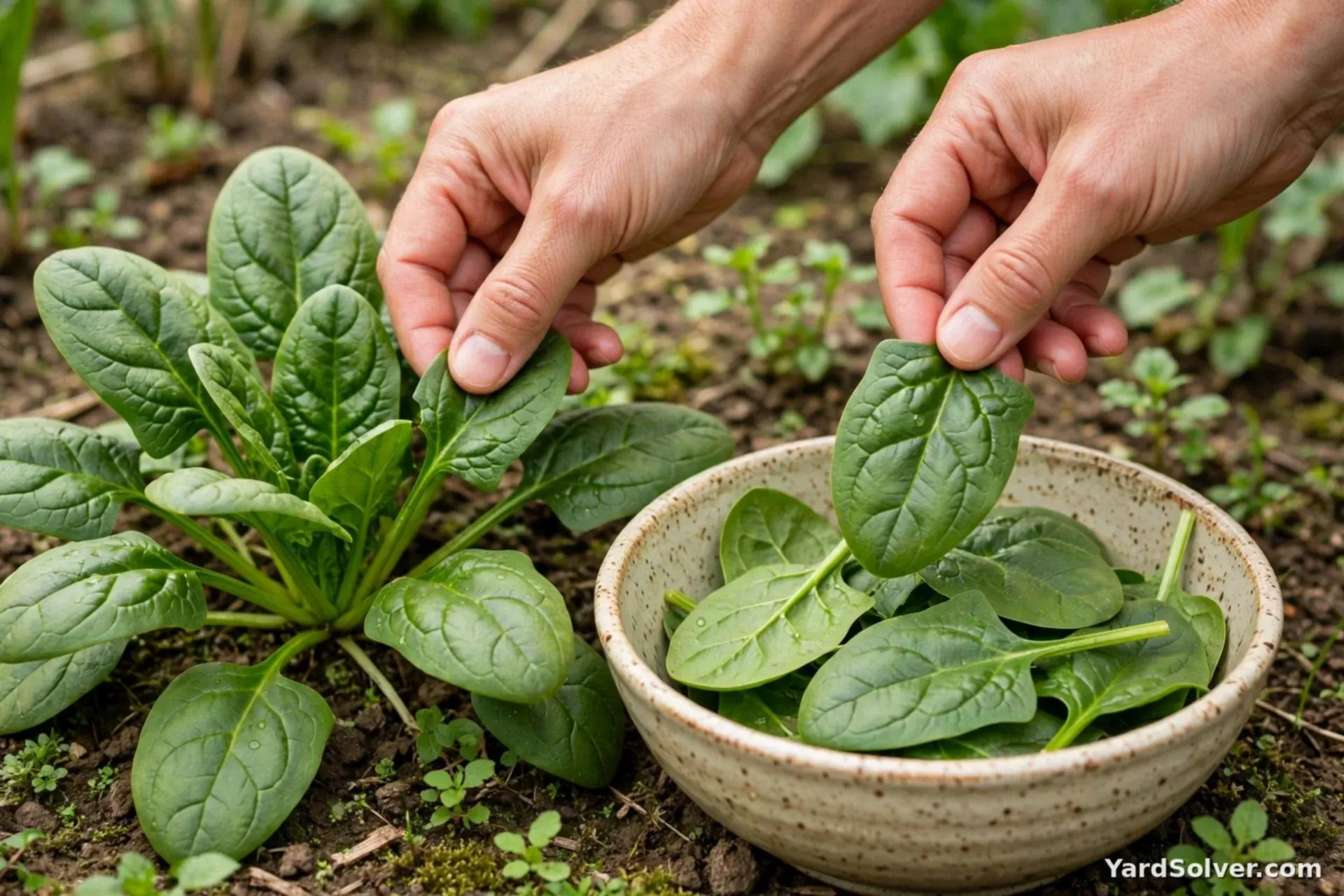
Ready in: 40–50 days. Harvest runs from about day 40 to 50 — pick outer leaves first, and harvest fast if hot weather threatens to bolt it. Cut-and-come-again picking roughly doubles the row's life: take outer leaves at 4 to 6 in and the centre keeps producing. Once the centre stretches upward, strip the whole plant that day — leaves turn bitter within days.
📅 Your personal Spinach schedule
Spinach is a race against long days, so this schedule counts from your sowing day to the picking window and the next succession sowing. Day 0 is the day the seed went in the ground.
Varieties worth growing
| Variety | Colour | Why gardeners like it |
|---|---|---|
| Bloomsdale Long Standing | Dark green | A classic savoy type with crinkly, thick leaves and rich flavour |
| Space | Green | A smooth-leaf hybrid that grows fast and resists bolting longer than most |
| Tyee | Dark green | A semi-savoy type that does well in both spring and fall |
| Giant Winter | Dark green | Bred for fall sowing and cold weather, with big hardy leaves |
Good for you — and take care
Benefits
- A natural source of iron, which the body needs for healthy blood
- Very high in vitamin K and vitamin A
- Provides folate and vitamin C
- Low in calories and provides fibre
- Contains lutein, a plant nutrient linked with normal eye health
Take care
- Spinach is high in oxalates, so people who are prone to kidney stones are often advised to limit it
- Some people taking blood-thinning medicine are told to keep leafy-greens intake steady because of the vitamin K
A little history — and one good fact
Spinach comes from Persia, in present-day Iran, and travelled east to China — where it was called the 'Persian vegetable' — and west into Europe in medieval times. It became a prized spring green because it grows fast in cool weather, when little else fresh is ready. Its fame grew even more in the 1900s thanks to a certain cartoon sailor.
Fun fact: Spinach is one of the fastest leafy greens — from seed to first picking in about 40 days in cool weather.
Keep going
Guides: When to Start Seeds Indoors · How to Prepare Garden Soil in Spring · How to Harden Off Seedlings
Calculators: Plant Spacing Calculator · Seed Calculator · Garden Mix Calculator
More vegetables: Tomato · Pepper · Cucumber · Amaranth
← Back to the Plant Library · Get your personal planting dates
A spinach succession plan that beats the bolt
You cannot stop spinach bolting, but you can schedule around it. Four sowings cover most gardens.
| Sowing | Picking window |
|---|---|
| Sowing 1 — 5 weeks before last frost | Picks from about week 6 to week 10 |
| Sowing 2 — 2 weeks later | Bridges the gap before long days end the spring crop |
| Fall sowing — 6 to 8 weeks before frost | The sweetest crop, maturing in cool weather |
| Plants per 10 ft row | 20 to 30 at the final 4 to 6 in spacing |
| Expected yield | Roughly 1/4 lb of leaves per plant, cut-and-come-again |
In zones 6 and warmer, the fall sowing often overwinters under cover for the earliest spring leaves.
Questions people ask
When do I plant spinach?
Count from your average last spring frost: sow outdoors 5 weeks before last frost. Spinach is a spring and fall crop: direct sow about 5 weeks before your last frost — summer heat makes it bolt and turn bitter, so give it part shade as days warm up.
How far apart do I space spinach?
Space plants 4–6 in apart, with seed sown 1/2 in deep. Sun: part shade in summer.
When is spinach ready to harvest?
40–50 days. Spring and fall crop; summer heat makes it bolt.
Why does my spinach always bolt before I pick much?
Bolting is triggered mainly by days lengthening past about 14 hours, with heat speeding it up, so a late spring sowing is programmed to flower. Sow earlier, choose slow-bolt varieties for spring, and make the main crop a late summer sowing for fall.
Can spinach grow through winter?
In zones 6 and warmer, a fall-sown crop often overwinters under straw or a low cover and gives the earliest spring leaves of the year. Established plants survive surprisingly hard frosts, especially hardy varieties such as Winter Bloomsdale and Giant Winter.
Spinach bolts at the first hint of summer: it is a spring-and-autumn crop pretending to be a summer one
Spinach (Spinacia oleracea) is a cool-season leaf that reads lengthening days and warmth as a signal to flower — once it bolts, the leaves turn bitter and the harvest ends within days. Successful spinach growing is therefore calendar work: sow from late winter for spring cuts and again from late summer for autumn and overwintered crops, choose bolt-resistant varieties for the longest days, and never expect a June sowing to behave.
The plant is hungry and thirsty for a leaf: rich soil, steady moisture and a nitrogen feed keep it growing fast enough to cut before it bolts, because a checked, dry plant bolts at half size. It is picked as a cut-and-come-again leaf or as whole plants from thinnings, and even a short row yields heavily in its brief season — freeze the surplus rather than fighting the calendar.
The worked example: a late-summer sowing kept watered typically cuts from autumn until hard frost. The same variety sown in late spring typically bolts before it is big enough to pick — with spinach, the season is the variety.
Sources
Key facts on this page — timing, spacing and care — cross-checked against NC State Extension Plant Toolbox — Spinacia oleracea — culture and care requirements and Spinach — Wikipedia — background on spinach and its cultivation.
Related page
Read next: Succession Planting Guide: Sow Little and Often.
Comments & ratings
No comments yet.
Be the first to share your experience.