
Guides · Seed starting · Published November 20, 2026 · By Faizan Ahmad
When to Start Seeds Indoors in Canada 2027: Dates by Province & Last Frost
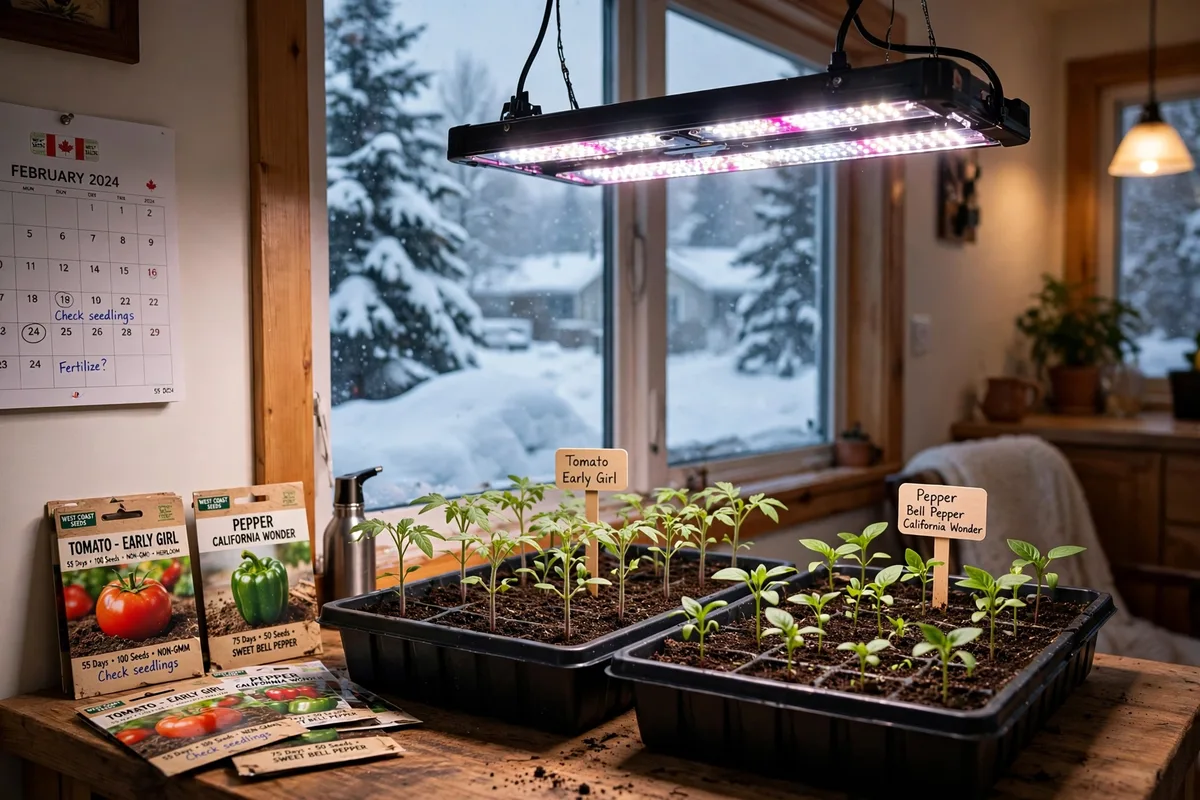
In Canada, you start seeds indoors by counting back from your own average last spring frost date — and that date runs from late March on the BC coast to the start of June in St. John's, so a single national calendar cannot work. The 2027 rule is the same everywhere: onions, leeks and celery go in 10–12 weeks before your last frost, peppers and eggplant 8–10 weeks before, tomatoes 6–8 weeks before, and cucumbers and squash just 3–4 weeks before — then tender crops move outside 1–2 weeks after the frost date, once nights stay above 10 °C. This guide turns that rule into real 2027 dates for the main Canadian growing regions, explains why Canadian dates differ from the American charts most seed packets are printed from, and walks through the hardening-off week that decides whether indoor seedlings thrive or stall. If you garden outside Canada, or you want the method without the Canadian dates, start with our general guide, When to Start Seeds Indoors: The Chart by Plant — this page is its Canada-specific 2027 companion, and the two are designed to be read together.
The short answer, on one card
- Find your last frost date first — every date below counts back from it. Averages by city: Vancouver late March, Toronto early May, Calgary late May, St. John's around June 1.
- 10–12 weeks before frost: onions, leeks, celery, celeriac.
- 8–10 weeks before: peppers, eggplant — the slowest germinators; a heat mat earns its keep here.
- 6–8 weeks before: tomatoes, broccoli, cabbage, cauliflower, kale, Brussels sprouts.
- 3–4 weeks before: cucumbers, squash, melons, zucchini — never earlier.
- Never in pots: beans, peas, corn, carrots and other roots — direct-sow them where they will grow.
- Transplant tender crops 1–2 weeks AFTER last frost, and only when nights hold above 10 °C. The frost date gets the seed started; the night temperature gets the plant outside.
Step 1 — Your last frost date is the whole calendar
Every indoor sowing date is a subtraction, and the number you subtract from is your town's average last spring frost — the date after which frost becomes unlikely, not impossible. Two cautions matter in Canada. First, the published date is an average (roughly a 50% probability point): in about half of years the last frost comes later, which is exactly why tender crops are transplanted a week or two after it rather than on it. Second, Canadian sources genuinely disagree by a week or more for the same city, because they use different weather stations and different climate-normal periods — Toronto appears as April 30 at one station and May 4 in another widely used table. Treat any single date as the centre of a window, not a promise, and check the station nearest your garden. Our Planting Calendar works from your own frost date and does the counting for every crop; the table below gives the regional anchors most Canadian gardeners plan around.
| Region (anchor city) | Average last spring frost* | Start peppers (8 wks before) | Start tomatoes (6 wks before) | Tender crops out (nights >10 °C) |
|---|---|---|---|---|
| BC Coast (Vancouver, Victoria) | Late March – mid-April | Late Jan – mid-Feb | Mid-Feb – early Mar | Late Apr – mid-May |
| BC Interior (Kelowna) | Around May 10 | Mid-March | Late March | Late May |
| Alberta (Calgary, Edmonton) | Late May (May 21–26) | Late Mar – mid-Apr | Mid – late Apr | Early – mid-June |
| Prairies (Regina, Saskatoon, Winnipeg) | Late May (May 20–24) | Late March | Mid-April | Early June |
| Southern Ontario (Toronto, Windsor) | Mid-Apr – early May | Early – late Mar | Late Mar – mid-Apr | Mid – late May |
| Eastern Ontario / Quebec (Ottawa, Montreal) | Late Apr – mid-May | Early – mid-Mar | Late Mar – early Apr | Late May |
| Atlantic (Halifax, Fredericton) | Early – mid-May | Mid-March | Late Mar – mid-Apr | Late May – early June |
| Newfoundland (St. John's) | Around June 1 | Early April | Mid – late April | Mid-June |
*Averages compiled from Environment and Climate Change Canada climate normals as summarised by the Canadian sources in the Sources list below. Stations a few kilometres apart can differ by a week; a frost pocket or a south-facing city lot can differ by more. Use the date for your nearest station, and treat it as an estimate, not a guarantee.
Read the spread honestly: a Vancouver gardener starts peppers around the end of January and a St. John's gardener starts the same peppers two months later, and both are right. This is also why the American seed-starting charts that dominate search results mislead Canadian readers — they are calibrated on US frost dates that run weeks earlier than most of Canada's, and following one in Calgary or Winnipeg is the classic route to a windowsill of leggy, root-bound plants waiting for a spring that has not arrived.
Step 2 — The lead times, crop by crop
The weeks-before-frost figures are not tradition; they are the crop's biology. Onions, leeks and celery (10–12 weeks) grow slowly from tiny seed and need a long indoor childhood to reach transplant size — they are always the first trays of the Canadian year, sown from late January on the coast to March on the Prairies. Peppers and eggplant (8–10 weeks) are slow to germinate and slower to size up; peppers in particular sulk if they are rushed out into cold soil, so their long indoor run is paired with the latest transplant date of any crop here. Tomatoes and the brassicas (6–8 weeks) are the main wave — vigorous enough to size up quickly, tender enough (tomatoes) or hardy enough (brassicas, which can go out 2–3 weeks before last frost) to need the count done properly. Cucurbits (3–4 weeks) grow so fast and resent root disturbance so much that an earlier start is a handicap, not a head start: sow them in individual pots, or skip the pots and direct-sow, which usually catches up within a fortnight. The chart below is the same count as a picture — screenshot it for the potting bench.
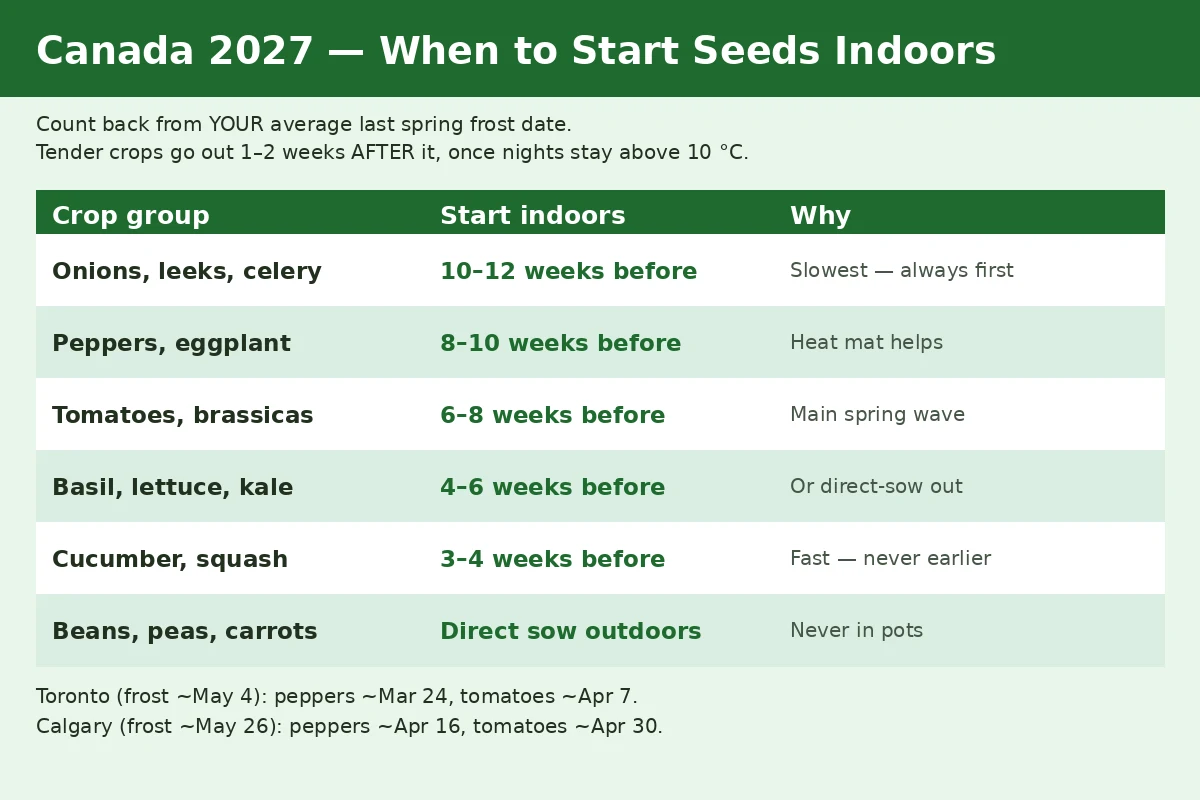
Two worked examples make the method concrete. Toronto (last frost around May 4): onions and leeks start in mid-to-late February, peppers around March 24, tomatoes around April 7, cucumbers in mid-April, and tender transplants go out from mid-May once nights warm. Calgary (last frost around May 26): the whole programme slides three weeks later — peppers around April 16, tomatoes around April 30 — and the season is short enough that variety choice matters as much as timing: pick tomatoes and squash bred for short seasons, because no sowing date can add frost-free days in October. Gardeners in the coldest regions should also read the January list in What Seeds to Start Indoors in January before assuming January sowing applies to them — in most of Canada, January is for the coast and for ordering seed, not for sowing it.
Step 3 — Light and warmth: the Canadian difference
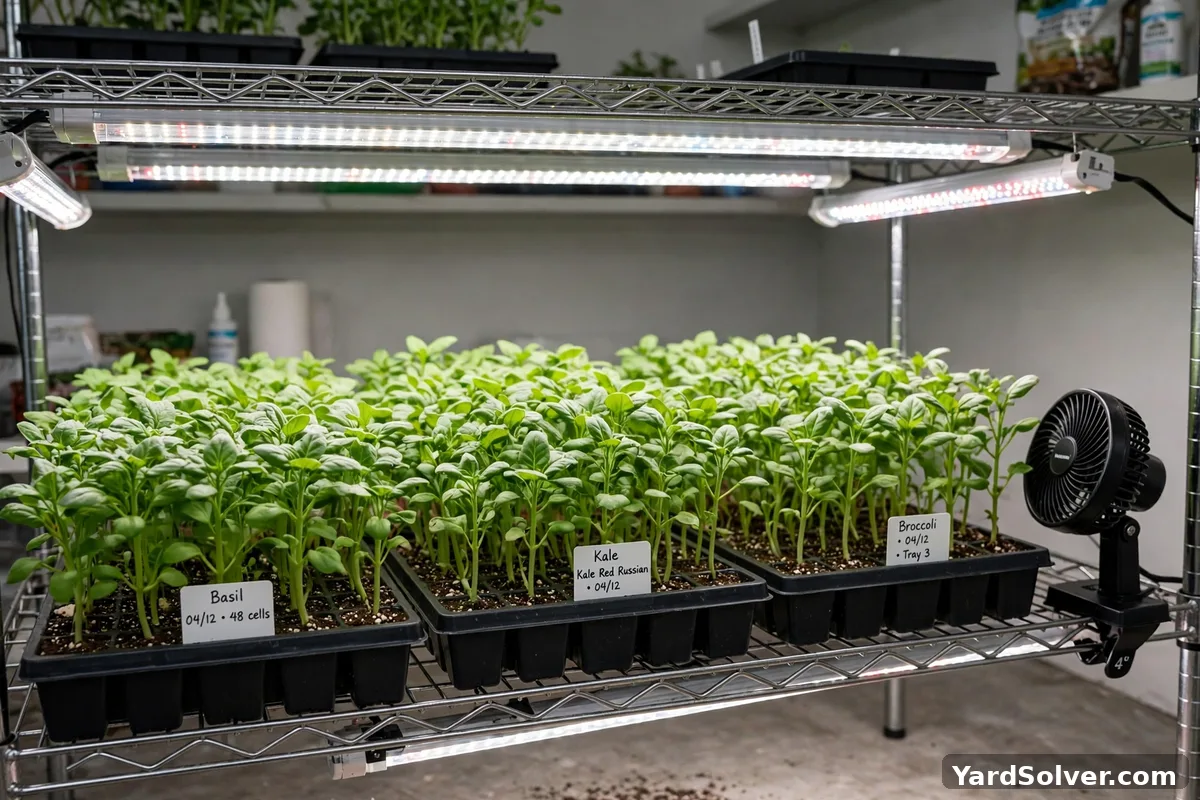
Starting early in Canada means starting in the darkest weeks of the year, and light — not the sowing date — is what decides whether the seedlings are stocky or stretched. A south window in February delivers a fraction of the light a seedling needs; the reliable setup is an LED or fluorescent light hung 5–10 cm above the leaves for 14–16 hours a day, raised as the plants grow, with a small fan moving air across the trays to strengthen stems. Our guide Grow Lights for Seedlings covers the fixtures and heights in detail. Warmth splits by crop: peppers, eggplant and tomatoes germinate fastest on gentle bottom heat (a heat mat holding the mix around 24–29 °C), while onions, leeks and the brassicas germinate happily at cool room temperature and grow better cool afterwards. The full temperature table is in Do Seedlings Need a Heat Mat? — the short version is that the mat comes off the day the crop sprouts, because warm, dim seedlings are the leggiest of all.
Step 4 — Hardening off: the week that decides the transplant
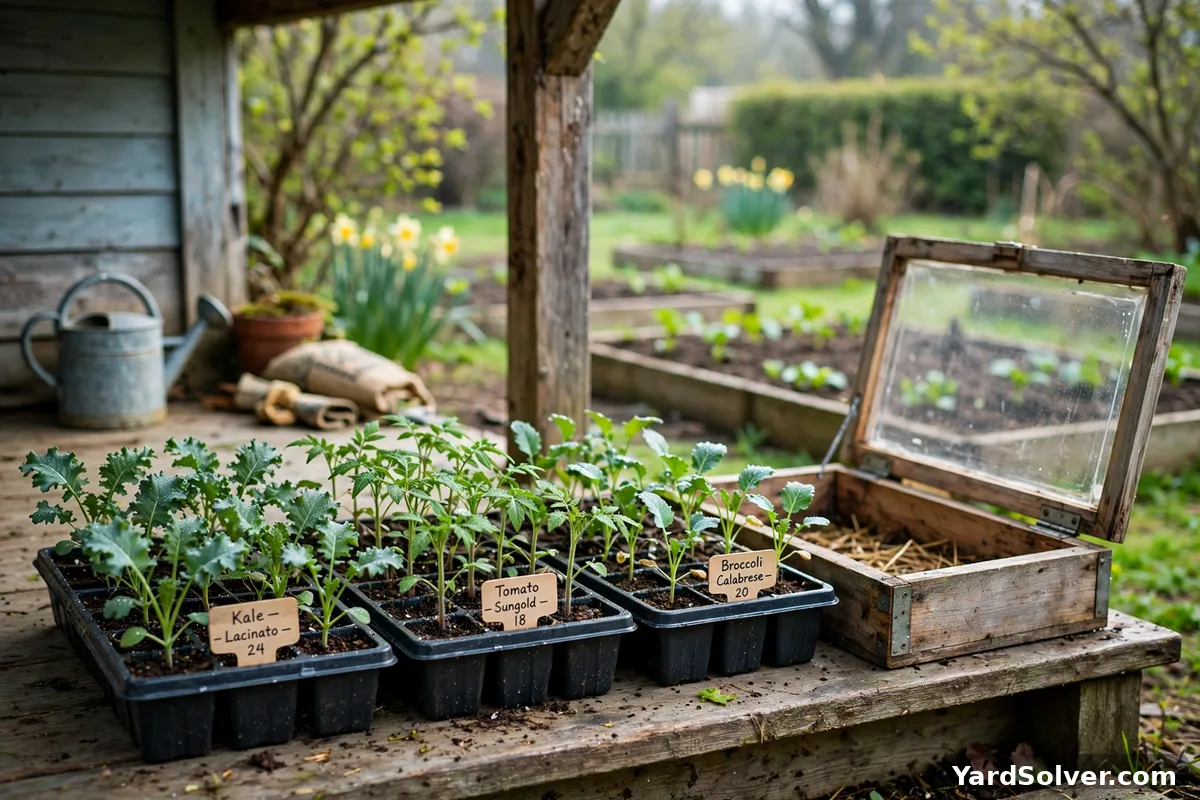
A seedling raised indoors has never met wind, direct sun or a cold night, and moving it straight to the bed is the single most common cause of the pale, stalled transplant that sits for two weeks doing nothing. Hardening off is the 7–10 day bridge: days 1–2, one to two hours in bright shade, sheltered from wind; days 3–5, morning sun building to half a day outside; days 6–8, full days out, brought in only if a frost threatens; final 2 days, nights outside too, so the plant meets the temperature it will be planted into. Water a little less as the week goes on, never let the trays bake dry, and if a Prairie cold snap or an Atlantic nor'easter interrupts the sequence, simply pause it — the calendar bends, the process does not break. The step-by-step version, including what to do when work or weather steals a day, is our dedicated guide to how to harden off seedlings. Transplant on a calm, cloudy late afternoon where you can, water the plants in well, and keep row cover or cloches ready for the first fortnight: in Canada, a late frost after transplanting is not bad luck, it is a normal year, and the gardeners who plan for it are the ones whose tomatoes never check.
The mistakes Canadian gardeners actually make
Following an American chart. US last-frost dates run weeks ahead of Canada's; the result is seedlings started a month too early, nursed leggy on a windowsill, and overtaken by on-time plants within weeks of transplanting. Counting to the frost date instead of past it. Peppers and tomatoes counted back from last frost but planted out on that date meet nights of 5 °C and simply stop growing — cold-stunted peppers can sulk for the whole season. Count the sowing from the frost date; count the transplanting from warm nights. Starting cucumbers and squash with the tomatoes. A six-week-old squash in a small pot is a worse plant than a two-week-old one; the cucurbits' 3–4 week limit is a ceiling, not a suggestion. Skipping hardening off because the forecast looks kind. Sun-scald and wind damage do not need frost — one bright, windy day does it. And sowing everything the same weekend: the staggered count exists so that each crop is the right size on its own day. Write the real date on each packet in marker the day it arrives, and the calendar runs itself.
Keep going
Put your own town's frost date into the Planting Calendar and it converts every lead time in this guide into your personal 2027 sowing list. For the month-by-month view of the whole Canadian season, read the companion Canada Vegetable Planting Calendar 2027.
The general method behind this page — and the version for gardeners outside Canada — is When to Start Seeds Indoors: The Chart by Plant. The earliest sowings are listed in What Seeds to Start Indoors in January, and the full indoor routine continues in the earliest seeds to start indoors.
Sources
Last-frost dates and city seed-starting dates cross-checked against GrowersGuide.ca — When to Start Seeds Indoors in Canada (city last-frost table built on Environment and Climate Change Canada climate normals; tomato and pepper starts counted back from the safer, 9-in-10 frost-free date) and The Home Almanac — When to Start Seeds Indoors (station-based last-frost dates and weeks-before-frost offsets by crop), with transplant and direct-sow windows checked against The Home Almanac — Frost and Planting Calendar. Where sources differ for the same city, this guide shows the range and says so — frost dates are station averages, and your nearest station is the one to trust.
Questions people ask
When should I start seeds indoors in Canada in 2027?
Count back from your average last spring frost: onions, leeks and celery 10–12 weeks before, peppers and eggplant 8–10 weeks, tomatoes and brassicas 6–8 weeks, cucumbers and squash 3–4 weeks. In real dates that means peppers start from late January on the BC coast to early April in Newfoundland, and tomatoes from mid-February to late April across the same spread.
What is the average last frost date in Canada?
There is no single Canadian date — that is the point of this guide. Averages run from late March in Vancouver and mid-April in Victoria, through early May in Toronto and Halifax and late April to mid-May in Ottawa and Montreal, to late May in Calgary, Edmonton, Winnipeg, Regina and Saskatoon, and around June 1 in St. John's. Your nearest weather station's date is the one to plan from.
When do tomatoes go outside in Canada?
One to two weeks after your last frost date, and only when night temperatures stay above about 10 °C — mid-to-late May in southern Ontario, late May in Ottawa, Montreal and Atlantic Canada, and early June on the Prairies. A tomato planted into cold nights stops growing and can take weeks to restart; a week of patience costs nothing.
Why are my seedlings leggy every spring?
Almost always light, not timing: a February windowsill in Canada delivers far too little light, so seedlings stretch toward it. Hang an LED light 5–10 cm above the leaves for 14–16 hours a day, run a small fan across the trays, and take heat mats off at germination. A later sowing under strong light beats an early sowing on a dim sill every year.
Can I follow the dates on the seed packet in Canada?
Follow the packet's weeks-before-frost figure, not any calendar date printed beside it — many packets sold in Canada are printed for US conditions. The weeks are the crop's biology and travel anywhere; the dates assume a frost date that may be a month earlier than yours.
How long does hardening off take?
Seven to ten days: shade and shelter first, then building sun, then full days, then nights outside. Skipping it risks sun-scald, wind damage and a two-week transplant stall; pausing it for a cold snap does no harm at all.
Comments & ratings
No comments yet.
Be the first to share your experience.