
Plant Library · Field Crops · By Faizan Ahmad
🌼 How to Grow Canola
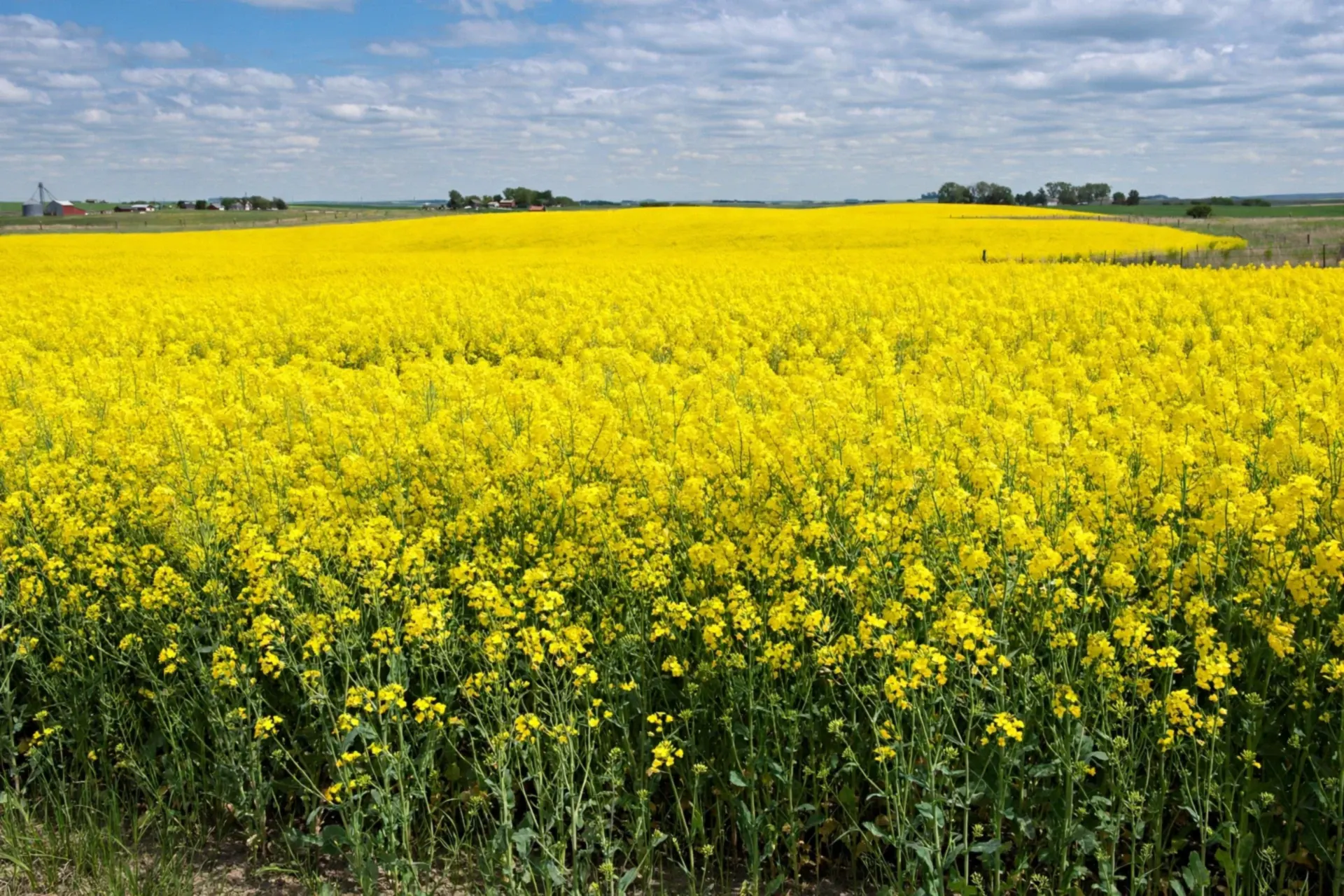
A field crop and a prairie staple: seeded shallow in spring once fields can be worked. Regional farm guidance sets the dates, not the garden frost calendar. Canola is a prairie field crop, not a garden plant: it is seeded shallow in spring once fields can be worked, and harvested in about 80 to 110 days when the seeds change colour inside the pods.
Grow Canola with us — step by step
Everything for this plant is written step by step below — what to do, and exactly when. Read it through first if you like: you can grow it entirely on your own with that guide. Or start with us here — tell us your planting day and we lay out your personal schedule on this page, every next step on its own day, counted from your planting date. No guessing, no forgetting.
Step 1 — today: Canola follows regional farm guidance — today's step is to confirm your regional seeding window and rate before drilling.
Canola at a glance
Spacing: Rows 7–12 in · Seed depth: 1/2–1 in
Sun: Full sun
Water: Rainfall in most regions; most needed at flowering
Harvest: About 80–110 days (field harvest at seed colour change)
Timing counts from your average last spring frost — get your own dates in the Planting Calendar. Guidance follows standard extension-service practice for Canada and the US.
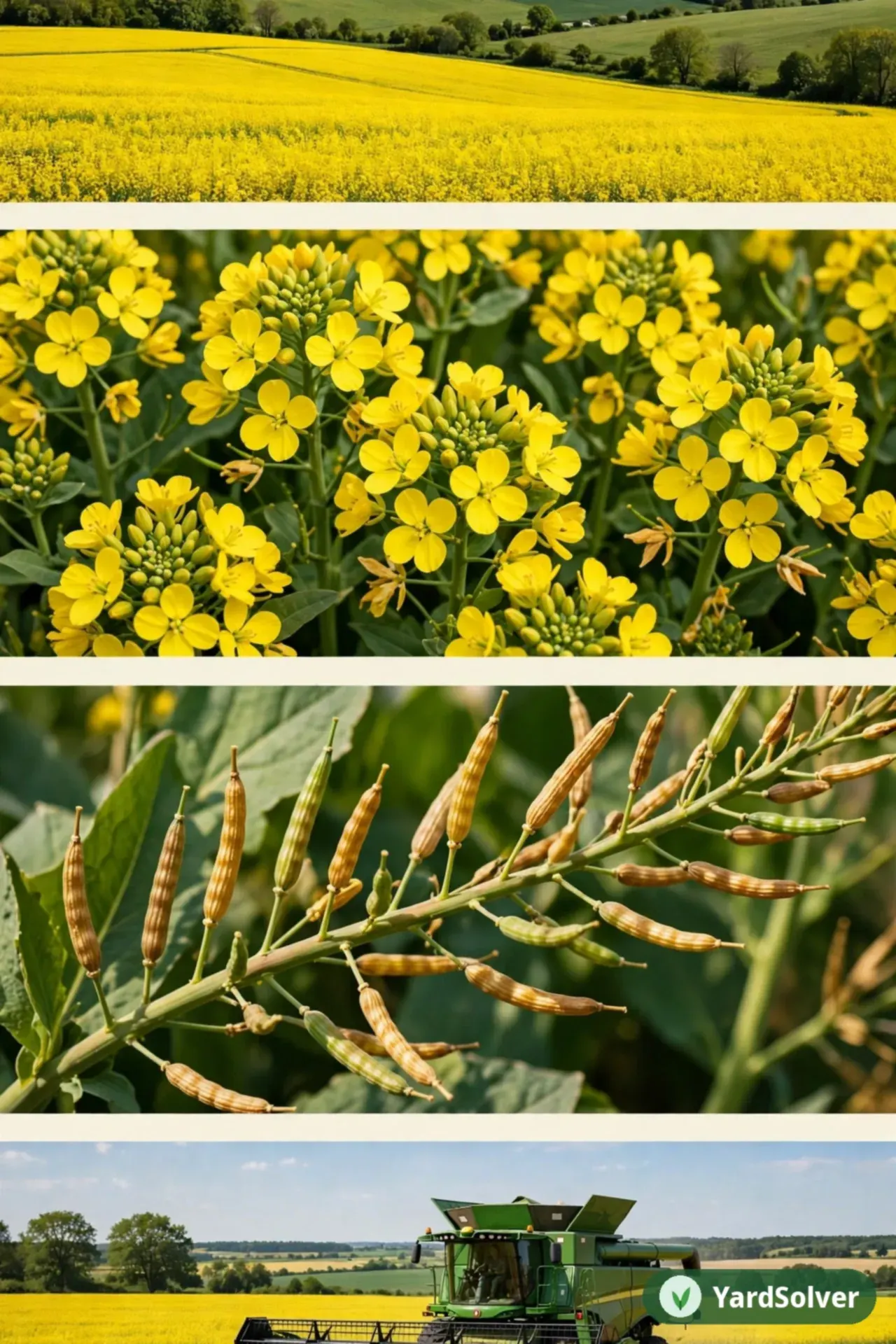
How to plant and grow canola, step by step
Step 1 — Timing follows your region
Canola is a prairie field crop, not a garden plant: it is seeded shallow in spring once fields can be worked, and harvested in about 80 to 110 days when the seeds change colour inside the pods. A field crop and a prairie staple: seeded shallow in spring once fields can be worked. Regional farm guidance sets the dates, not the garden frost calendar.
Step 2 — Field preparation
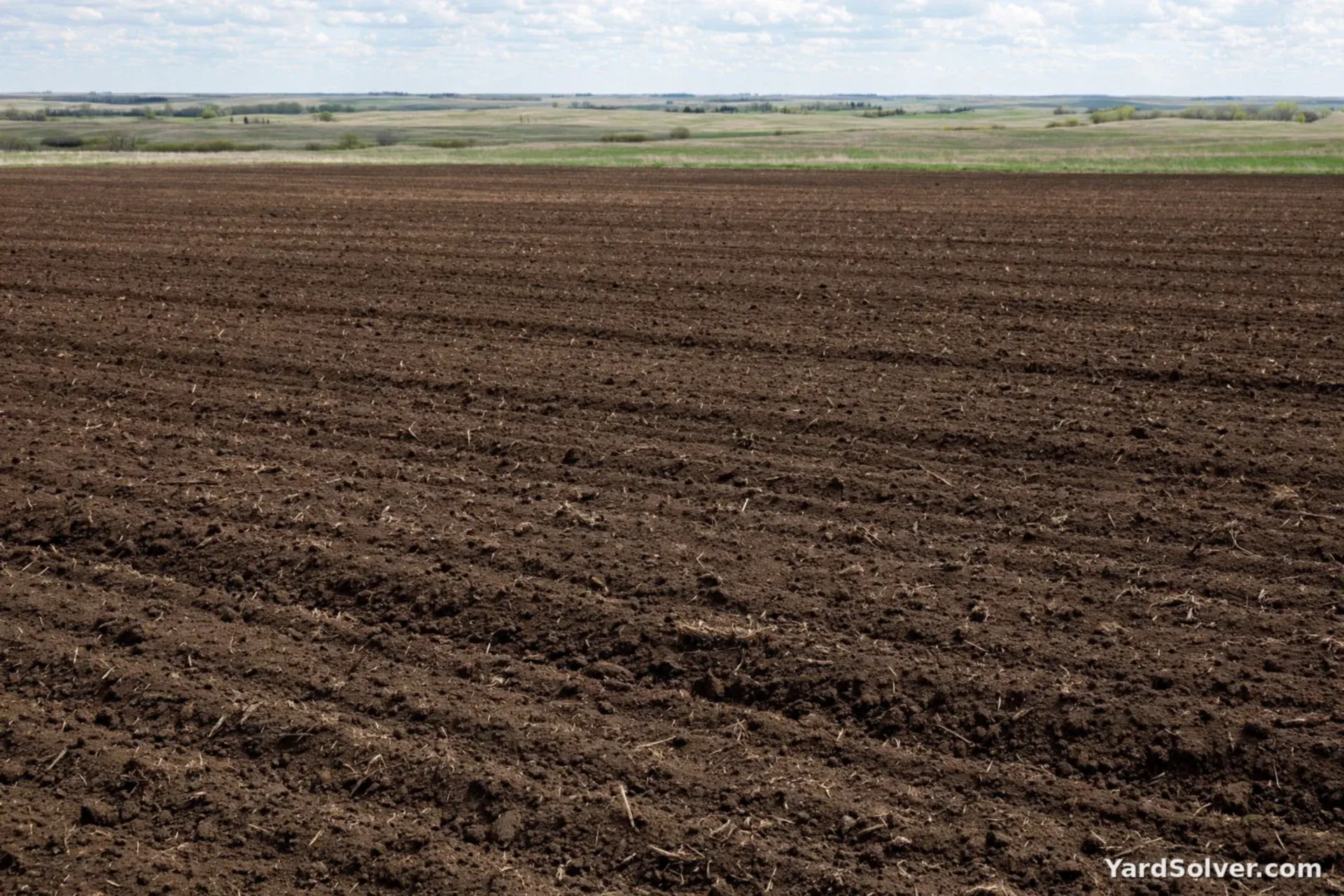
Field crops are drilled at farm scale; soil preparation follows regional farm guidance rather than a garden bed routine.
Step 3 — Seeding
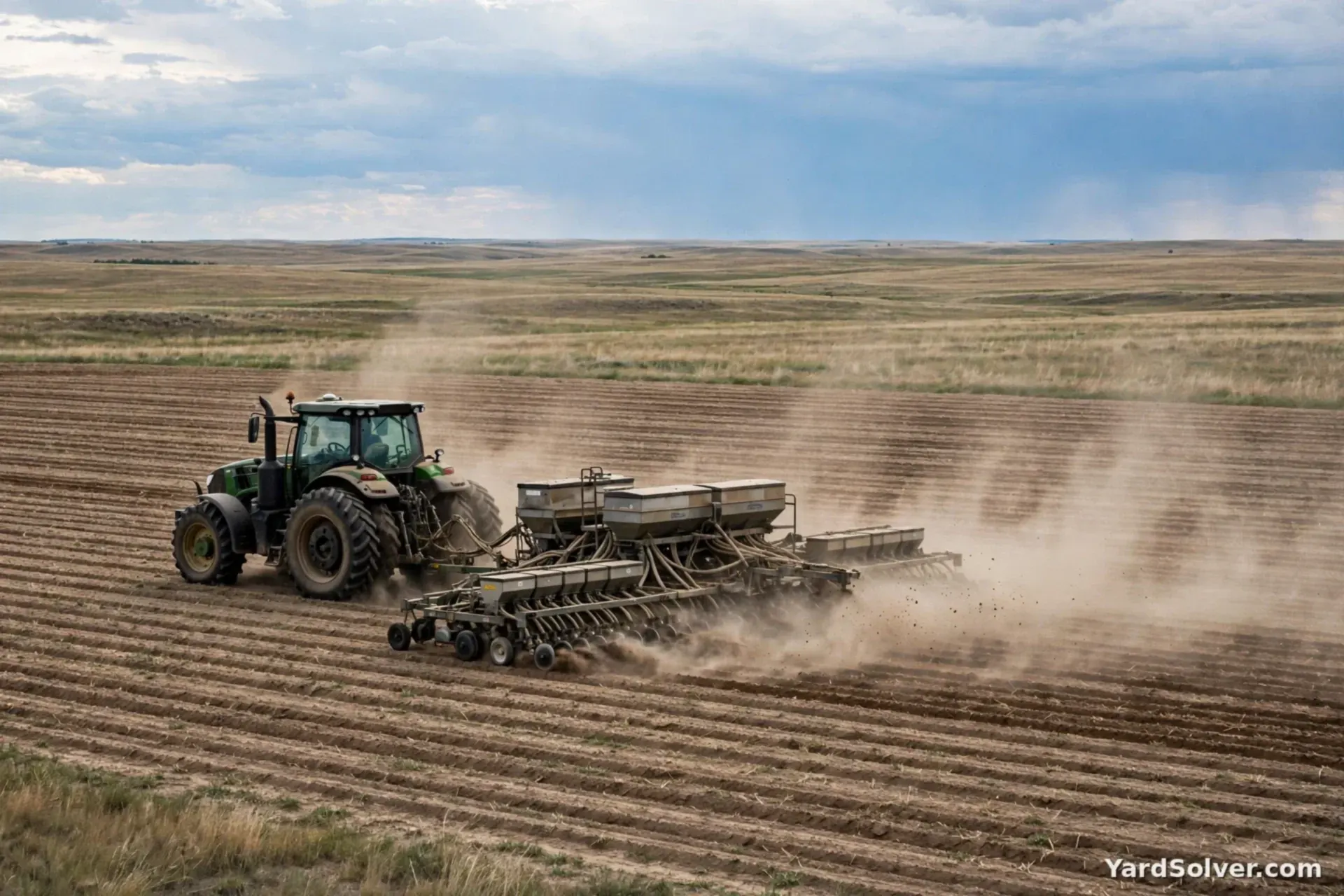
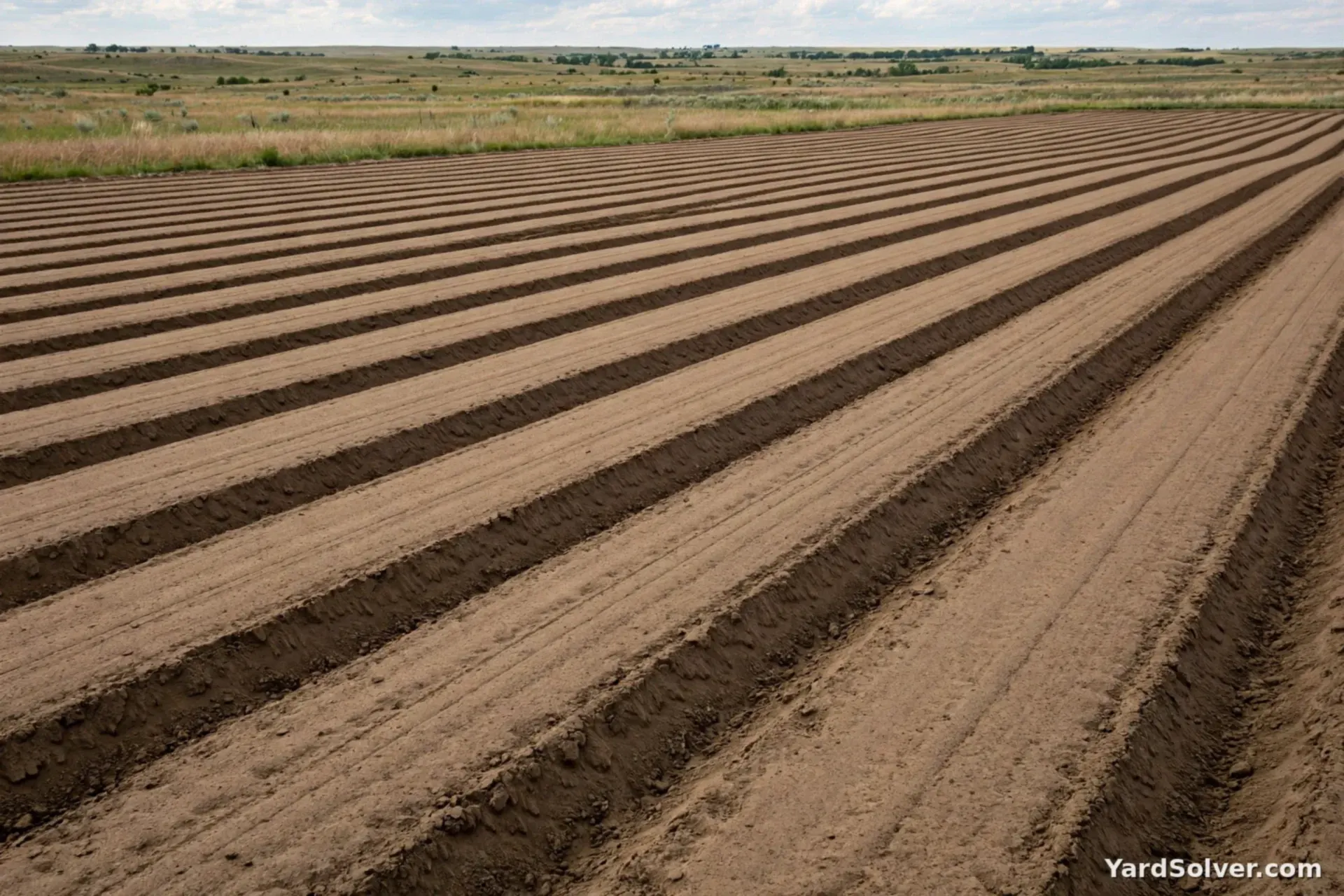
At garden scale the library figures still describe the plant: seed about 1/2–1 in deep, rows spaced for machinery. Drilled across the field, canola follows the regional seeding-rate guidance for your soil and season.
Step 4 — Watch for the usual problems
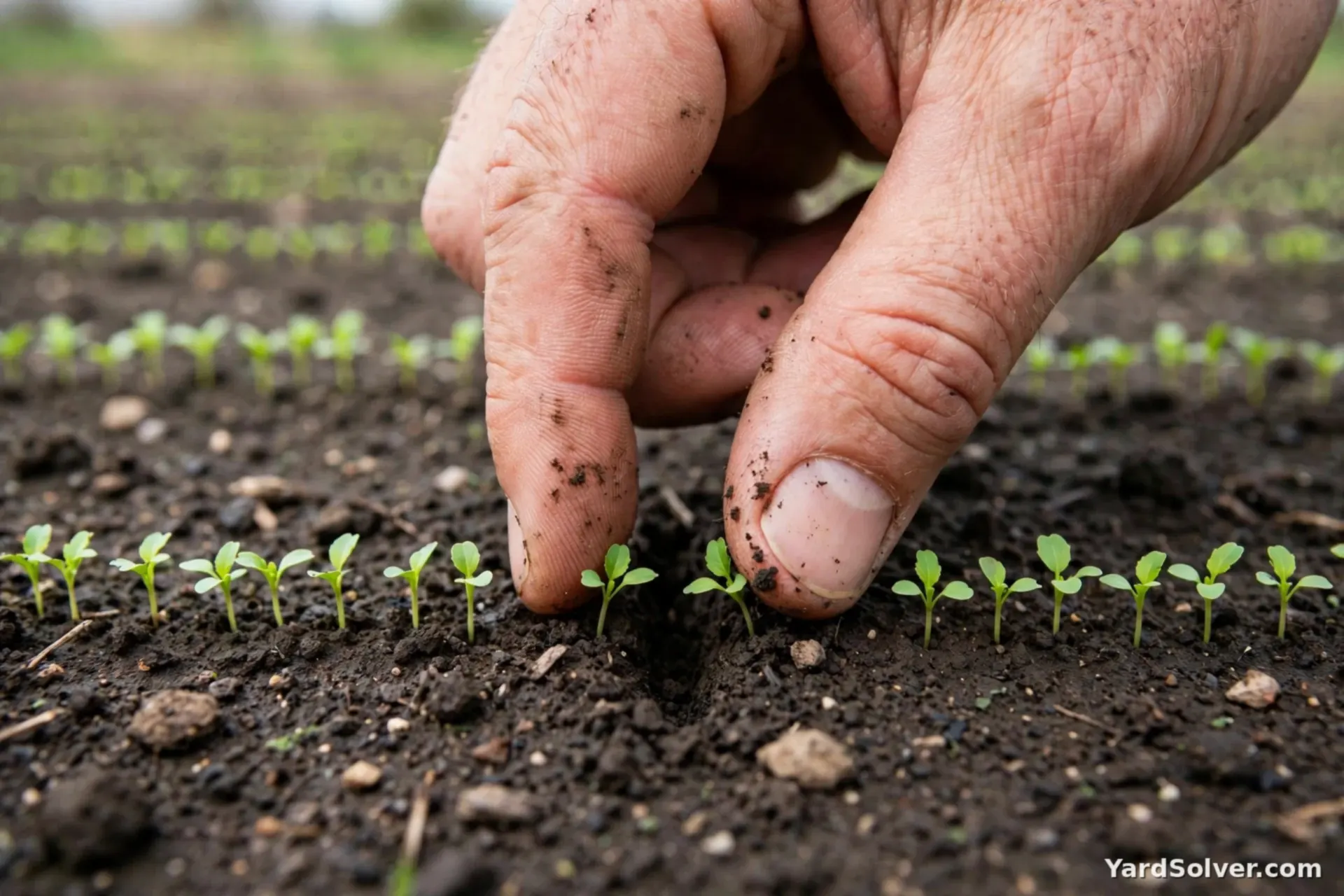
- Flea beetles on seedlings — the main early pest; regional guidance covers thresholds.
- Clubroot — a soil disease managed by rotation and resistant varieties.
- Sclerotinia stem rot in wet flowering weather — regional farm guidance applies.
Step 5 — Harvest
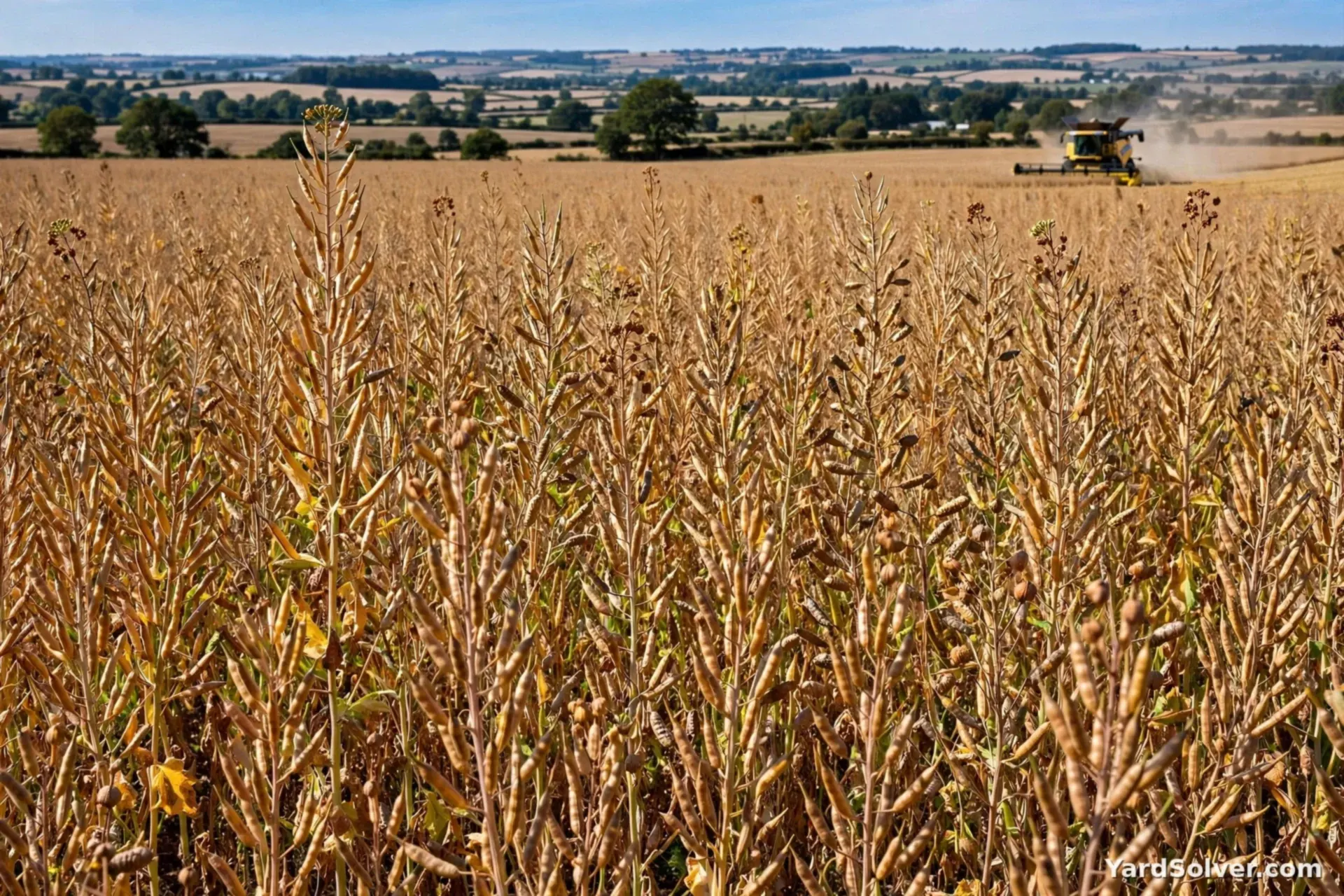
Typical harvest runs About 80–110 days (field harvest at seed colour change) under good conditions, judged at field scale by regional extension guidance rather than a single garden date.
📅 Your personal Canola schedule
This plant runs on rhythm and season rather than a day count — here is the honest version of its schedule.
Varieties worth growing
| Variety | Colour | Why gardeners like it |
|---|---|---|
| Argentine Canola (Brassica napus) | Bright yellow flowers | The main type grown on the prairies — higher yielding and later maturing |
| Polish Canola (Brassica rapa) | Pale yellow flowers | An earlier-maturing type suited to shorter-season northern fields |
| InVigor Hybrids | Bright yellow flowers | Popular hybrid seed lines bred for strong, fast early growth |
| Clearfield Canola | Bright yellow flowers | Bred to tolerate specific herbicides, so fields stay cleaner with fewer passes |
Good for you — and take care
Benefits
- Its seeds are crushed for canola oil, a cooking oil that is low in saturated fat compared with many others
- Canola oil provides vitamin E and vitamin K
- A blooming canola field feeds bees and other pollinators on a huge scale
- The protein-rich meal left after pressing the seeds becomes feed for farm animals
Take care
- Canola is a farm-scale field crop grown over whole prairie fields — it is not planted in home gardens
- Its planting and harvest dates follow regional farm guidance, not a home-garden frost calendar
A little history — and one good fact
Canola was bred in Canada in the 1970s from older rapeseed, by prairie scientists Keith Downey and Baldur Stefansson, who bred out the bitter and less healthy parts to create a mild, useful oilseed. Its name says it proudly: 'Can' for Canada, plus 'ola' for oil. The sea of yellow canola bloom each summer is now a signature of the Canadian prairies.
Fun fact: Canola is a Canadian invention — the name combines 'Canada' and 'ola' for oil, honouring the prairie scientists who bred it in the 1970s.
Keep going
Guides: When to Start Seeds Indoors · How to Prepare Garden Soil in Spring · How to Harden Off Seedlings
Calculators: Seed Calculator
More field crops: Wheat · Soybean
← Back to the Plant Library · Get your personal planting dates
Questions people ask
When is canola planted?
Canola is a prairie field crop, not a garden plant: it is seeded shallow in spring once fields can be worked, and harvested in about 80 to 110 days when the seeds change colour inside the pods.
Why is there no day-by-day schedule for canola?
Canola is a prairie field crop seeded shallow in spring — its timing comes from regional farm guidance and field conditions, not a home-garden calendar, so it sits outside the reminder system.
How deep is canola seeded?
About 1/2–1 in at garden scale; at field scale, follow your regional seeding guidance for depth and rate.
A cool-season oilseed that lives or dies at seeding depth: canola seed is tiny, and it must go in shallow and even
Canola — the oilseed bred from rapeseed, its name a contraction of 'Canada' and 'ola' for oil — is a cool-season brassica grown at field scale for its oil-rich seed, and trialled by curious smallholders for the same reason. Its seed is very small, and that single fact runs the crop: seed placed deeper than about 2 cm exhausts its reserves before the seedling reaches light, so depth control and a fine, firm seedbed matter more than any later care. Sow into moisture, roll or firm the surface, and the crop emerges fast and covers ground early, which is also its main weed defence.
From there canola asks for what its cabbage cousins ask for: steady nutrition — it is notably hungry for sulphur, without which yield and oil content fall — and a watch for the shared brassica pests, flea beetles at emergence above all, since a checked seedling stand rarely catches up. It flowers in a famous sheet of yellow for several weeks, a genuine pollinator resource, then ripens unevenly; the harvest judgement is pod colour, cutting or swathing when most pods have turned and the seed inside has darkened, before the earliest pods shatter. In a rotation it must sit years away from other brassicas on the same ground to keep clubroot and sclerotinia pressure down.
The worked example: a stand sown shallow into a firm, moist seedbed with flea beetles watched at emergence commonly establishes evenly and yields a full pod set. The identical seed drilled deep into a loose, dry bed typically emerges in patches the weeds take first. With canola, the crop is decided in the first centimetre of soil.
Sources
Key facts on this page — timing, spacing and care — cross-checked against Canola — Wikipedia — background on the crop's origin, oilseed use and cultivation.
Related page
Read next: Crop Rotation Basics: A Simple Four-Year Plan.
Comments & ratings
No comments yet.
Be the first to share your experience.