
Plant Library · Field Crops · By Faizan Ahmad
🫘 How to Grow Soybean
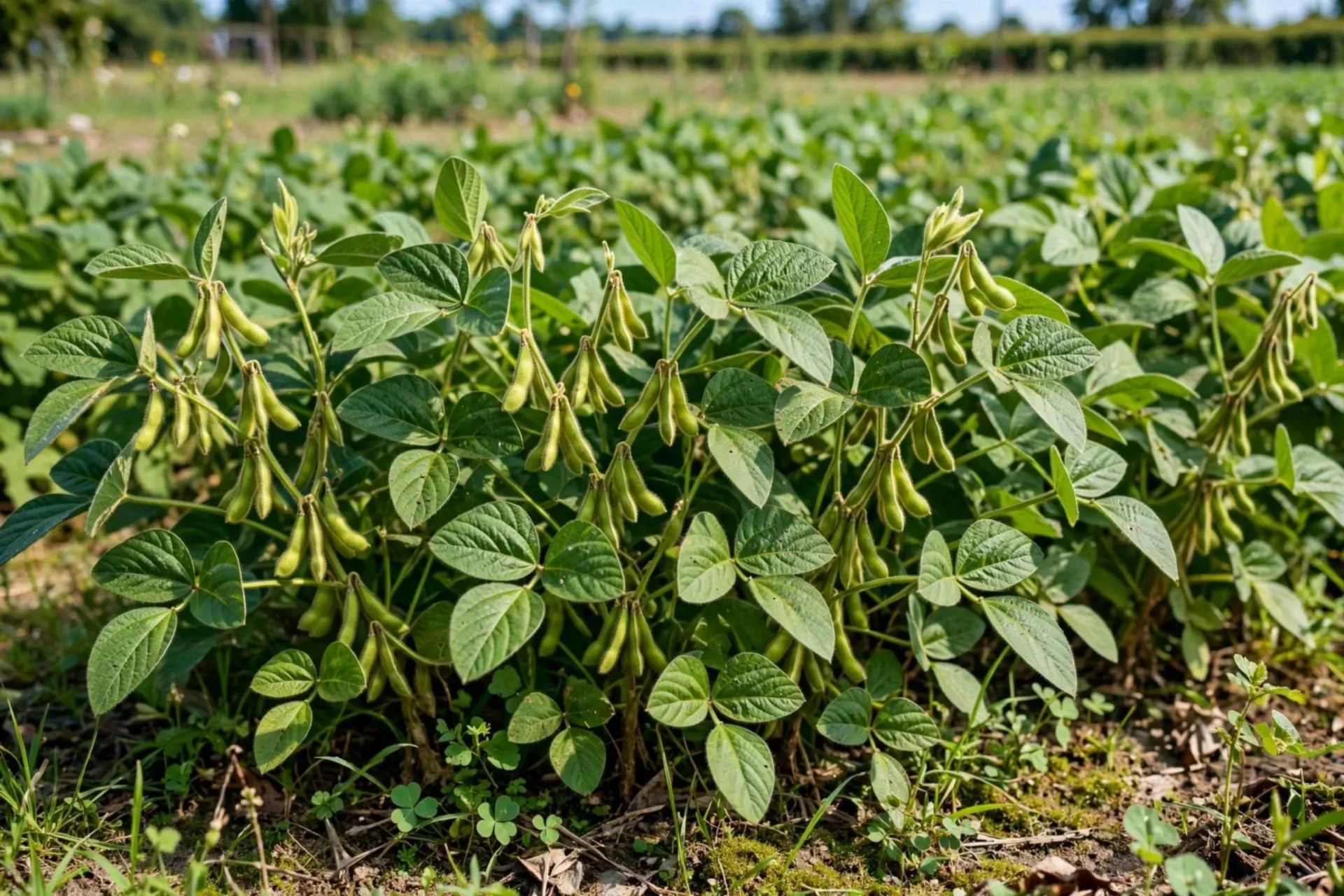
A field crop: drilled after the soil warms in late spring — it is frost-tender. Planting dates are regional, so it sits outside the home-garden frost calendar. Soybean is a frost-tender field crop: it is drilled in late spring once the soil has warmed, and harvested in about 90 to 130 days when the pods are dry — or picked green and earlier for edamame.
Grow Soybean with us — step by step
Everything for this plant is written step by step below — what to do, and exactly when. Read it through first if you like: you can grow it entirely on your own with that guide. Or start with us here — tell us your planting day and we lay out your personal schedule on this page, every next step on its own day, counted from your planting date. No guessing, no forgetting.
Step 1 — today: Start your Soybean today — sow 1–1 1/2 in deep, spaced Rows 15–30 in apart — and water in well.
Soybean at a glance
Spacing: Rows 15–30 in · Seed depth: 1–1 1/2 in
Sun: Full sun
Water: Rainfall in most regions; most needed at flowering and pod fill
Harvest: About 90–130 days (field harvest when pods are dry)
Timing counts from your average last spring frost — get your own dates in the Planting Calendar. Guidance follows standard extension-service practice for Canada and the US.
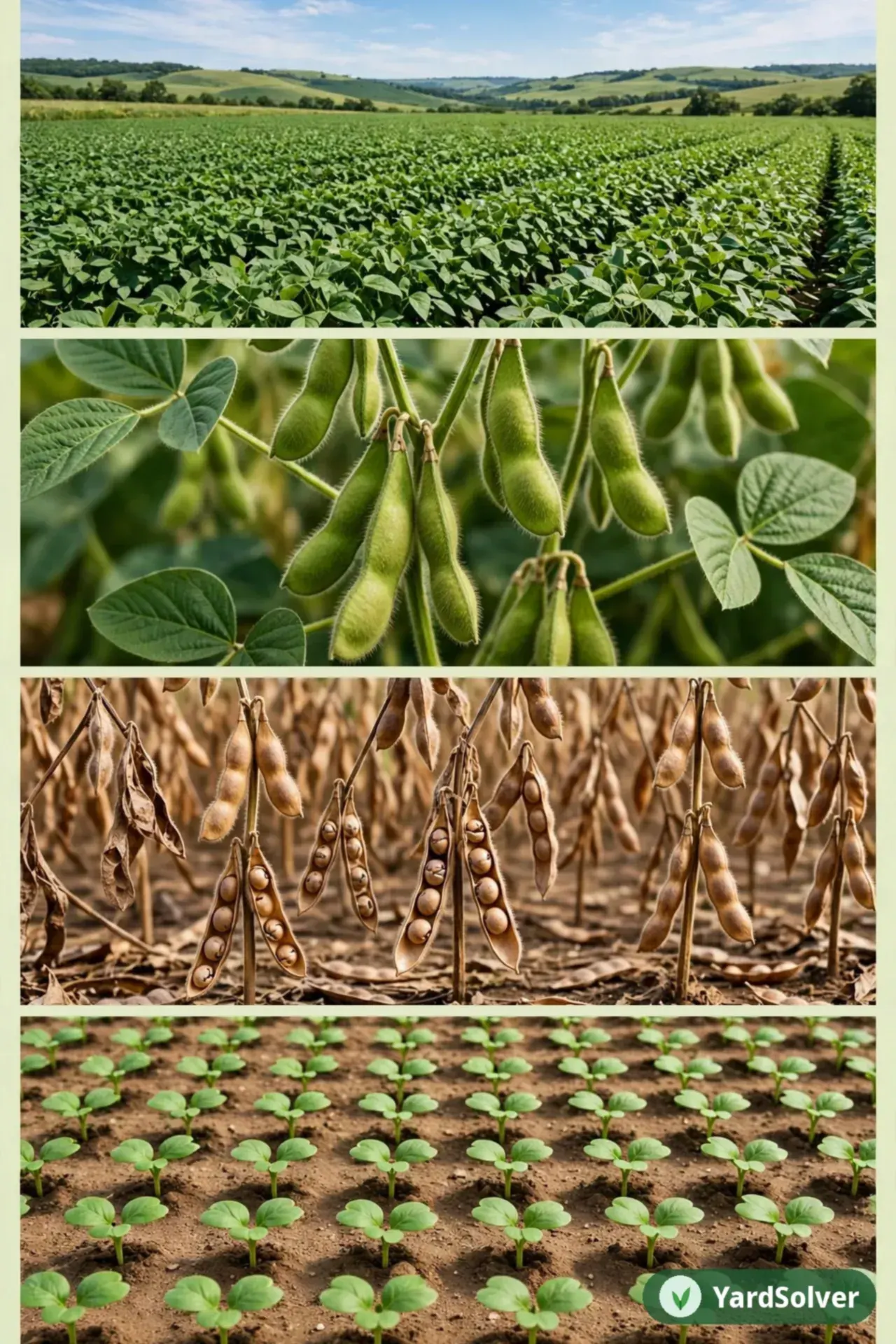
How to plant and grow soybean, step by step
Step 1 — Time it right
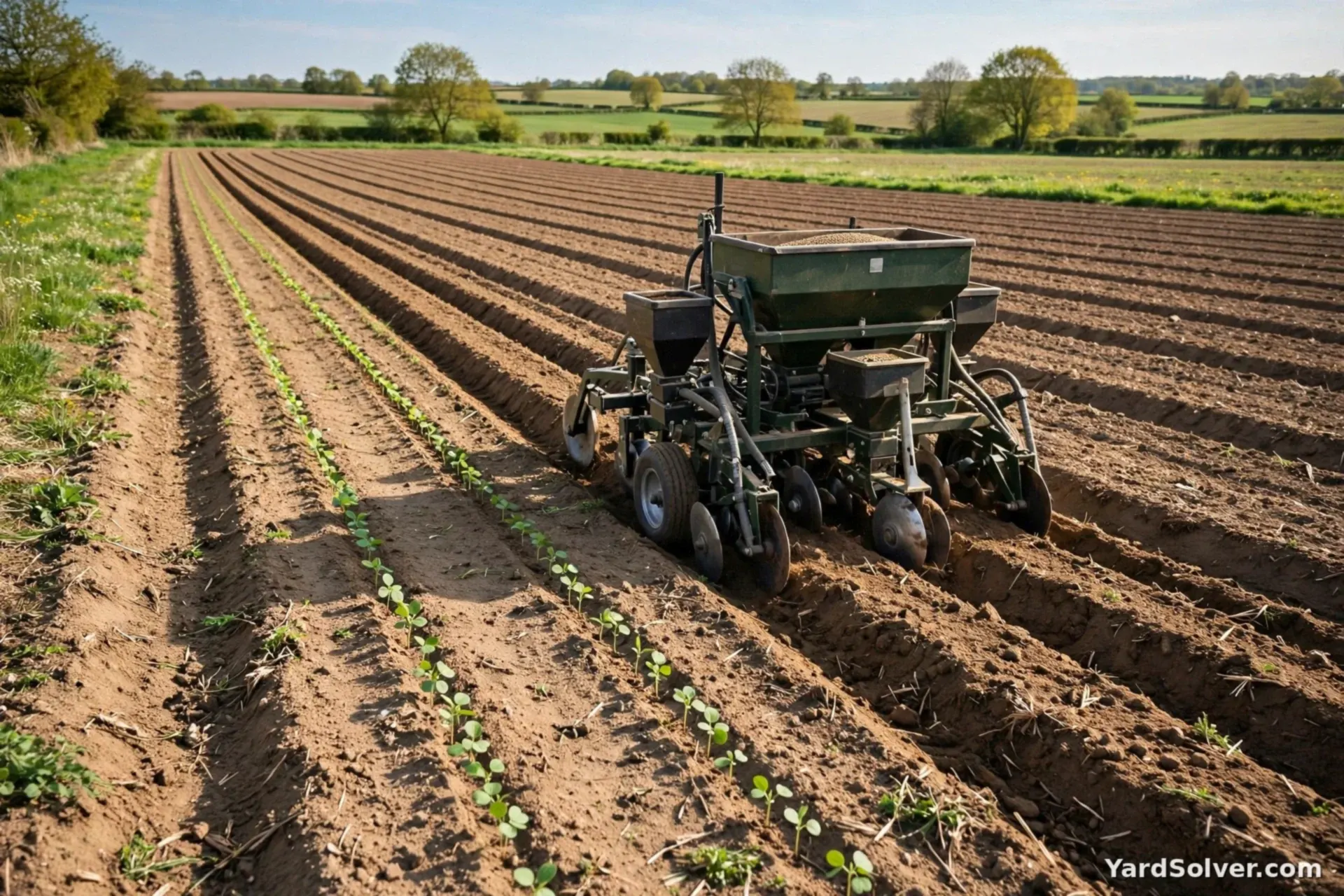
. All dates count from your average last spring frost — the Planting Calendar turns them into real dates for your garden. Soybean is a frost-tender field crop: it is drilled in late spring once the soil has warmed, and harvested in about 90 to 130 days when the pods are dry — or picked green and earlier for edamame.
Step 2 — Prepare the spot
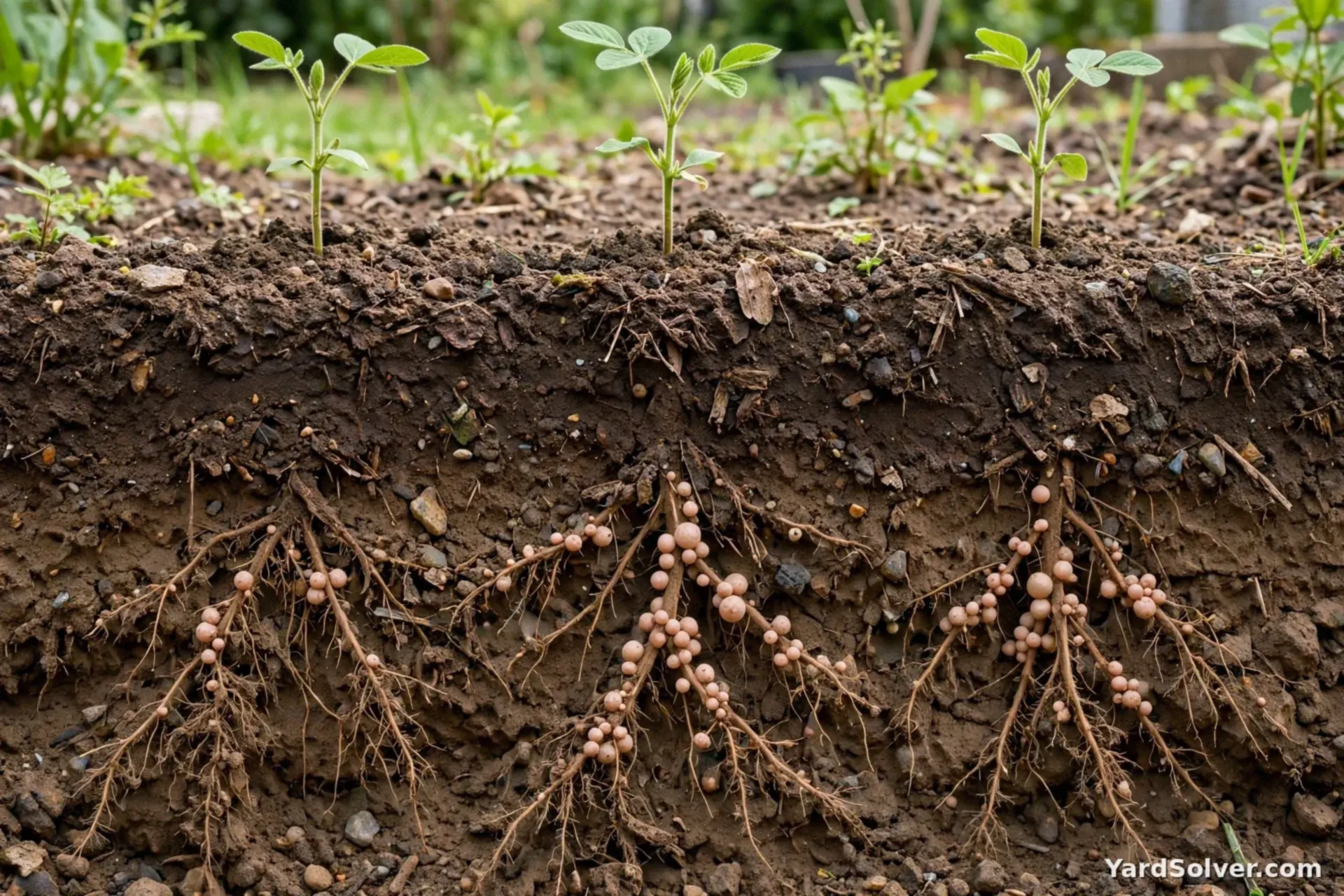
Sun: Full sun. Average soil is genuinely fine — beans and peas make much of their own nitrogen with their roots. Too much fertilizer grows leaves instead of pods. Work out how much you need with the Garden Mix Calculator or the Raised Bed Soil Calculator.
Step 3 — Plant out
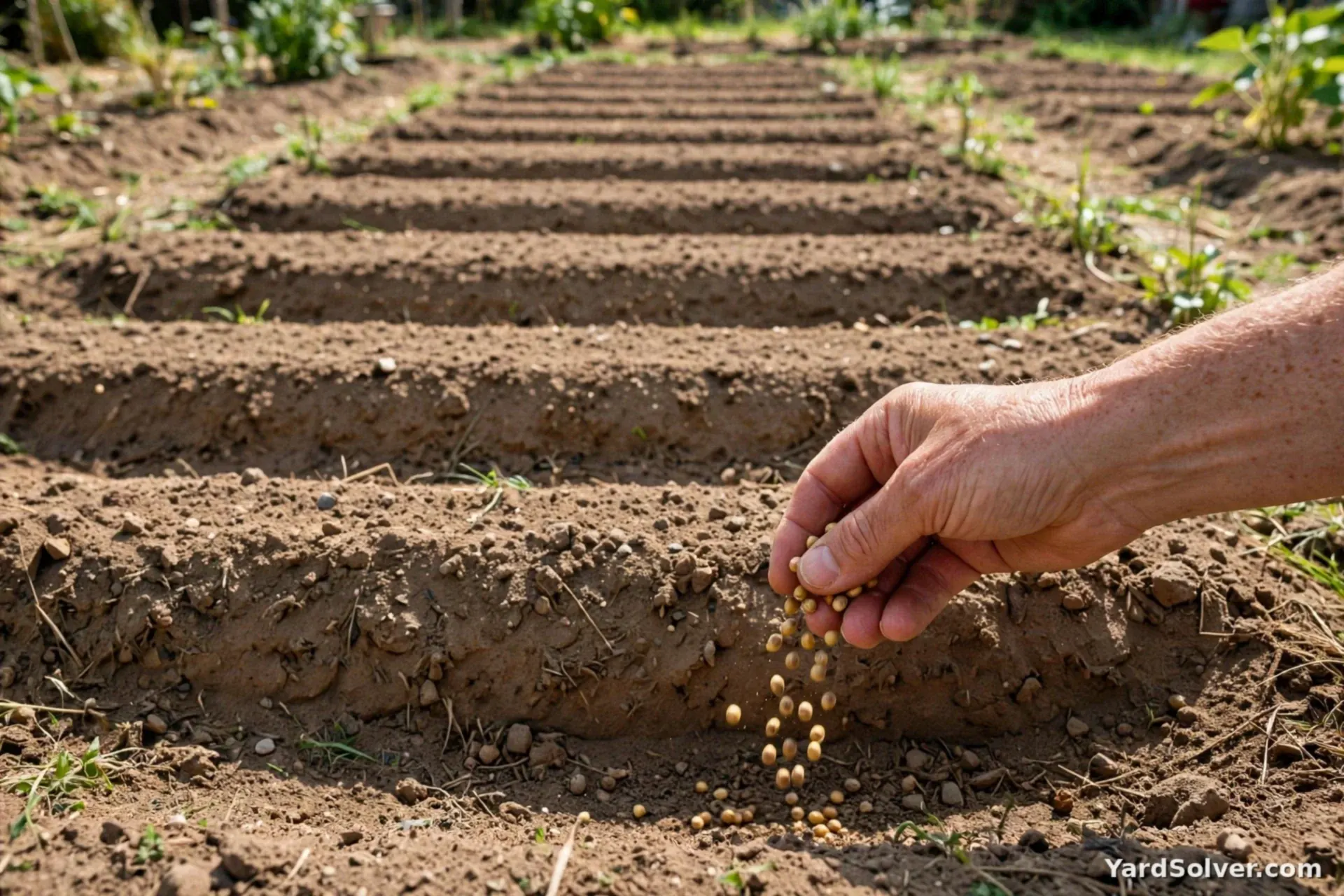
Start indoors None at 1–1 1/2 in deep, or sow outdoors None; plants finish spaced Rows 15–30 in apart. Harden off indoor-started plants before they move out for good.
Step 4 — Water and feed
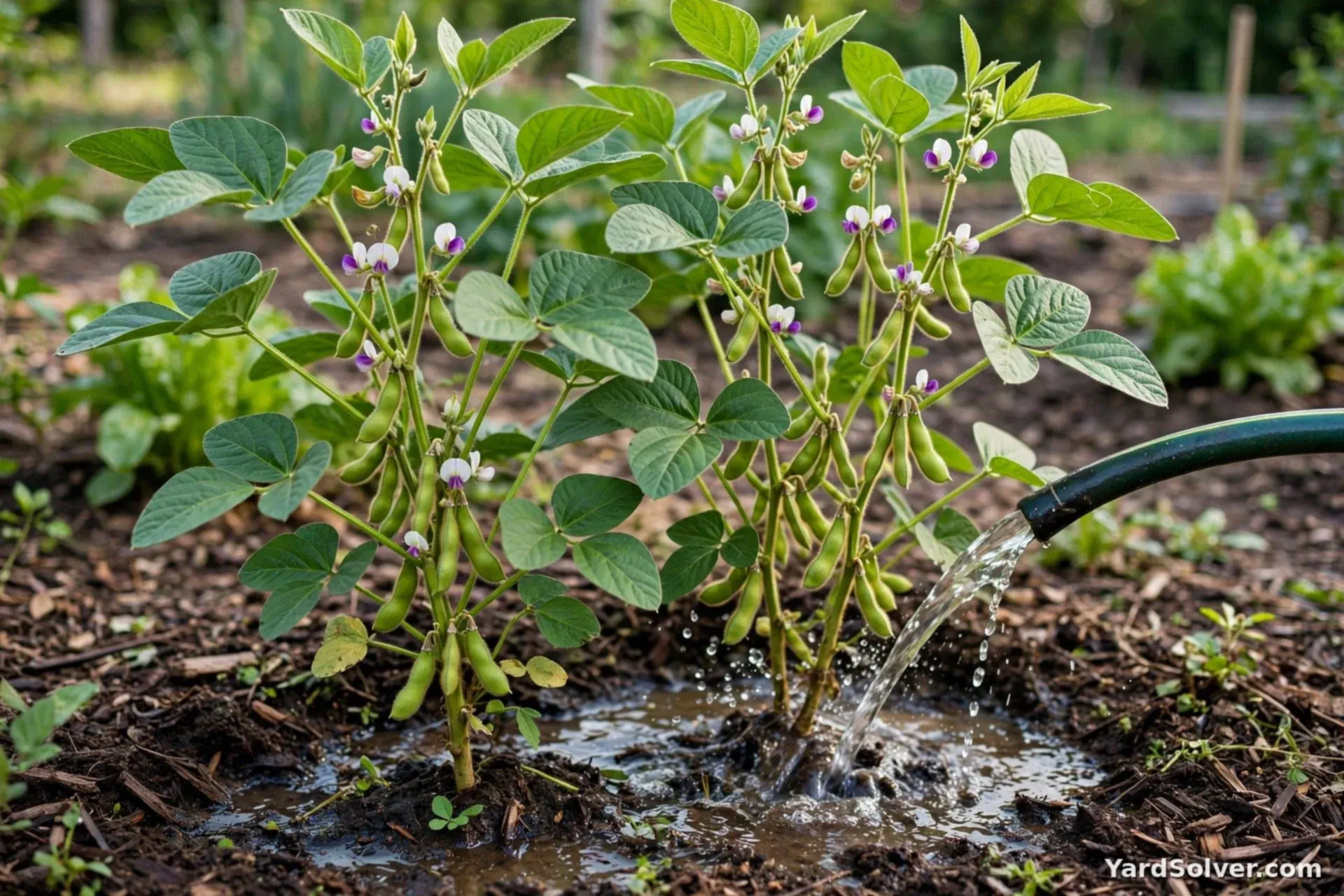
Water: Rainfall in most regions; most needed at flowering and pod fill. The Fertilizer Calculator turns a bed size into the right amount.
Step 5 — Care and the problems to watch for
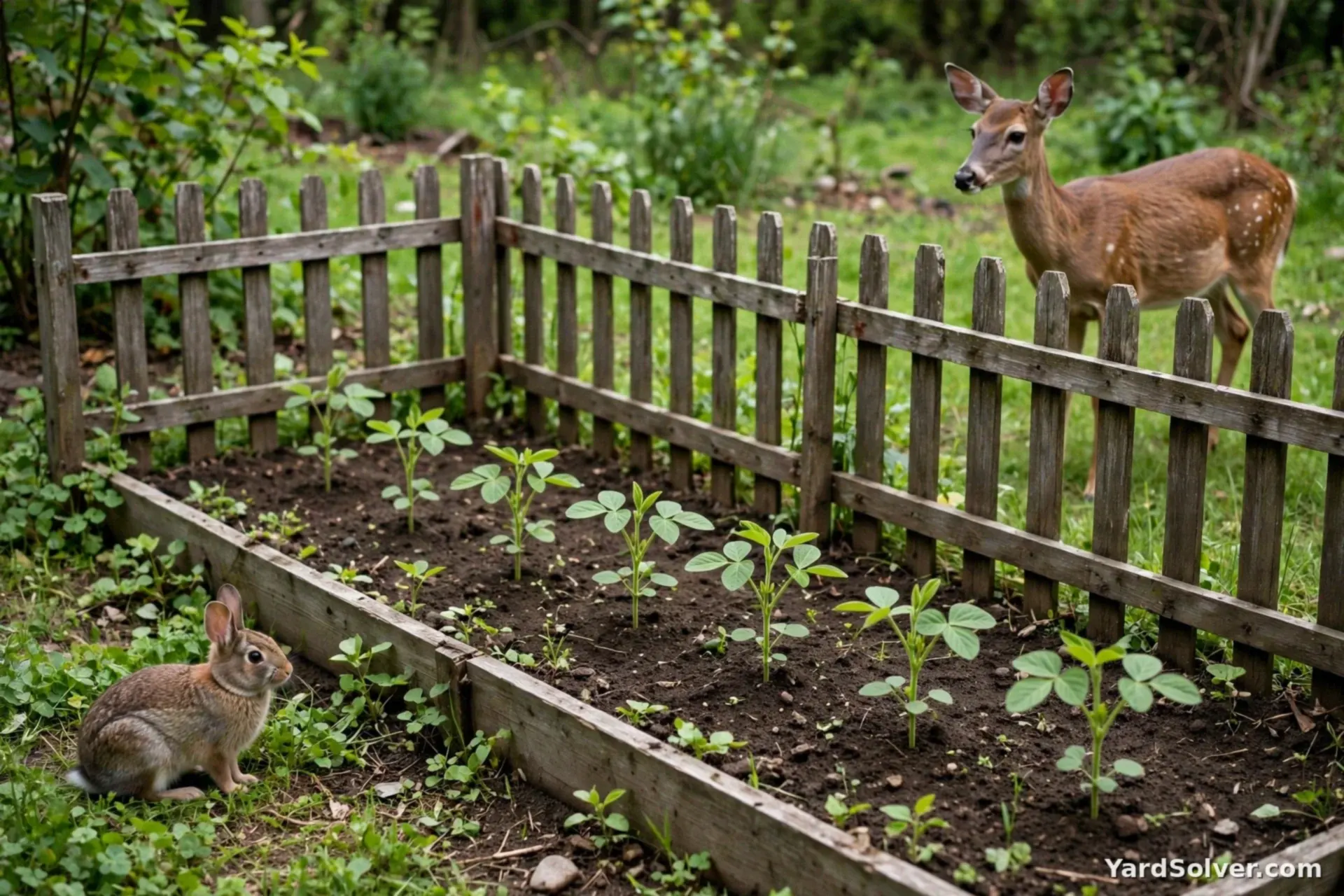
- Deer and rabbit grazing — young plants are a favourite; fencing at garden scale.
- Poor nodulation — soybeans need their nitrogen-fixing bacteria; inoculated seed helps on new ground.
- White mould in dense, wet canopies — wider rows and airflow help.
Take care: Soybean is a farm-scale field crop, drilled and harvested by machine over large areas — not a backyard vegetable, though edamame types suit big gardens. Soy is one of the common food allergies, so some people must avoid it completely.
Step 6 — Harvest
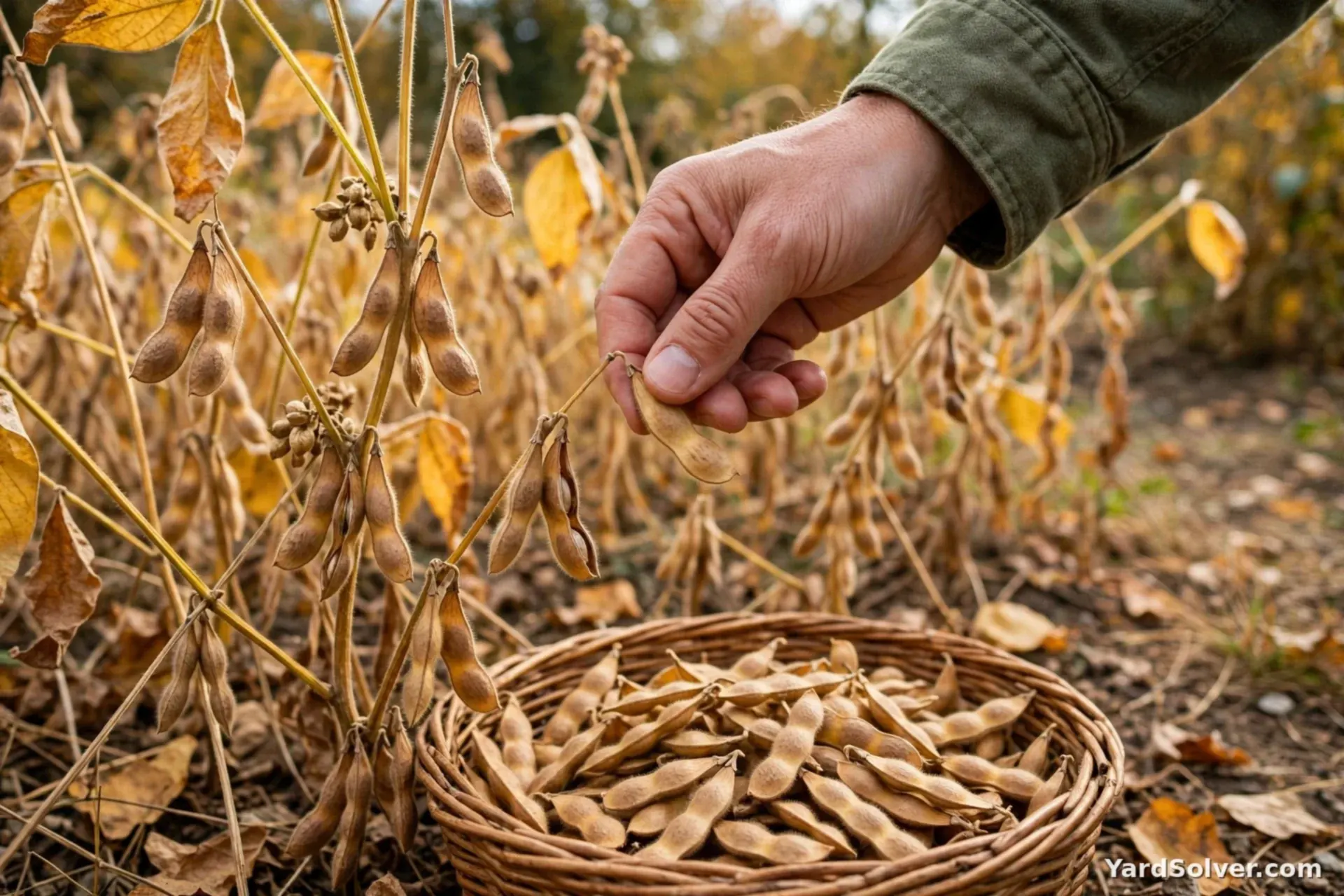
Ready in: About 90–130 days (field harvest when pods are dry).
📅 Your personal Soybean schedule
This plant runs on rhythm and season rather than a day count — here is the honest version of its schedule.
Varieties worth growing
| Variety | Colour | Why gardeners like it |
|---|---|---|
| Envy | Bright green pods | A popular edamame type with big, sweet green seeds, picked young |
| Butterbeans | Green pods | An edamame with a rich, buttery flavour and plump pods |
| Sayamusume | Green pods | A Japanese edamame known for extra-large, sweet seeds |
| Agate | Green pods, tan seeds | An old heirloom edamame, one of the earliest to ripen in short seasons |
Good for you — and take care
Benefits
- One of the richest plant sources of protein — the base for tofu, soy milk and edamame
- Provides fibre for good digestion
- Provides iron and B vitamins, including folate
- Young green pods picked early are eaten as edamame, a sweet and healthy snack
- The plants fix nitrogen from the air in their root nodules, leaving the soil richer for the next crop
Take care
- Soybean is a farm-scale field crop, drilled and harvested by machine over large areas — not a backyard vegetable, though edamame types suit big gardens
- Soy is one of the common food allergies, so some people must avoid it completely
A little history — and one good fact
Soybeans come from China, where they were farmed thousands of years ago and became a cornerstone food — the source of tofu, soy sauce and much more. They reached North America as a curiosity and forage crop, then in the 1900s became one of the continent's biggest field crops of all.
Fun fact: A soybean plant makes its own fertilizer — friendly bacteria living in bumps on its roots pull nitrogen straight out of the air to feed it.
Keep going
Guides: When to Start Seeds Indoors · How to Prepare Garden Soil in Spring · How to Harden Off Seedlings
Calculators: Plant Spacing Calculator · Seed Calculator · Garden Mix Calculator
More field crops: Wheat · Canola
← Back to the Plant Library · Get your personal planting dates
Questions people ask
When do I plant soybean?
Count from your average last spring frost: see the season guide on this page. Soybean is a frost-tender field crop: it is drilled in late spring once the soil has warmed, and harvested in about 90 to 130 days when the pods are dry — or picked green and earlier for edamame.
How far apart do I space soybean?
Space plants Rows 15–30 in apart, with seed sown 1–1 1/2 in deep. Sun: full sun.
When is soybean ready to harvest?
About 90–130 days (field harvest when pods are dry). A field crop: drilled after the soil warms in late spring — it is frost-tender. Planting dates are regional, so it sits outside the home-garden frost calendar.
Soybeans fix their own nitrogen — but only if the right bacteria are in the soil when the roots go looking for them
The soybean (Glycine max) is a legume that feeds itself through root nodules housing Rhizobium bacteria — on ground that has grown soybeans before. On new ground the bacteria may be absent, and the crop grows yellow and hungry in soil that looks fertile; the fix is seed inoculant, a cheap powder applied at sowing, standard practice wherever soybeans are new to a rotation. Edamame types are the same plant harvested green, before the pods yellow.
Soybeans are warm-season and day-length sensitive: sown into cold soil they rot, and varieties are bred for latitude bands, so a locally proven variety matters. Once up, the crop is undemanding — it shades out its own weeds, wants water most at flowering and pod-fill, and asks for no nitrogen feed, which would only delay the nodules doing their work.
The worked example: inoculated seed sown into warm soil typically nodulates, darkens and crops without any nitrogen. The same seed uninoculated on new ground typically stays pale all season — with soybeans, the bacteria are the fertiliser.
Sources
Key facts on this page — timing, spacing and care — cross-checked against NC State Extension Plant Toolbox — Glycine max — culture and care requirements and Soybean — Wikipedia — background on soybeans and their cultivation.
Related page
Read next: Crop Rotation Basics: A Simple Four-Year Plan.
Comments & ratings
No comments yet.
Be the first to share your experience.