
Plant Library · Flowers · By Faizan Ahmad
🤍 How to Grow Orlaya (White Lace Flower)
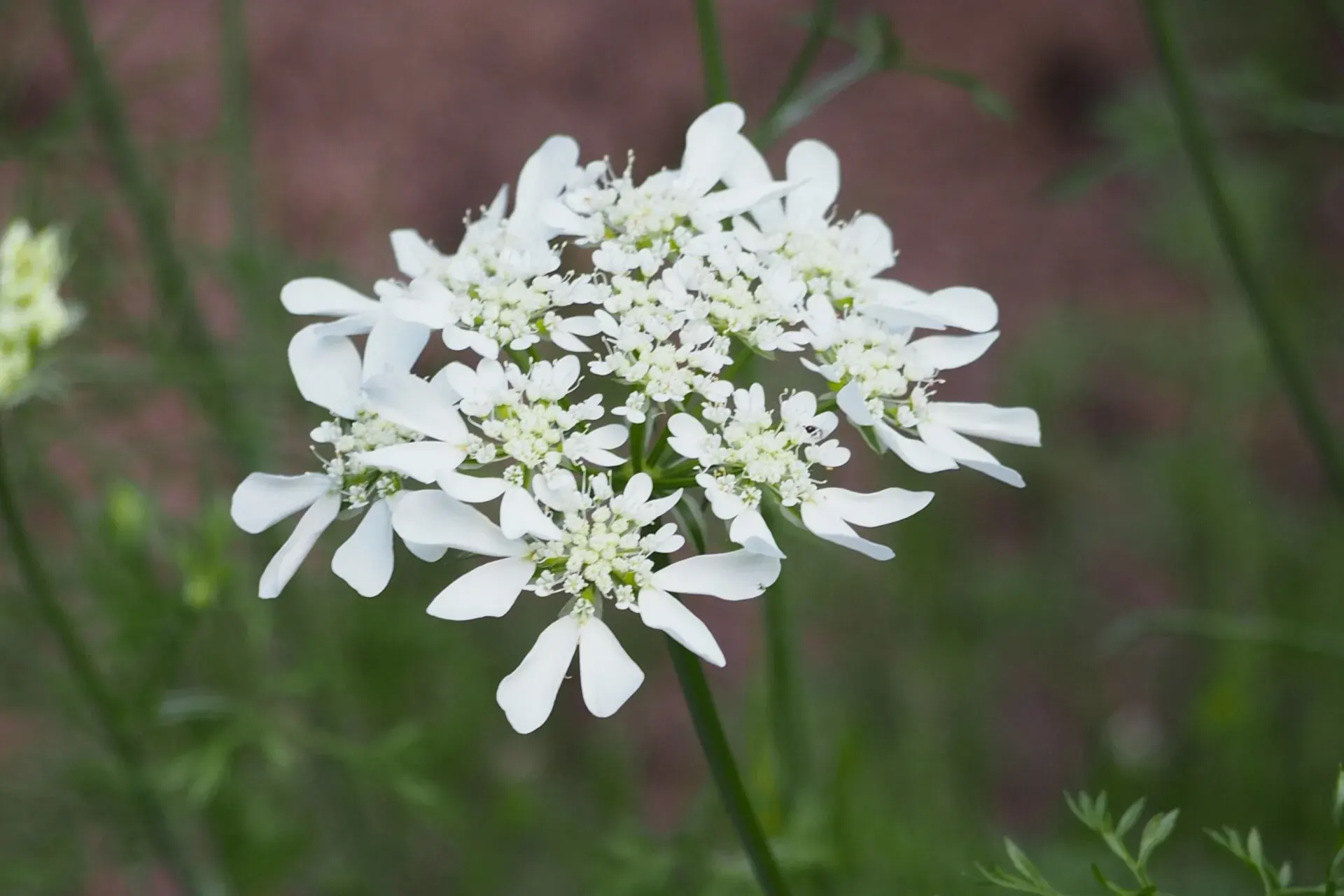
White lace plates with a handkerchief edge — the wedding florist's favourite umbel, on a compact plant. Orlaya (Orlaya grandiflora) is a hardy Mediterranean annual, smaller and tidier than ammi, flowering from late spring. Sow it in autumn or early spring, where it will grow, and cut the lace plates just as they open flat.
Grow Orlaya (White Lace Flower) with us — step by step
Everything for this plant is written step by step below — what to do, and exactly when. Read it through first if you like: you can grow it entirely on your own with that guide. Or start with us here — tell us your planting day and we lay out your personal schedule on this page, every next step on its own day, counted from your planting date. No guessing, no forgetting.
Step 1 — today: Sow orlaya seed in pots indoors, or directly in an autumn bed — like its carrot cousins, it prefers not to be moved.
Orlaya (White Lace Flower) at a glance
Sow indoors: 6 weeks before last frost, in pots
Move outside: At last frost
Sow outdoors: Early spring, or autumn in mild districts
Spacing · Seed depth: 10 in apart · 1/8 in deep
Sun: Full sun
Water: Moderate — drought-tolerant once settled
Bloom: May to July; cut as the plates open flat
Timing counts from your average last spring frost — get your own dates in the Planting Calendar. Guidance follows standard extension-service practice for Canada and the US.
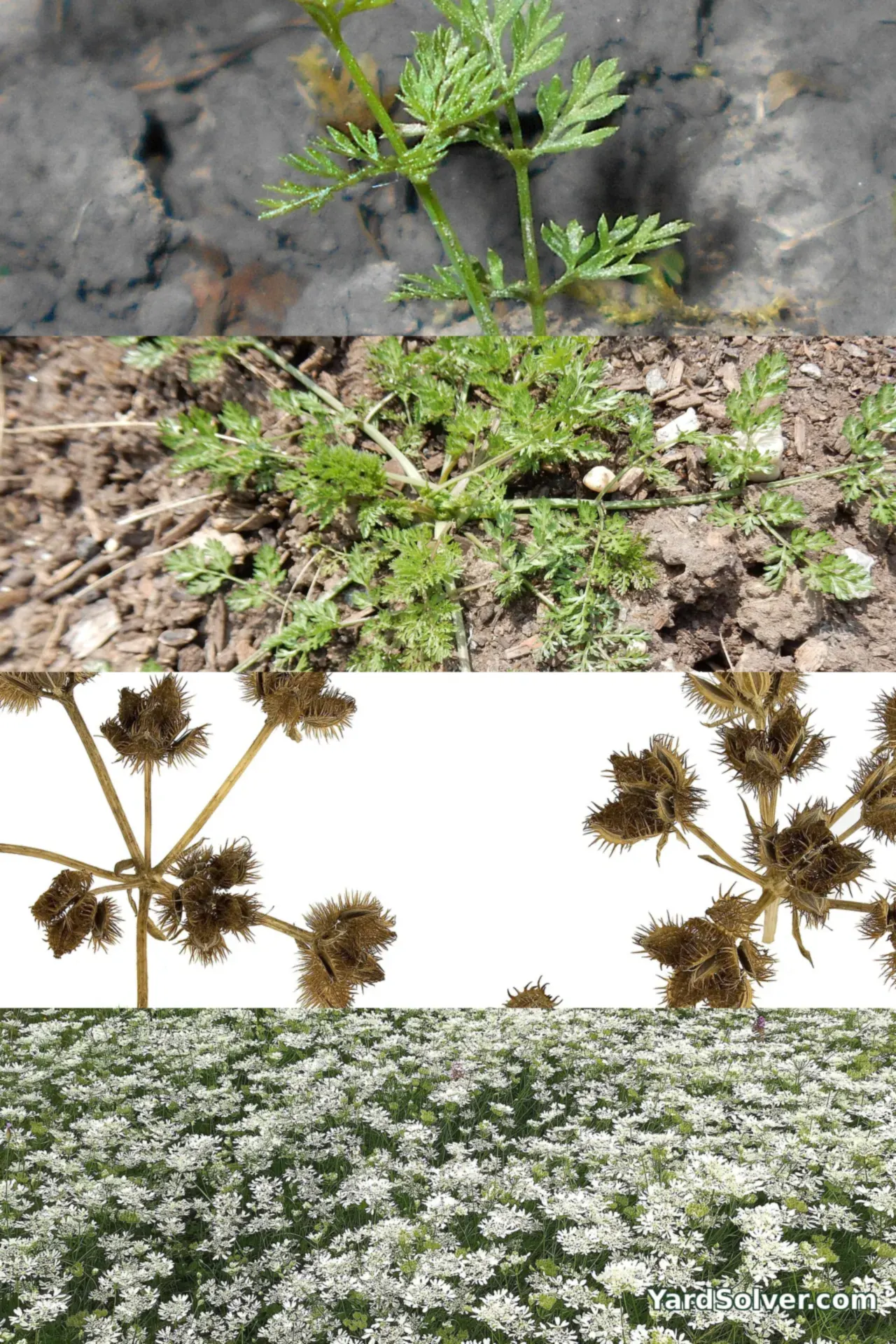
How to plant and grow orlaya, step by step
Step 1 — Time it right
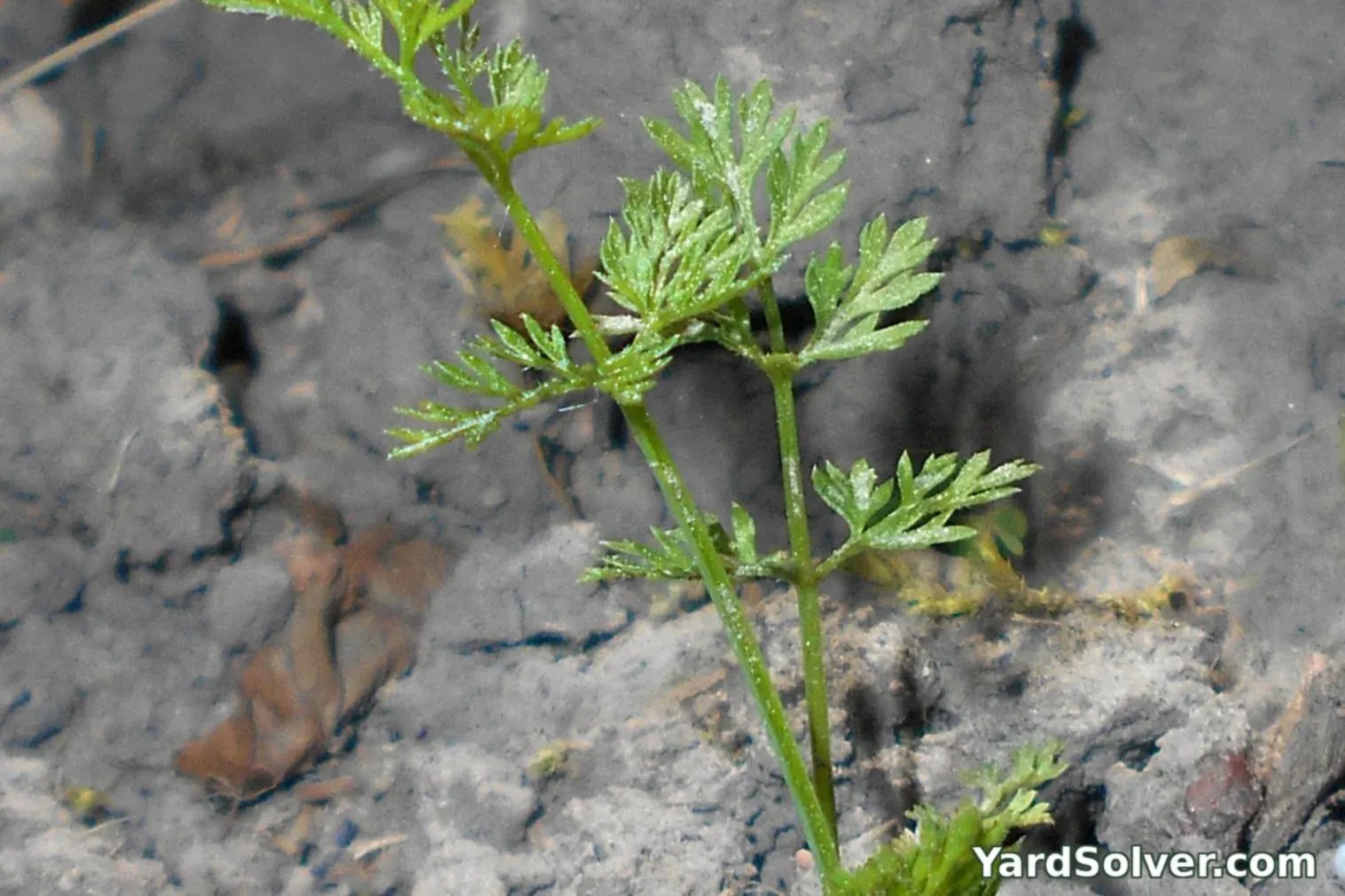
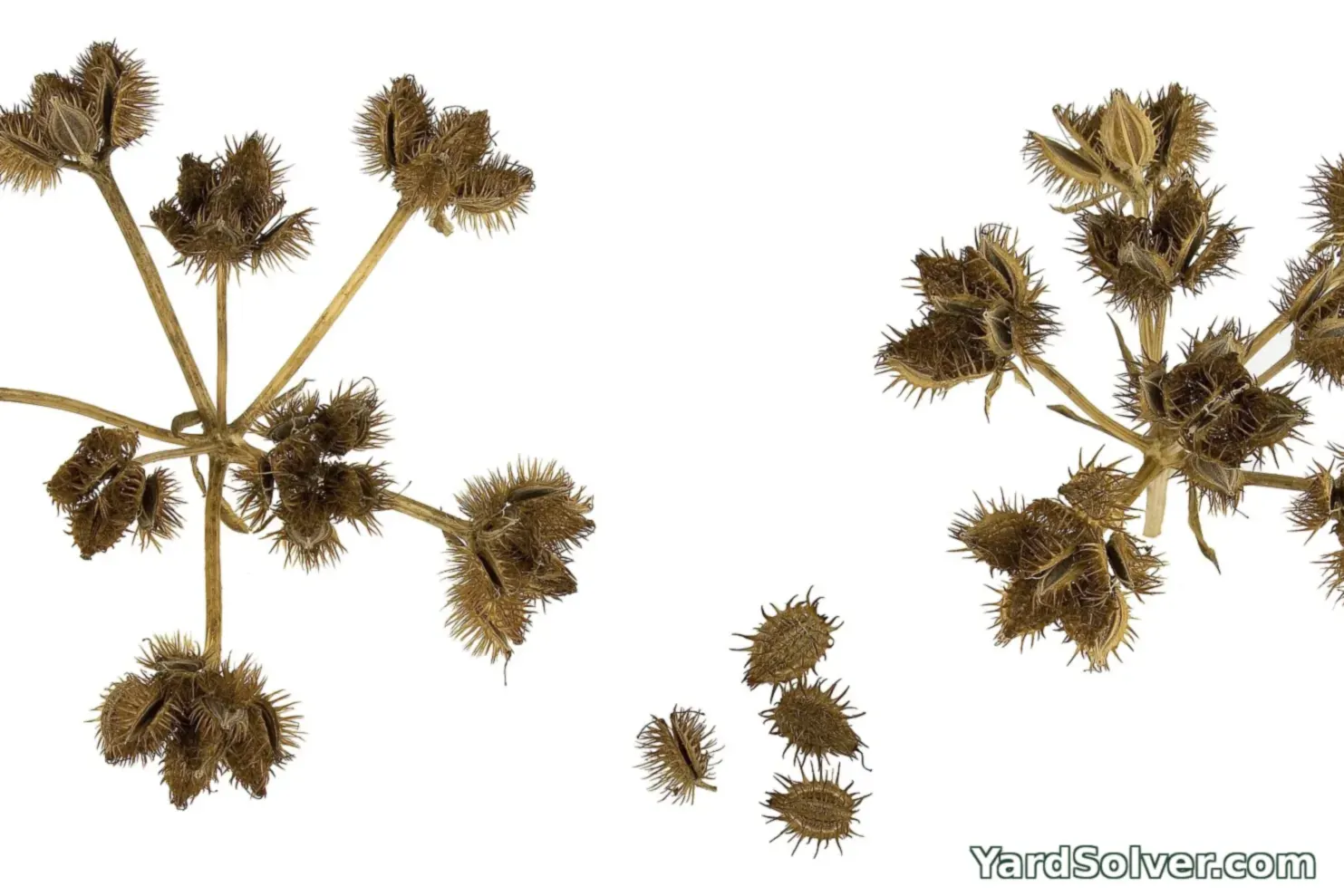
Sow indoors: 6 weeks before last frost, in pots; Move outside: at last frost; Sow outdoors: in early spring — or autumn in mild districts for the earliest flowers. All dates count from your average last spring frost — the Planting Calendar turns them into real dates for your garden. Orlaya is a cool-season flower in the ammi mould but half the height: autumn sowing gives May flowers on the strongest plants, spring sowing flowers by late June. Germination is slowish (2–3 weeks) and erratic — sow generously. The seed is ribbed and burr-like; fresh seed germinates best.
Step 2 — Prepare the spot
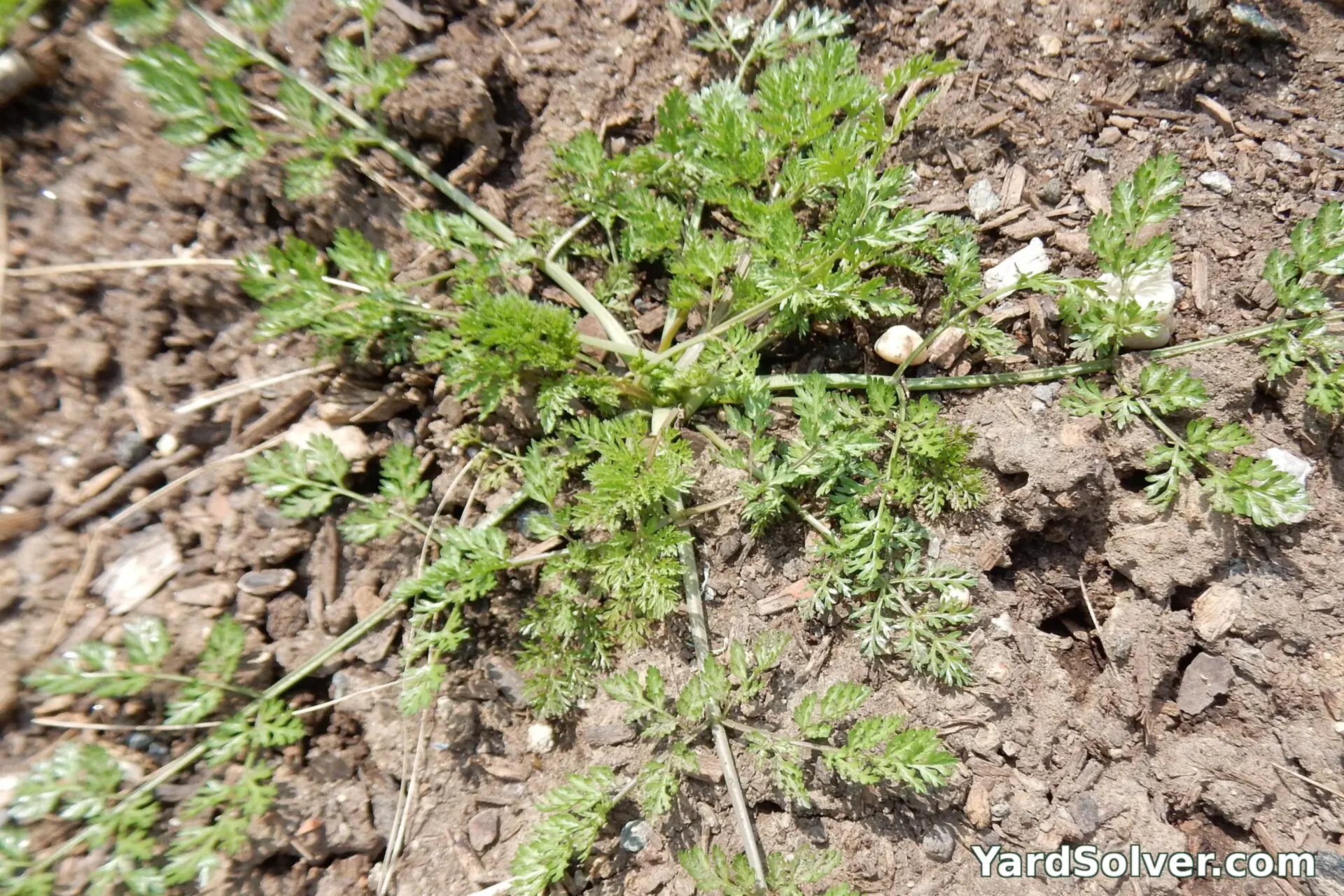
Orlaya grows wild on dry Mediterranean hillsides — copy that: full sun, well-drained average soil, no rich feeding. A cutting-bed block or a gravelly border both suit it. It stays around 2 ft, so it can live in the border proper, unlike its taller cousins. For a raised bed, the Raised Bed Soil Calculator counts the bags for you; mixing your own? The Garden Soil Calculator gives the compost-rich split to aim for.
Step 3 — Sow and plant out
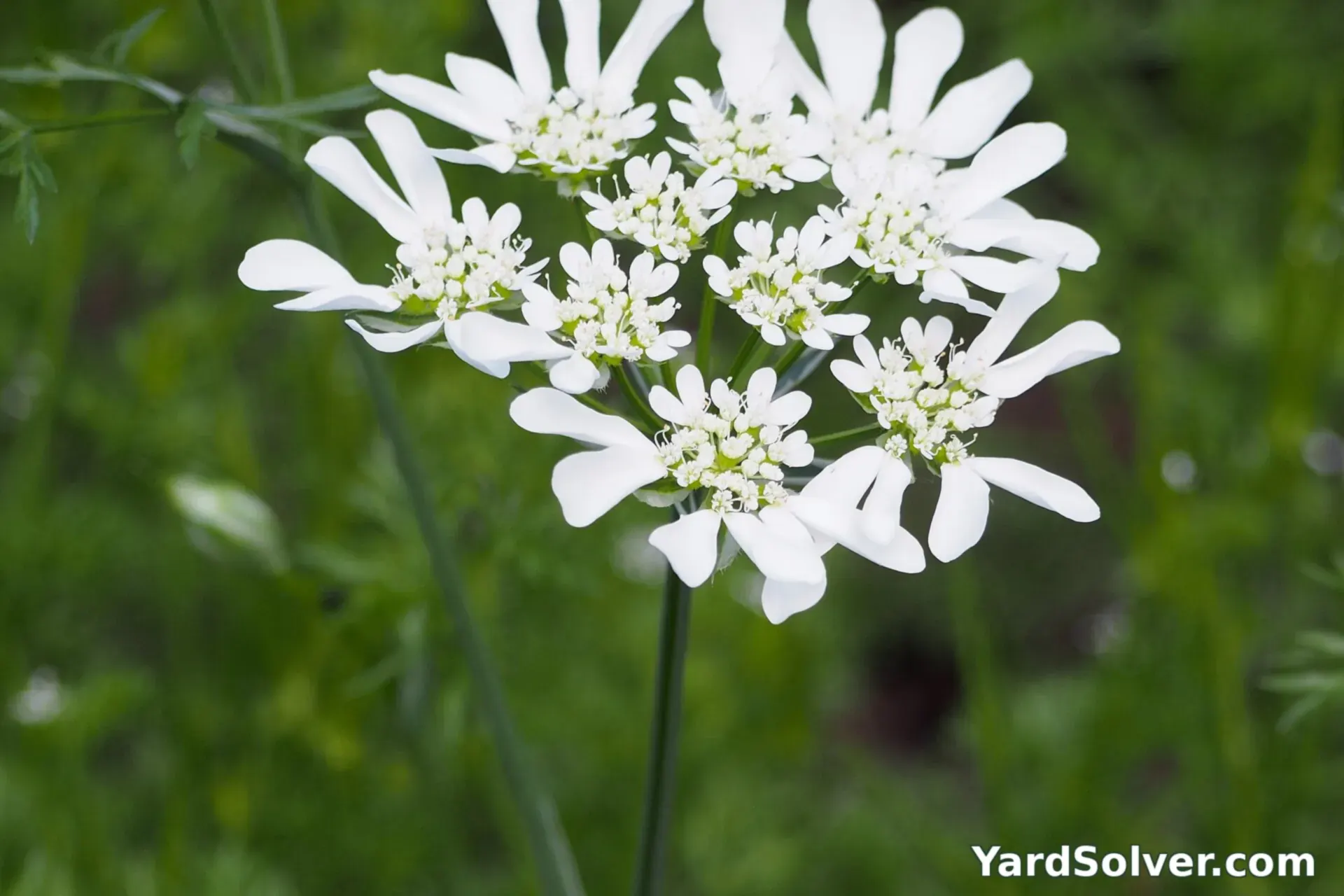
Plant out whole at 10 in spacing. The Plant Spacing Calculator turns your bed size into an exact plant count. Orlaya usually stands without support — one of its advantages over ammi. Good neighbours: the white plates are the perfect partner for dara's coloured lace and for early roses, flowering in the same weeks.
Step 4 — Water and feed
Water transplants until they are growing away, then only in drought. No feeding in ordinary soil; a light feed at planting on sand is the maximum — the Fertilizer Calculator turns your bed size into exact amounts.
Step 5 — Care and the problems to watch for
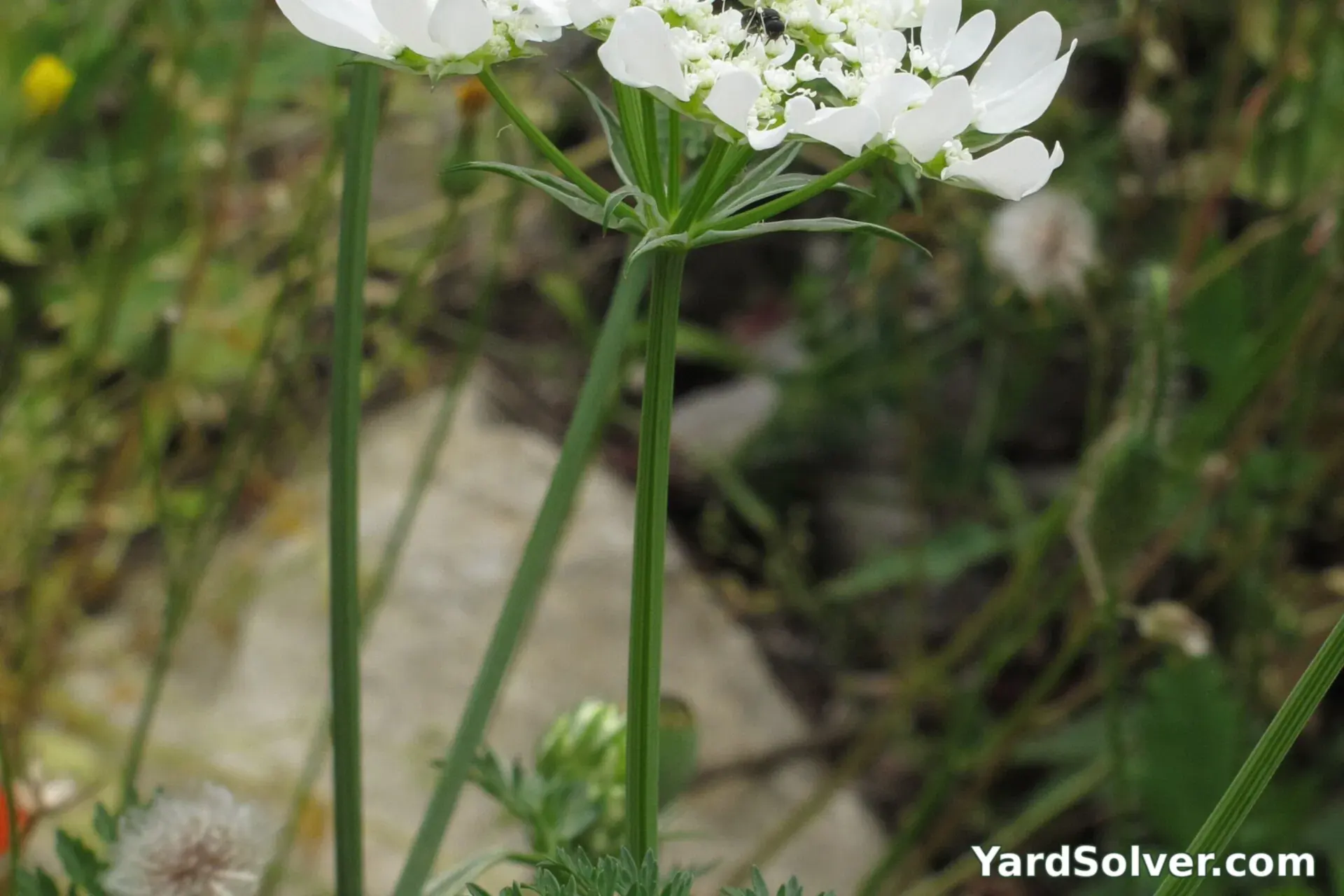
Cutting is the care: pick plates twice a week and the plant branches into more.
- Plates opening green-centred — cut a day later; the white fills in.
- Aphids under the plates — water jet; lacewing allies usually follow.
- Patchy germination — old seed; buy fresh and sow extra.
Step 6 — Harvest
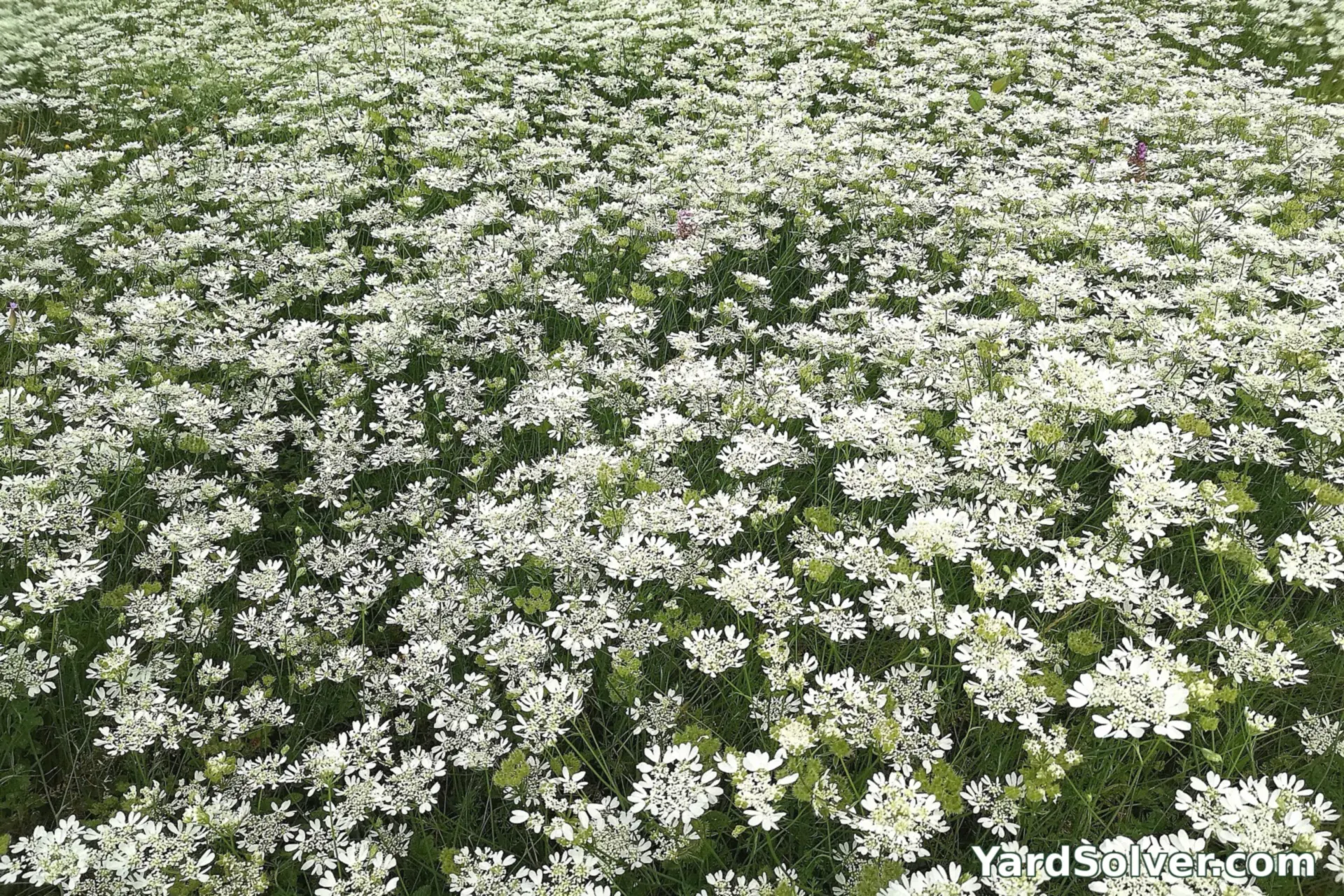
Cut stems when the umbel has opened flat and white, in the morning, and stand them straight into deep water. Expect about a week of vase life — excellent for a lace flower. Leave the last plates to seed if you'd like volunteers; orlaya self-sows modestly and seedlings are easy to recognise by their ferny leaves.
📅 Your personal Orlaya (White Lace Flower) schedule
Counted from your planting day — not a generic calendar. Day 0 is the day the seed went in the ground or the young plant went out.
Varieties worth growing
| Variety | Colour | Why gardeners like it |
|---|---|---|
| White Lace | Pure white plates | The standard strain — larger outer petals, clean white lace. |
| Meteore | White, compact | A shorter, earlier selection for exposed gardens. |
| Grandiflora type | White, taller | The species form — looser and more naturalistic in drifts. |
Good for you — and take care
Benefits
- The refined white lace — tidier and longer-lasting than ammi.
- Compact enough for the border, not just the cutting bed.
- Feeds hoverflies and parasitic wasps while it flowers.
Take care
- Germination is erratic — sow generously with fresh seed.
- Autumn sowings give the strongest plants in mild districts.
- Gloves for big cuts, as with the whole carrot family.
A little history — and one good fact
Orlaya grandiflora is a wildflower of Mediterranean Europe that florists adopted in the wedding boom for its lace-doily plates — each umbel ringed with enlarged outer petals like the edge of a handkerchief. It has quietly become a cut-flower standard in a decade.
Fun fact: The trick of the enlarged outer petals is called 'radiation' — the flower advertises to pollinators with a fake, bigger bloom made of a few oversized petals.
Keep going
Guides: Succession planting · Companion planting basics · Crop rotation basics
Calculators: Plant Spacing Calculator · Garden Mix Calculator · Fertilizer Calculator
More flowers: Ammi · Dara · Lisianthus · Scabiosa
← Back to the Plant Library · Get your personal planting dates
Questions people ask
How is orlaya different from ammi?
Both are white carrot-family lace flowers for cutting. Orlaya is shorter (about 2 ft), earlier, and has distinctive enlarged outer petals forming a clean plate; ammi is taller (3–4 ft) with a looser, airier umbel. Many cutting gardens grow both.
When should I cut orlaya?
As the umbel opens completely flat and white, ideally in the morning. Cut at that stage it lasts about a week in water; cut half-open, it may never flatten properly.
Does orlaya self-sow?
Lightly, where it's happy. Leave a few plates to ripen in autumn and move the spring seedlings to where you want them — they transplant best while very small.
Orlaya is the white lacework annual that pollinators queue for: sow it in autumn and let it self-seed
Orlaya (Orlaya grandiflora), often sold as white laceflower, carries flat heads of pure white flowers — a large, lacy outer ring around a fine centre — that read in the border like cow parsley refined for the garden. Like many hardy annuals of Mediterranean origin, it germinates best from an autumn sowing that passes through winter cold, flowering earlier and stronger than spring-sown plants.
The flowers are open, accessible nectar and pollen, and hoverflies, small bees and other beneficial insects work them constantly — one reason orlaya has become a favourite in pollinator and cut-flower gardens alike; the stems also cut well for arrangements. It wants sun and drainage, resents rich feeding, and is best sown where it is to flower, as seedlings dislike transplanting.
The worked example: an autumn sowing in lean, drained soil typically gives sturdy plants flowering from late spring, then seeds itself into a returning colony. The same seed sown late in rich, wet ground typically gives a few weak stems — orlaya is a sow-in-place, leave-alone annual.
Sources
Key facts on this page — timing, spacing and care — cross-checked against Orlaya grandiflora — Wikipedia — background on orlaya and its cultivation.
Related page
Read next: Native Plants: Benefits, Regional Picks & How to Grow.
Comments & ratings
No comments yet.
Be the first to share your experience.