
Plant Library · Fruits · By Faizan Ahmad
Updated November 17, 2026
🟪 How to Grow Plum Tree
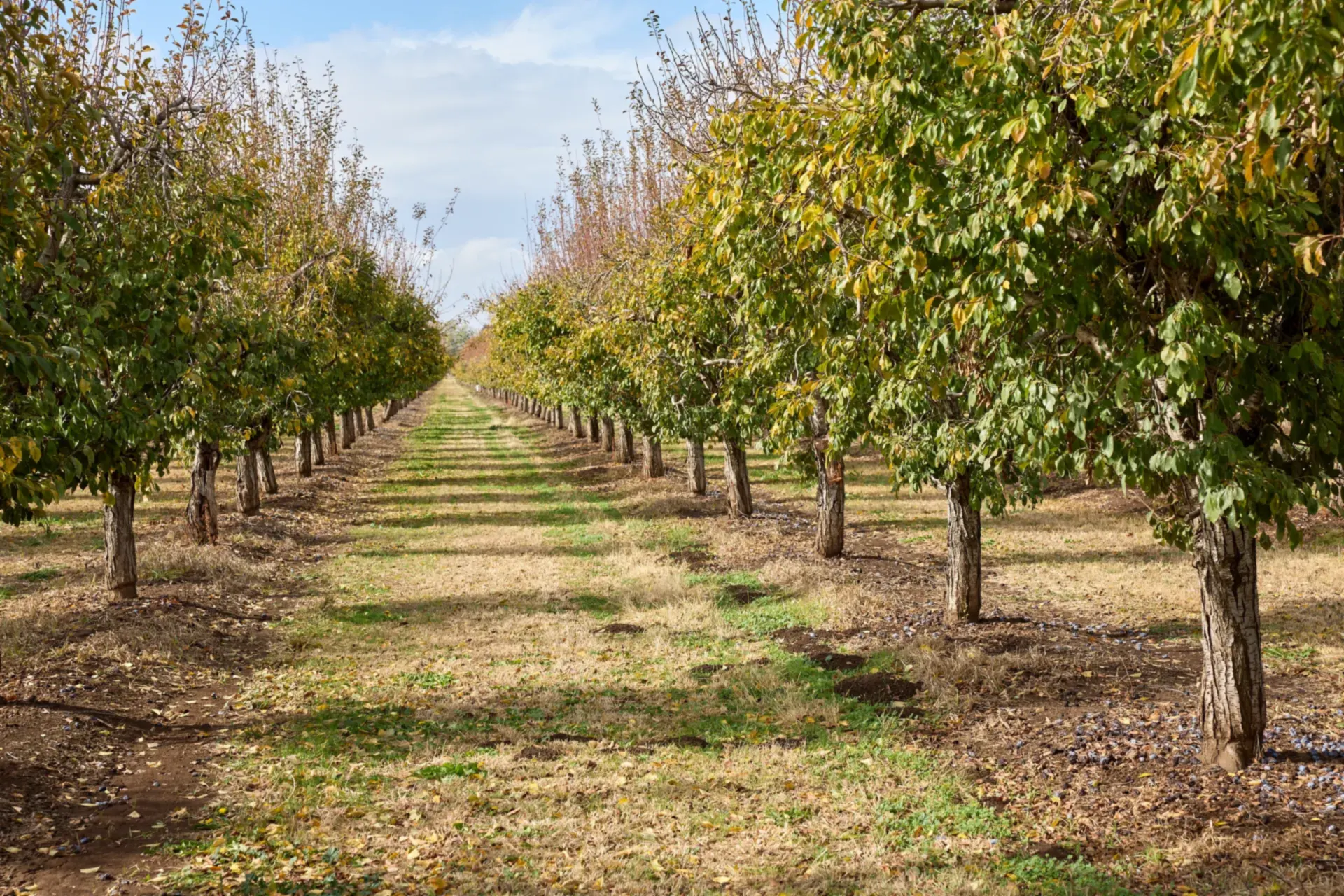
Plums split into two families: European plums — the prune and gage types — which are often self-fertile, and Japanese plums, larger and juicier, which usually need a partner tree. Both grow to 15–25 ft, fruit in 3–6 years, and crop so heavily that thinning the fruitlets is the difference between big sweet plums and a broken branch.
Grow Plum Tree with us — step by step
Plums split into two families with different rules: Japanese plums bloom earliest, grow vigorously and often need a partner tree to pollinate them, while European plums are hardier, later and mostly self-fertile — the prune plums among them dry beautifully. The steps below flag which rule belongs to which family as you go. Tell us your planting date and the page builds your plum schedule from it: spring feeding, fruit thinning, and pruning timed to keep stone fruit healthy.
Step 1 — today: Plant your Plum Tree today: dig a hole twice as wide as the root ball, set the graft union 2–3 in above the soil line, backfill, water deeply and mulch. Full sun, drained soil.
Plum Tree at a glance
Spacing: 15–25 ft in · Seed depth: As in the pot
Sun: Full sun
Water: Regular, deep, especially while young
Harvest: First fruit in 3–6 years
Timing counts from your average last spring frost — get your own dates in the Planting Calendar. Guidance follows standard extension-service practice for Canada and the US.
How to plant and grow plum tree, step by step
Step 1 — Time it right
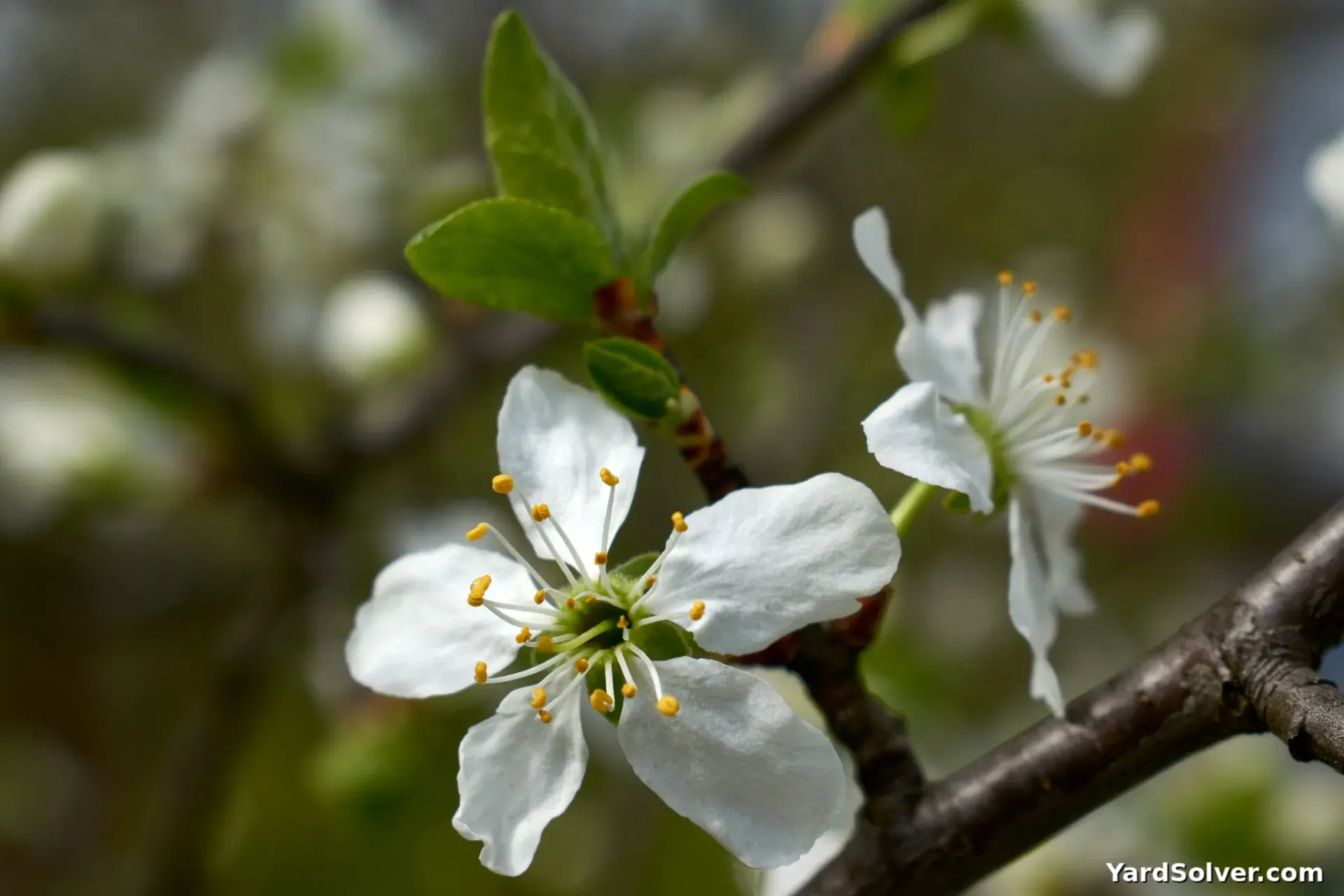
Plant bare-root trees in early spring, or container trees in spring or fall. Plums bloom early — a sheltered spot helps the blossom dodge frost. Chilling requirement is the hidden detail: plum varieties need roughly 300–1,000 winter chill hours depending on type, so match the variety to your winters or blossom will be sparse and erratic. In frost-pocket gardens, a slope or a spot near a wall gives the early blossom its best protection.
Step 2 — Prepare the spot
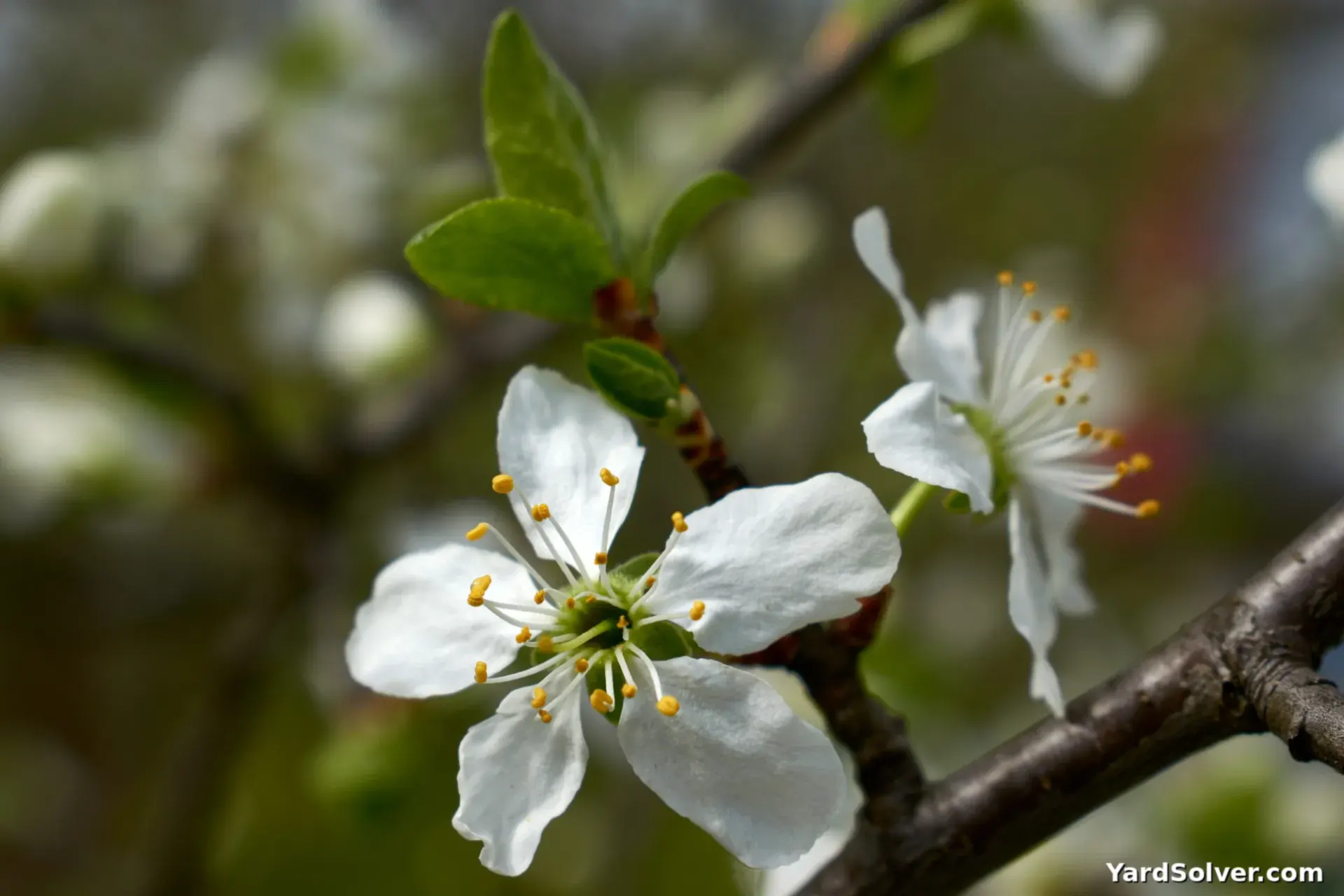
Sun: Full sun. Well-drained loam in full sun. Plums tolerate slightly heavier soil than peaches but not waterlogging. Work out how much soil you need with the Garden Mix Calculator or the Raised Bed Soil Calculator. Plums flower on the earlier side and their roots dislike competition, so keep a mulched, grass-free circle at least 3 ft across around a young tree. On very heavy soil, planting on a broad, low mound lifts the crown enough to prevent the winter waterlogging that kills more young plums than cold does.
Step 3 — Plant it
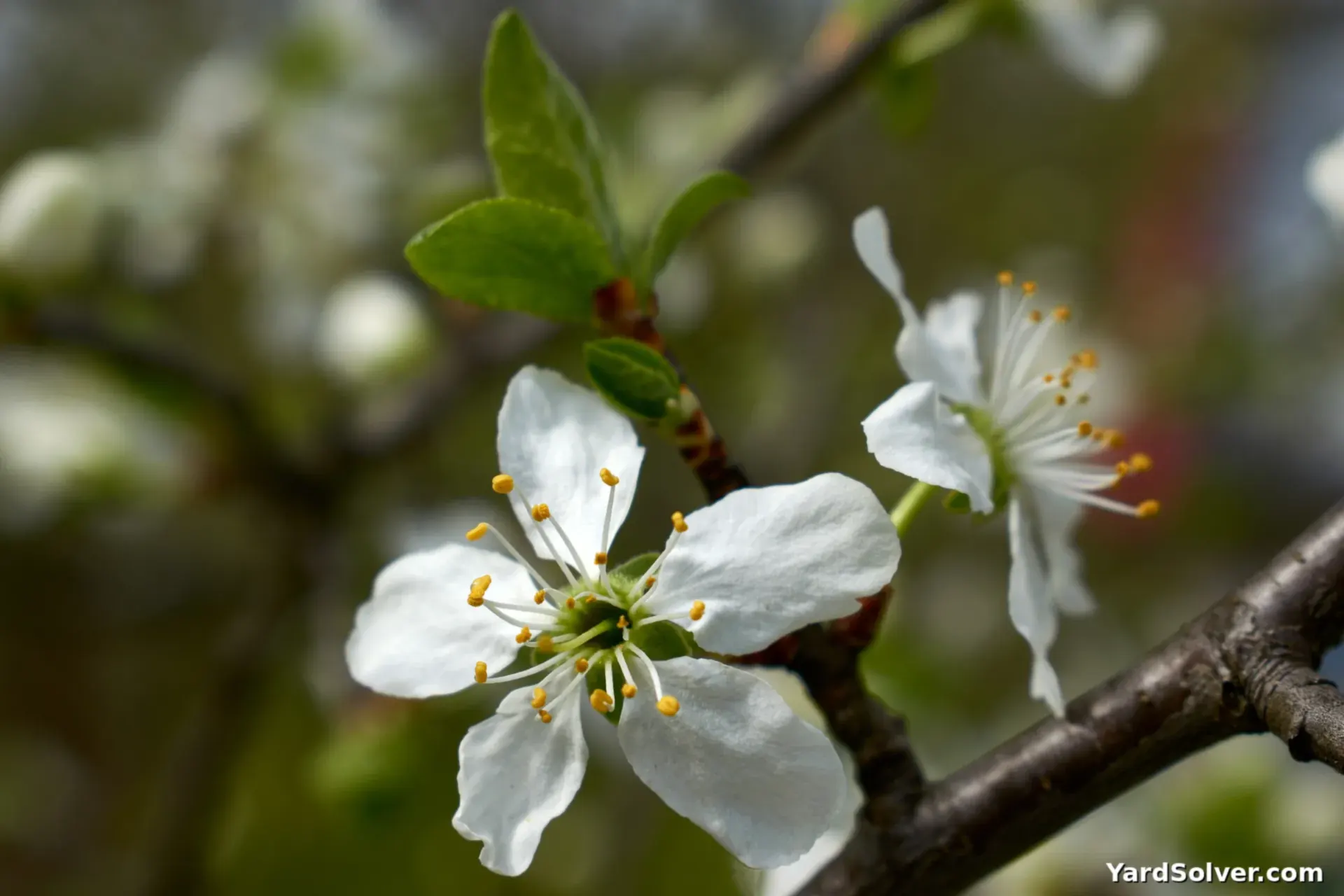
Dig a hole twice as wide as the root ball, set the graft union 2–3 in above the soil line, backfill, water deeply and mulch. The Plant Spacing Calculator turns that spacing into trees-per-plot. Japanese plums are usually spaced about 15–20 ft apart and European types 18–24 ft, with dwarfing rootstocks bringing both down considerably. Water deeply at planting and weekly through the first dry season — a young plum that checks from drought in year 1 takes years to forgive you.
Step 4 — Water and feed
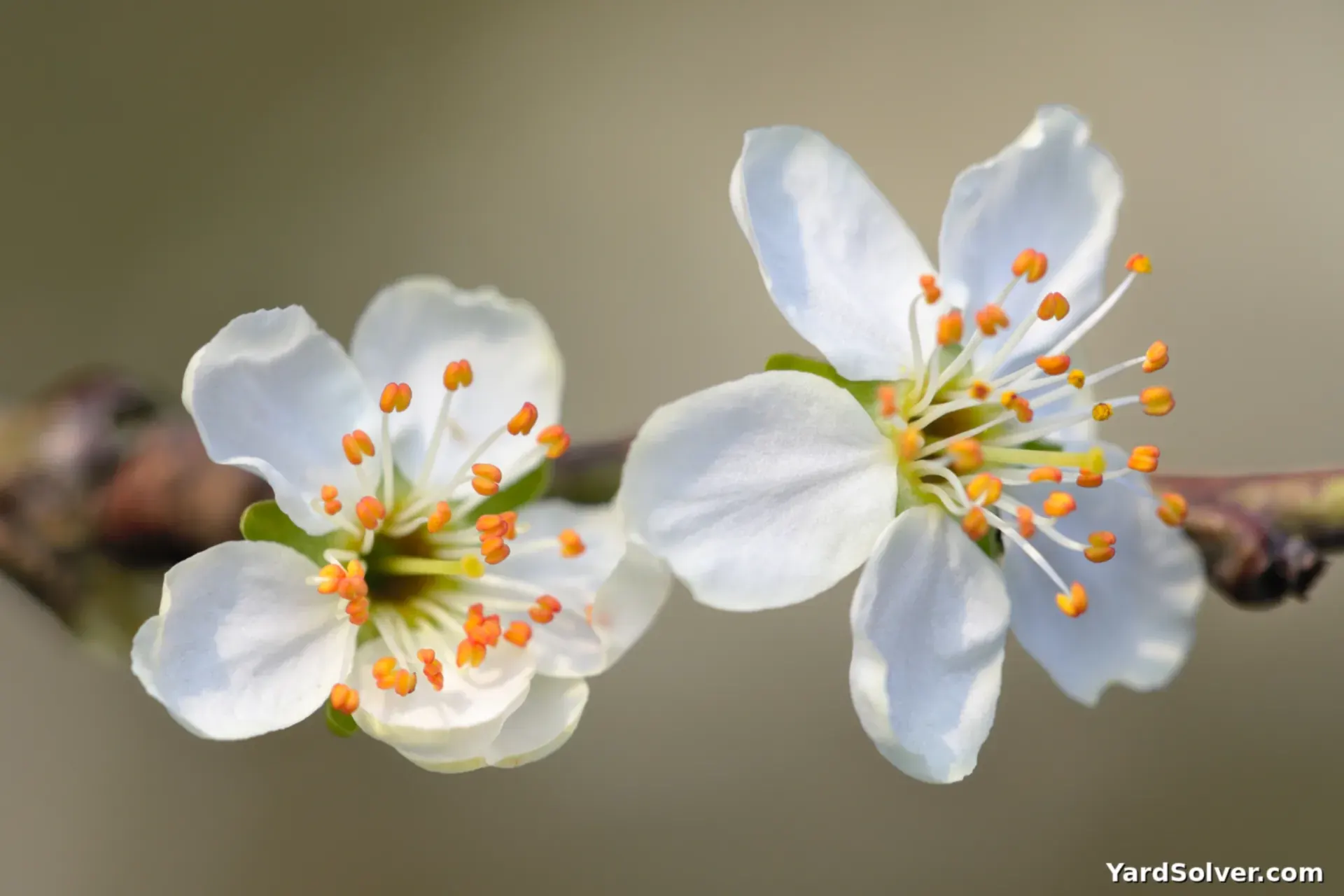
Water: Regular, deep, especially while young. Feed in spring with a balanced fertilizer, modestly. A yearly compost mulch helps the shallow roots. The Fertilizer Calculator turns a plot size into the right amount. Thin ruthlessly in late spring: plums set far more fruit than any branch can carry, and thinning to roughly one fruit every 4–6 in prevents broken branches, biennial bearing and small, bland fruit. The job feels wasteful and is the single biggest quality improvement you can make.
Step 5 — Care and the problems to watch for
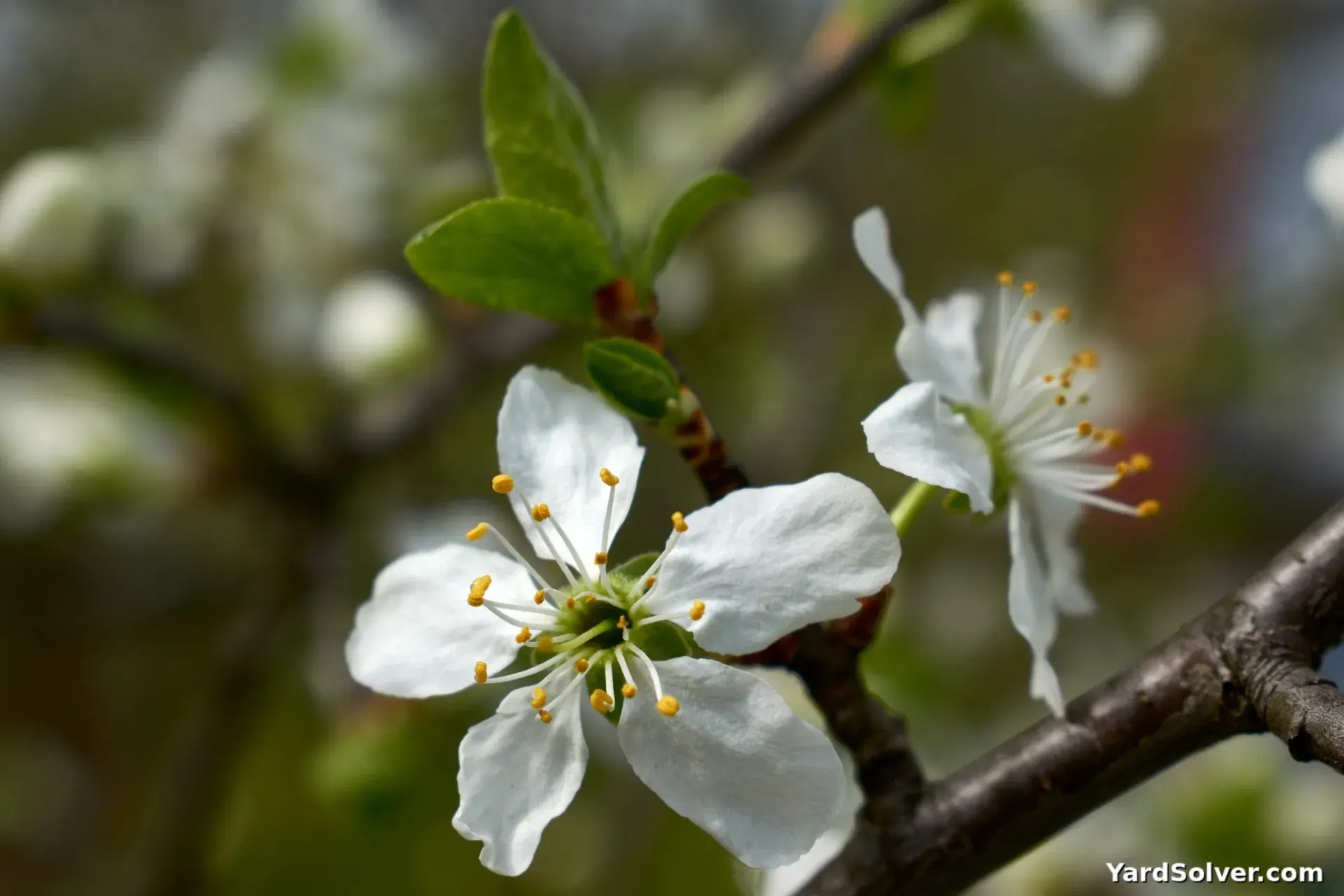
Plum pocket — hollow, swollen fruitlets in spring; remove and destroy them. Black knot — black swollen lumps on branches (common on European types); prune out well below the knot in winter. Aphids — they curl the new leaves; a strong jet of water or a ladybird population handles most. Prune Japanese plums to an open centre and European types to a modified central leader — and time structural pruning for dry summer weather where silver leaf disease is common, because the fungus enters fresh cuts in wet, cold months. Brown rot on ripening fruit spreads from mummified plums left hanging, so pick up and destroy every mummy each winter.
Step 6 — Harvest
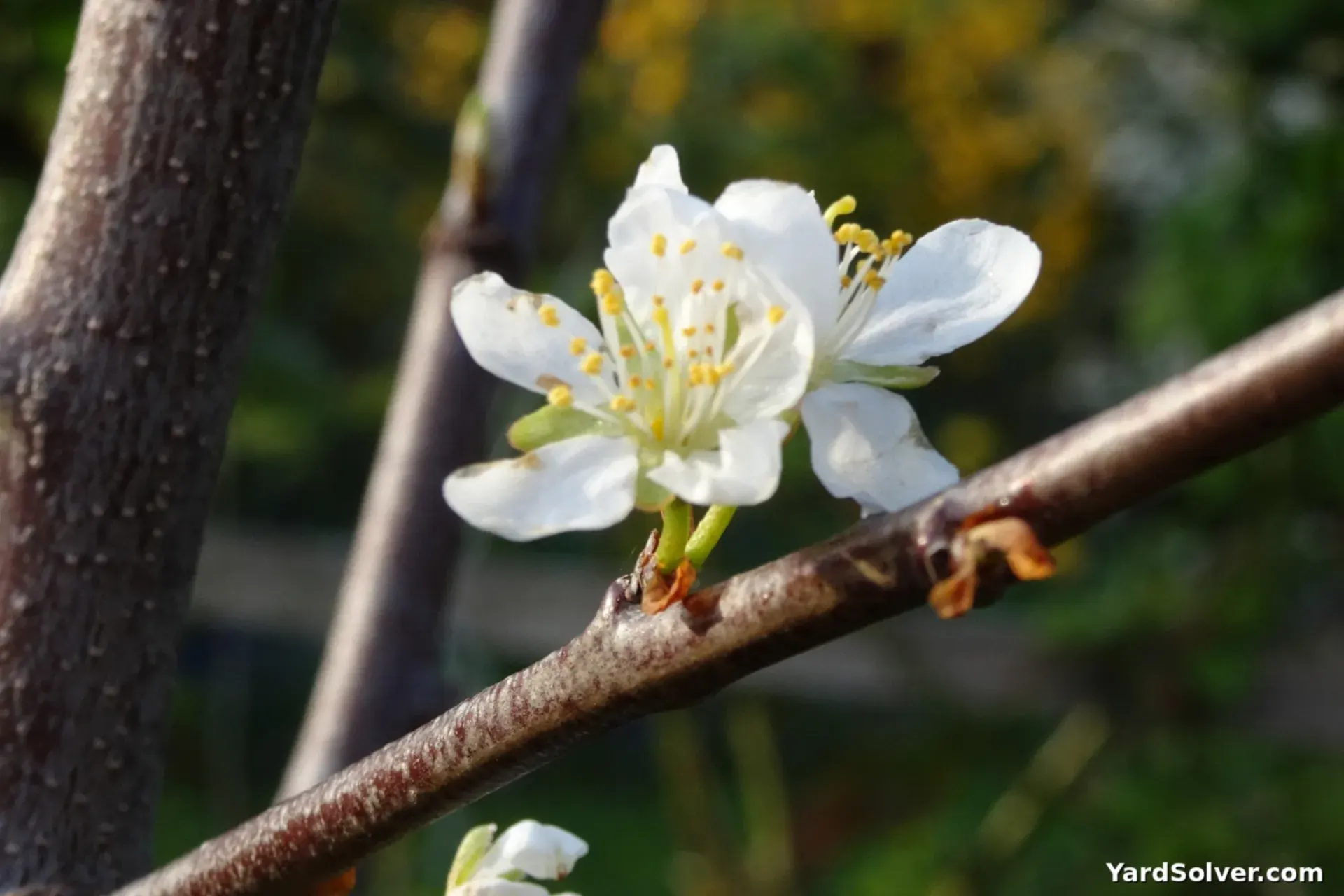
First fruit in 3–6 years. Pick when the fruit is fully coloured and gives slightly — prune-plums can hang longer and dry on the tree in hot summers. Judge ripeness by taste and a gentle squeeze rather than the calendar: dessert plums are best picked just before fully soft and finished indoors, while prune plums can hang until they begin to wrinkle at the stalk. A mature tree in a good year can carry 50–100 lb of fruit, which is why the thinning in spring matters so much.
📅 Your personal Plum Tree schedule
This schedule counts from the day your plum tree was planted and follows the stone-fruit year in order. It covers the spring feed, the late-spring thinning to one fruit every few inches — the job that decides fruit size — summer pruning in dry weather, and the taste-first harvest, with the winter reminder to clear every mummified fruit from the branches.
Varieties worth growing
| Variety | Colour | Why gardeners like it |
|---|---|---|
| Stanley | Purple-blue | A European prune-plum, self-fertile and reliable |
| Santa Rosa | Red-purple | The famous Japanese plum — juicy, needs a partner |
| Mount Royal | Blue | A very hardy European plum for cold winters |
| Green Gage | Green | The old French gage — small, green and honey-sweet |
Good for you — and take care
Benefits
- European types are often self-fertile
- Prolific — a small tree gives baskets of fruit
- Eat fresh, dry as prunes, or cook
- Blossom feeds early bees
Take care
- Thin fruitlets to one every 3–4 in — plums overcrop wildly otherwise.
- Japanese plums need a partner; European plums often fruit alone.
- Prune in summer after harvest to lower disease risk.
Problems to watch for
- Plum pocket — hollow, swollen fruitlets in spring; remove and destroy them.
- Black knot — black swollen lumps on branches (common on European types); prune out well below the knot in winter.
- Aphids — they curl the new leaves; a strong jet of water or a ladybird population handles most.
A little history — and one good fact
Plums have been grown since Roman times — Pliny listed varieties two thousand years ago. European plums came from the Caucasus region; Japanese plums were bred in China and refined in Japan, then carried to California in the 1800s.
Fun fact: Prunes are simply dried plums — and in France, the famous Agen prunes come from a single variety, the Prune d'Ente.
Keep going
Guides: How to Harden Off Seedlings · How to Read a Seed Packet
Calculators: Plant Spacing Calculator · Seed Calculator · Fertilizer Calculator · Garden Mix Calculator
Plan it: Garden Planner · Planting Calendar · Companion Planting Chart · Seed Box
Good companions: Garlic · Chives
More fruit trees: Cherry Tree · Peach Tree · Apple Tree
← Back to the Plant Library · Get your personal planting dates
Thinning plums: the worked numbers
An unthinned plum tree produces many small, bland fruit, exhausts itself into a fruitless following year, and snaps branches under the load. Thinning in late spring — after the natural June drop — fixes all three. The working figures:
| Item | Working figure | Note |
|---|---|---|
| Final spacing, dessert plums | One fruit every 4–6 in along the branch | Roughly a fist's width between neighbouring fruit |
| Final spacing, small prune plums | One fruit every 3–4 in | Smaller fruit can hang slightly closer |
| Clusters | Reduce every cluster to a single fruit | Twins and touching fruit rot where they press together |
| What comes off first | Damaged, diseased, misshapen and smallest fruit, then the surplus | You are editing, not just reducing |
| Typical removal | Often half to two-thirds of the set fruit on a heavy year | The remaining fruit commonly doubles in size |
| Timing | When fruitlets are about thumbnail size, after natural drop finishes | Thin earlier and the tree may drop more; thin late and size is already lost |
Work branch by branch with both hands, twisting fruitlets off cleanly. On a mature tree the job takes under an hour — and it is the difference between a crop you give away with apologies and one you give away with pride.
Questions people ask
When do I plant a plum tree?
Plant bare-root trees in early spring, or container trees in spring or fall. A sheltered spot helps the early blossom.
How far apart do I space plum trees?
Japanese plums 15–20 ft, European plums 18–25 ft. Sun: full sun.
When will my plum tree fruit?
First fruit in 3–6 years. European plums are often self-fertile; Japanese plums usually need a partner.
Does my plum tree need a pollinator?
European plums are mostly self-fertile and fruit alone. Many Japanese plums need a different Japanese variety flowering at the same time nearby — Santa Rosa is widely used as a pollinator — so check your variety before assuming a lone tree will crop.
When should I prune a plum tree?
Do structural pruning in dry weather in summer where silver leaf is a risk, because the disease enters fresh cuts in wet, cold months; light tidying can be done whenever dead wood shows. Shape Japanese types to an open centre and European types to a modified central leader.
Plums fruit heavily and forgive more than peaches do — but a congested centre still costs you the crop
Plums (Prunus domestica and the Japanese Prunus salicina) are among the most reliable stone fruits for home gardens: hardier than peaches, later to flower than apricots, and generous once established. European types are largely self-fertile; many Japanese types need a partner. The tree's natural habit is a dense thicket of upright shoots, and left alone it shades its own fruiting wood into decline.
Pruning is therefore light but annual, and timed differently from other stone fruit: plums are pruned in late spring or summer, not winter, because winter wounds invite silver leaf disease. Thin the fruit in heavy years — plums set more than branches can carry, and a limb snapped by its own crop is a common sight. Brown rot on ripening fruit is picked off and binned, never left hanging as mummies.
The worked example: a tree opened up each summer and thinned in a heavy year typically ripens a full, clean crop year after year. The same tree left as a thicket typically alternates glut and failure with rotting fruit inside — with plums, air and light are the crop protection.
Sources
Key facts on this page — timing, spacing and care — cross-checked against NC State Extension Plant Toolbox — Prunus domestica — culture and care requirements and Plum — Wikipedia — background on plums and their cultivation.
Related page
Read next: How to Prune Fruit Trees in Winter (Without Ruining Fruit).
Comments & ratings
No comments yet.
Be the first to share your experience.