
Plant Library · Fruits · By Faizan Ahmad
Updated November 17, 2026
🍒 How to Grow Cherry Tree
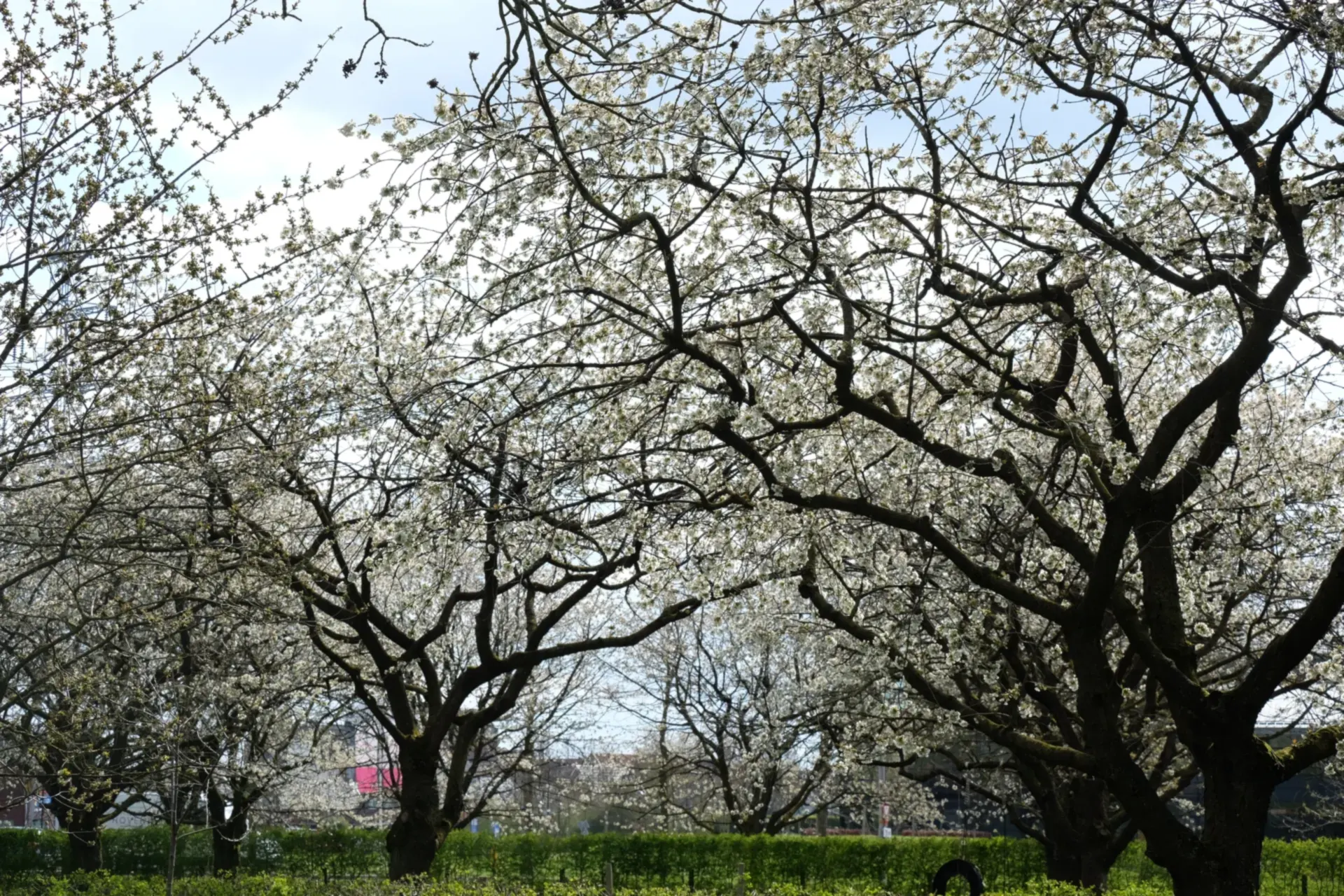
Cherries come in two kinds: sweet cherries for eating fresh — big trees, 18–25 ft, most needing a pollination partner — and sour cherries for pies and preserves, smaller at 15–20 ft and self-fertile, which makes them the easier pick for a one-tree garden. Either way, expect the first real harvest in 3–5 years, and a race with the birds every June.
Grow Cherry Tree with us — step by step
A cherry tree is planted once and picked for decades, but the first decisions — sweet or sour, dwarfing rootstock or standard, and a spot where blossom escapes spring frost — decide how those decades go. Below is the whole routine, from setting the graft union to netting the tree before the birds find it. Enter your planting day and we will build your personal cherry schedule from it.
Step 1 — today: Plant your Cherry Tree today: dig a hole twice as wide as the root ball, set the graft union 2–3 in above the soil line, backfill, water deeply and mulch. Full sun, drained soil.
Cherry Tree at a glance
Spacing: 15–25 ft in · Seed depth: As in the pot
Sun: Full sun
Water: Regular, deep, especially while young
Harvest: First fruit in 3–5 years
Timing counts from your average last spring frost — get your own dates in the Planting Calendar. Guidance follows standard extension-service practice for Canada and the US.
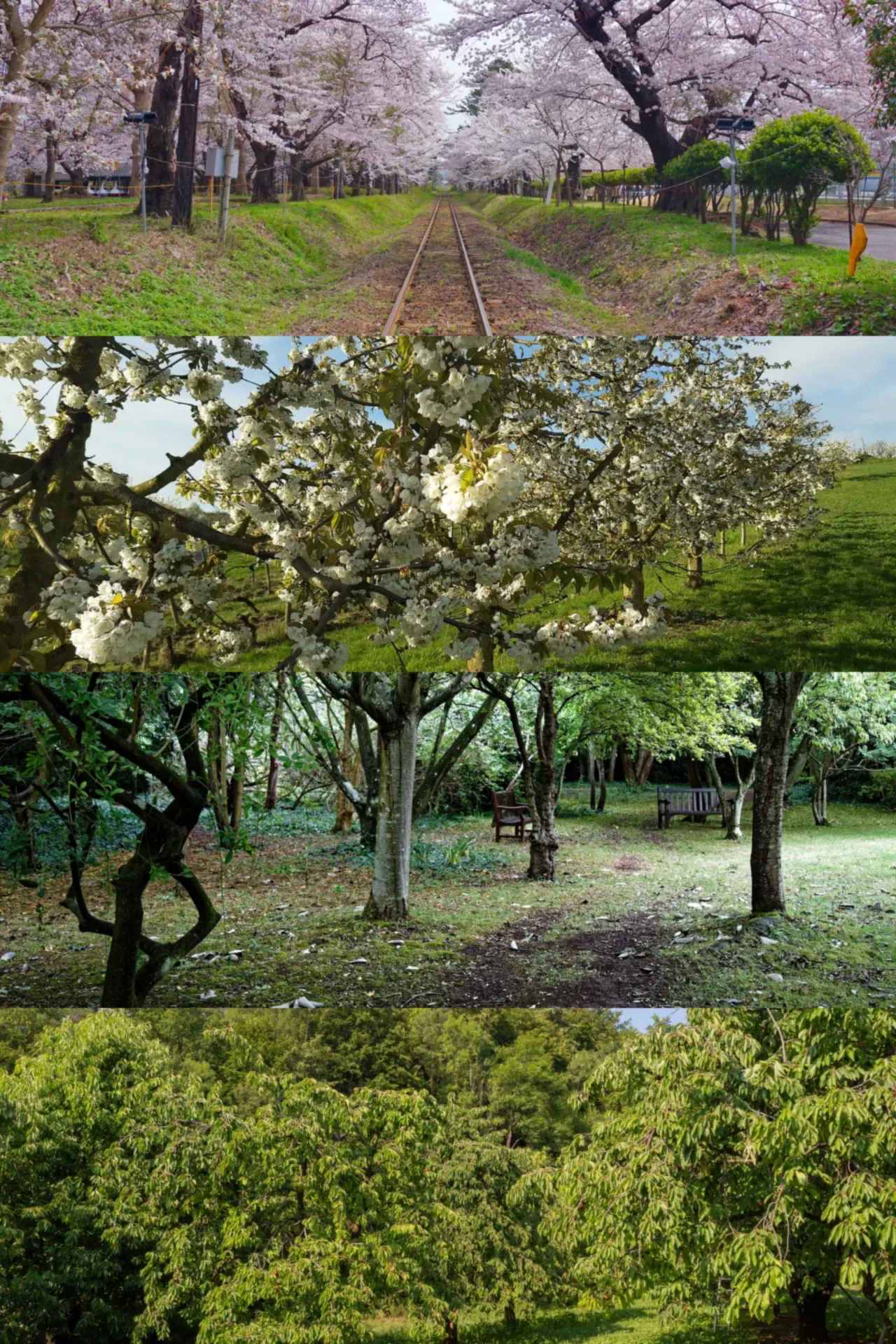
How to plant and grow cherry tree, step by step
Step 1 — Time it right
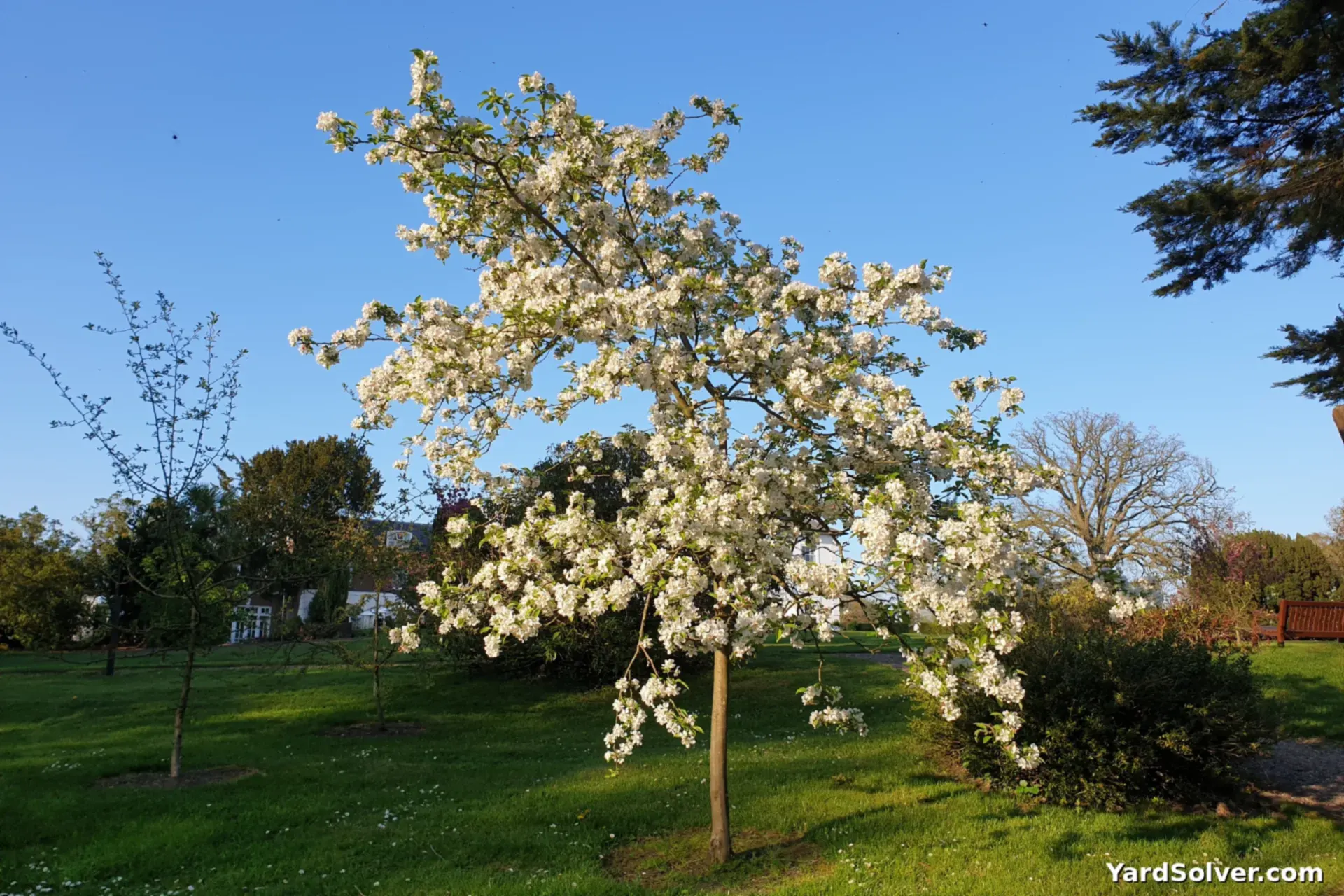
Plant bare-root trees in early spring, or container trees in spring or fall. Cherries bloom early, so a sheltered spot away from frost pockets helps the blossom survive. Plant bare-root cherries while fully dormant, several weeks before bud break, so roots grow before leaves demand water. In zones 5 to 7 that is usually late March into April; container trees can also go in during September.
Step 2 — Prepare the spot
Sun: Full sun. Well-drained soil in full sun — cherries rot in wet ground and crack in heavy, soggy soil. Work out how much soil you need with the Garden Mix Calculator or the Raised Bed Soil Calculator. Drainage comes first: if a test hole holds water an hour after rain, plant on a mound 8 to 12 in high. Soil pH 6.0 to 7.0 suits sweet and sour types, and a slope that sheds cold air protects blossom.
Step 3 — Plant it
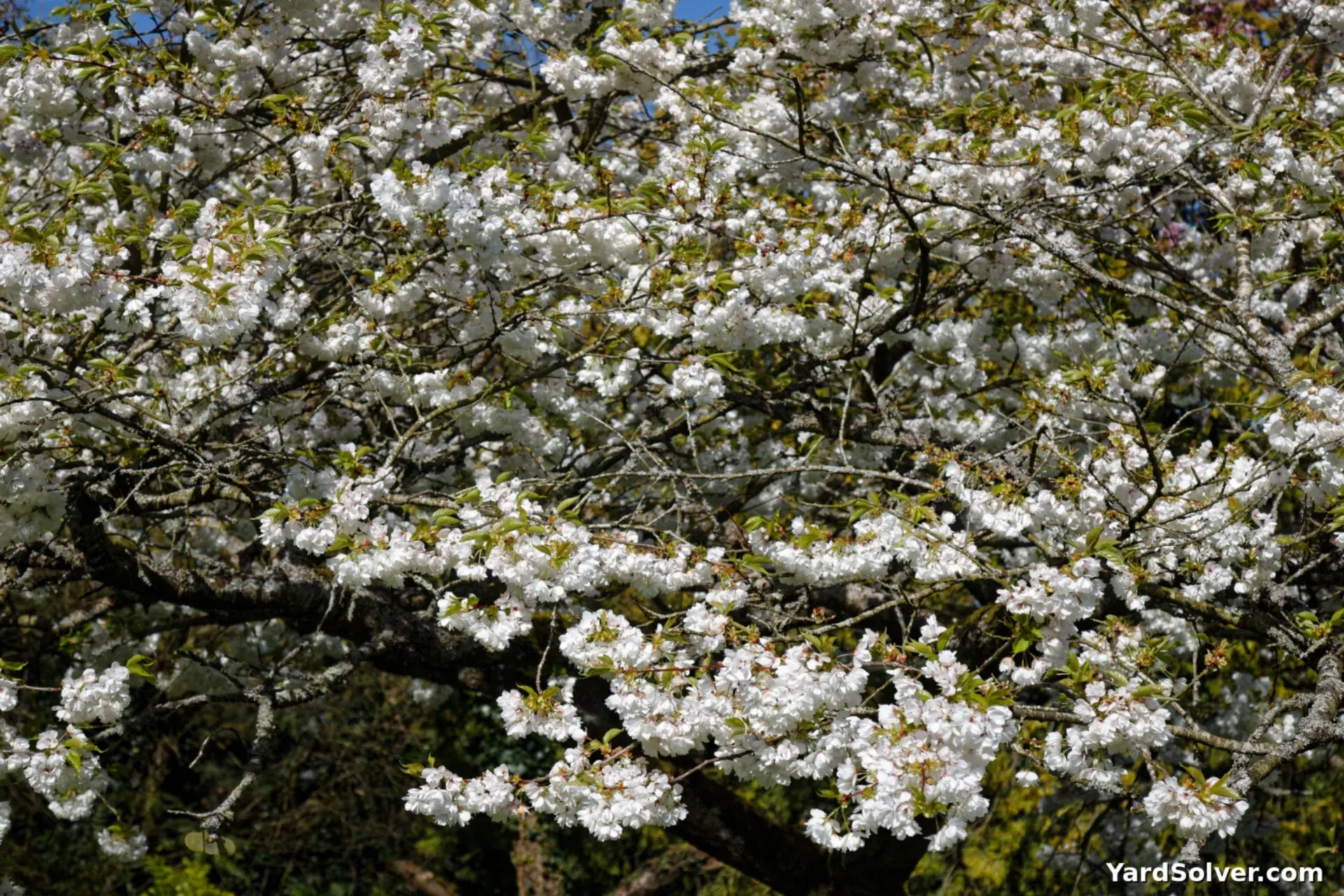
Dig a hole twice as wide as the root ball, set the graft union 2–3 in above the soil line, backfill, water deeply and mulch. The Plant Spacing Calculator turns that spacing into trees-per-plot. Water in with 3 to 5 gallons and firm the backfill so no air pockets sit against the roots. Stake trees on dwarfing rootstocks such as Gisela 5 from day one — a rocking tree never anchors properly.
Step 4 — Water and feed
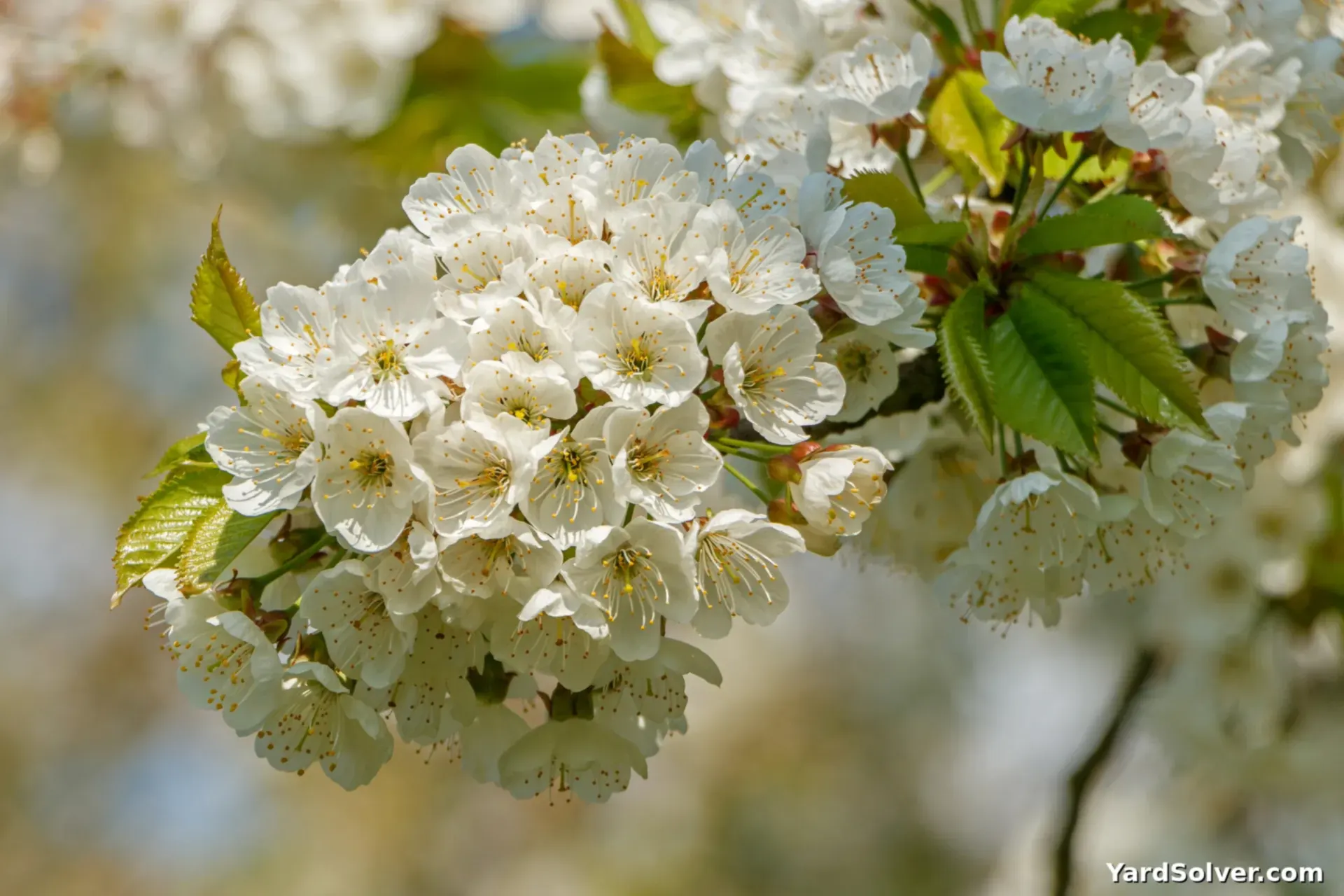
Water: Regular, deep, especially while young. Feed in spring with a balanced fertilizer, modestly. A yearly compost mulch keeps roots cool and moist. The Fertilizer Calculator turns a plot size into the right amount. For the first two summers, water deeply every 7 to 10 days in dry weather, wetting the top 12 in of soil. From year three, extra water is usually needed only in drought and during the fruit's final swell.
Step 5 — Care and the problems to watch for
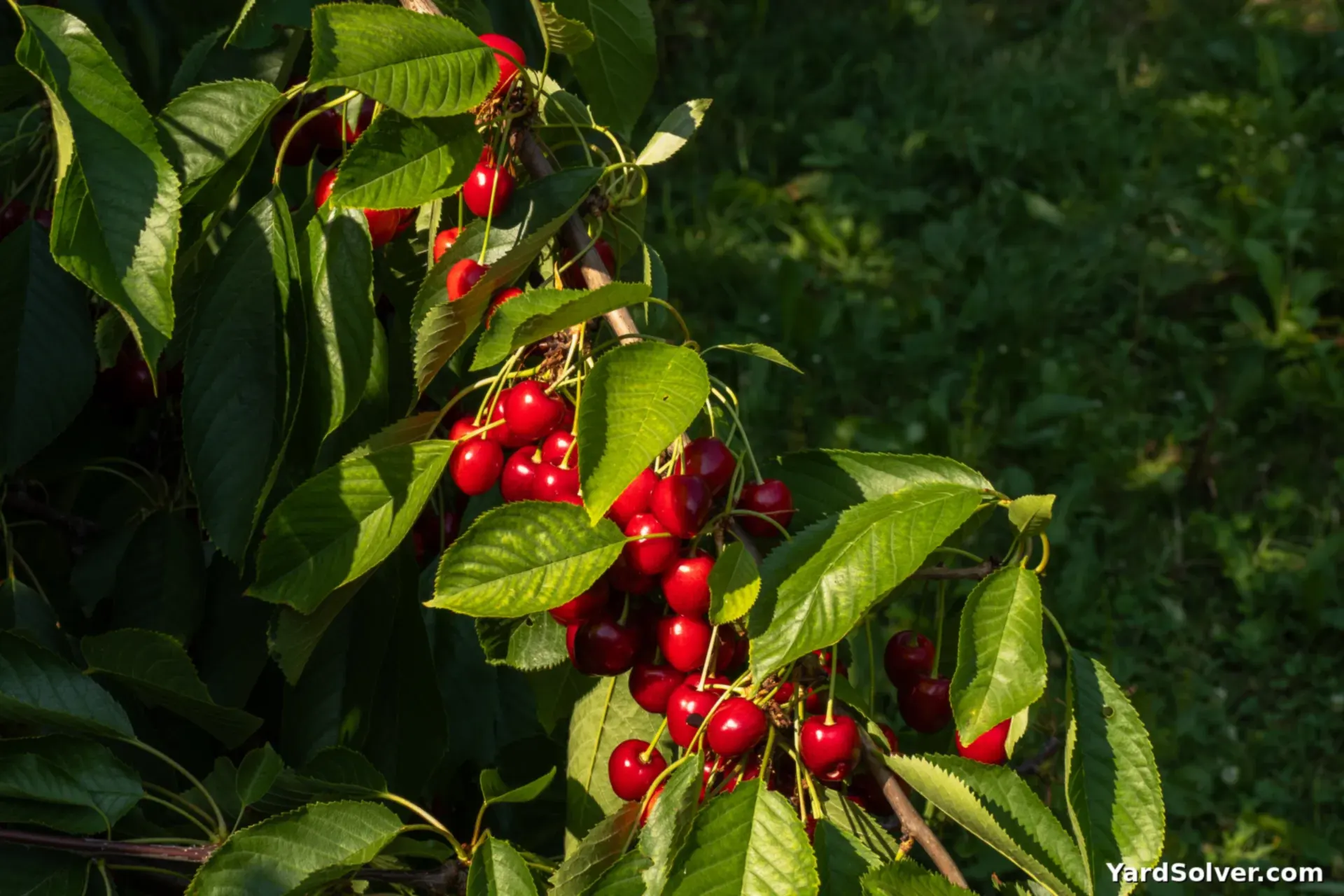
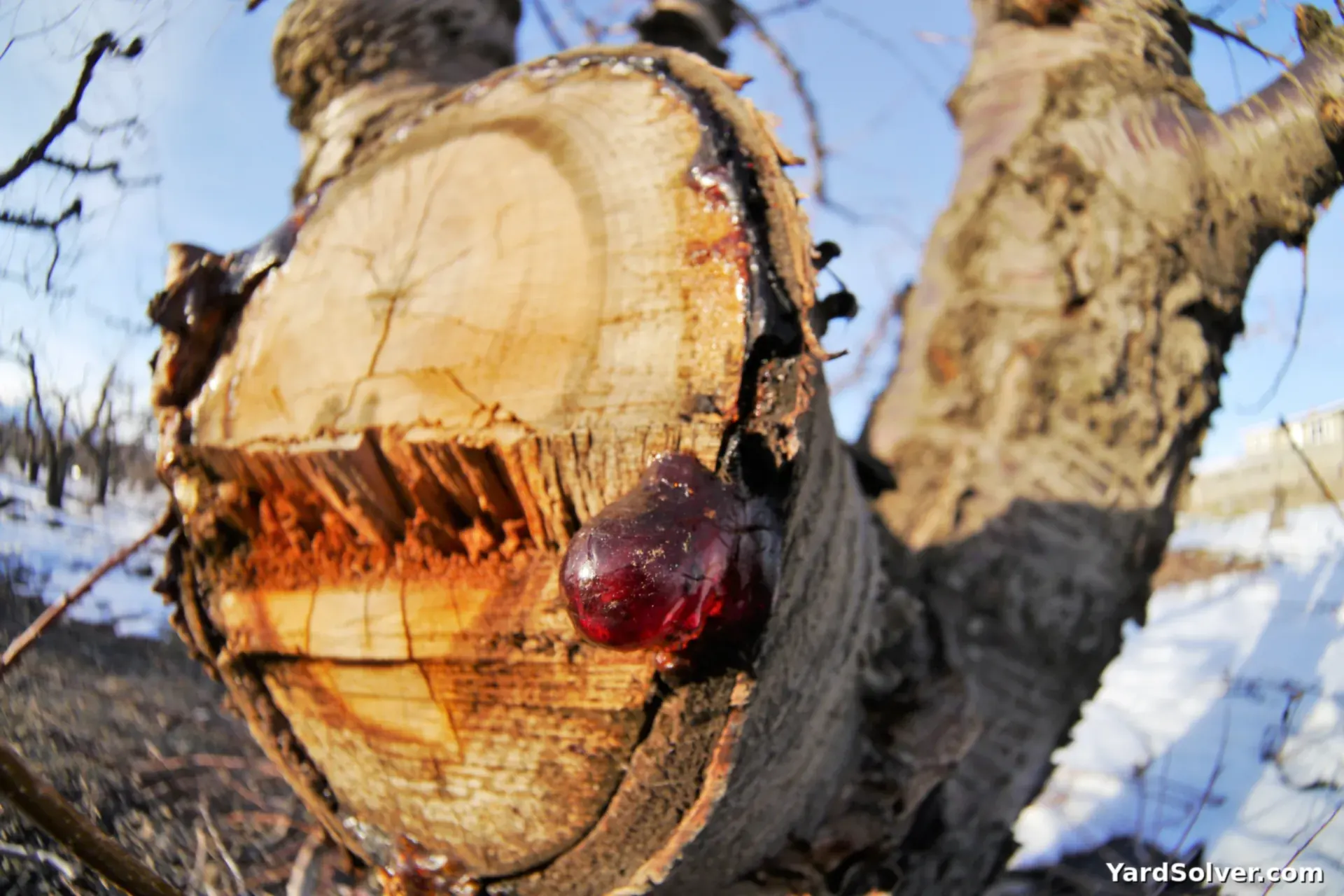
Birds — they will strip a tree in days; net the tree as the fruit colours. Cherry fruit fly — maggots in the fruit; hang yellow sticky traps and pick up fallen fruit. Bacterial canker — oozing patches on bark; prune in dry summer weather, not wet winter. Prune sweet cherries in mid to late summer, after harvest — cuts in wet winter weather invite bacterial canker and silver leaf. Remove one or two crossing branches a year to keep the centre open.
Step 6 — Harvest
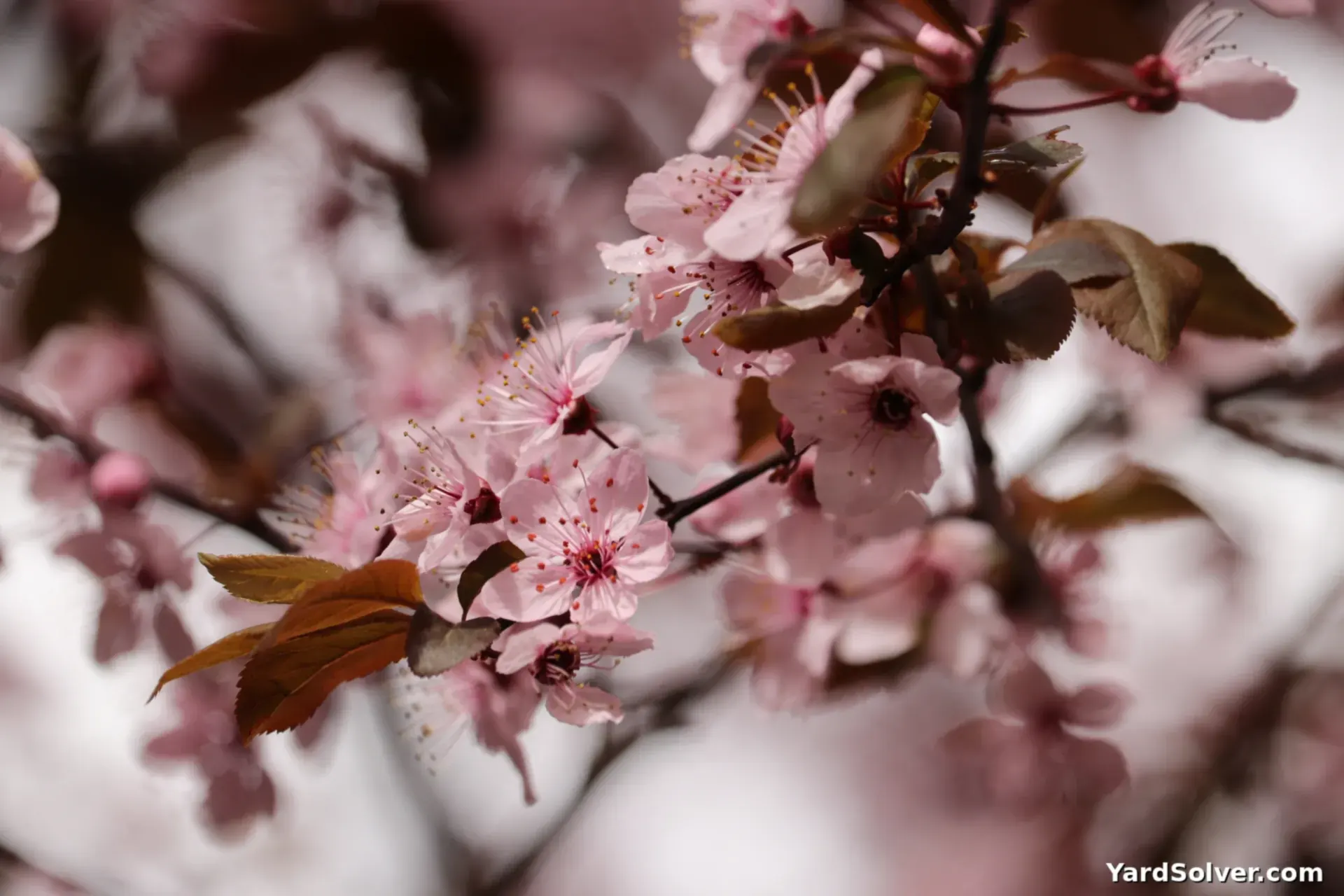
First fruit in 3–5 years. Pick sweet cherries fully ripe — they do not ripen off the tree — and leave the stems on so the fruit keeps. Sour cherries such as Morello ripen a few weeks after sweet types and hang longer, making them the easier crop. Expect roughly 10 to 20 lb from a mature dwarf tree, and two or three times that from a full-size tree.
📅 Your personal Cherry Tree schedule
A cherry tree is measured in seasons, so this schedule counts from your planting day through establishment to the first real harvests. Day 0 is the day your tree went in the ground.
Varieties worth growing
| Variety | Colour | Why gardeners like it |
|---|---|---|
| Stella | Dark red | A sweet cherry that is self-fertile — the one-tree answer |
| Montmorency | Bright red | The classic sour pie cherry, self-fertile and hardy |
| Bing | Dark red | The famous sweet eating cherry — needs a partner |
| North Star | Red | A dwarf sour cherry for small gardens, self-fertile |
Good for you — and take care
Benefits
- Sweet cherries fresh off the tree taste like nothing in a shop
- Sour cherries make the best pies and preserves there are
- Blossom in spring is spectacular
- A long-lived tree — decades of harvests
Take care
- Sweet cherries mostly need a partner variety; sour cherries are self-fertile.
- Net the tree as soon as fruit starts to colour — birds work faster than you do.
- Prune cherries in summer after harvest, not in winter — it lowers the risk of canker.
Problems to watch for
- Birds — they will strip a tree in days; net the tree as the fruit colours.
- Cherry fruit fly — maggots in the fruit; hang yellow sticky traps and pick up fallen fruit.
- Bacterial canker — oozing patches on bark; prune in dry summer weather, not wet winter.
A little history — and one good fact
Cherries have been eaten since prehistoric times — cherry stones have been found in Stone Age settlements. The Romans spread them across Europe, and the names tell the story: the sweet cherry's Latin name, Prunus avium, means the birds' cherry.
Fun fact: A mature sweet cherry tree can carry 7,000 cherries — roughly enough for 28 cherry pies.
Keep going
Guides: How to Harden Off Seedlings · How to Read a Seed Packet
Calculators: Plant Spacing Calculator · Seed Calculator · Fertilizer Calculator · Garden Mix Calculator
Plan it: Garden Planner · Planting Calendar · Companion Planting Chart · Seed Box
Good companions: Garlic · Marigold
More fruit trees: Plum Tree · Peach Tree · Pear Tree
← Back to the Plant Library · Get your personal planting dates
Cherry tree pruning calendar, year by year
Cherries are pruned on a different clock from apples — in the dry season, when cuts heal cleanly.
| When | Job |
|---|---|
| Planting day | Head back a bare-root whip; stake dwarfing rootstocks |
| Each late winter | Dead, damaged and crossing wood only — few, small cuts |
| Each summer, after harvest | Main prune for sweet cherries: thin the centre |
| Years 3 to 5 | First real crops — net as soon as fruit colours |
| Mature trees | Renew one old branch a year, never a hard cut all at once |
Add watering in drought and picking up fallen fruit, and most garden cherries need nothing else.
Questions people ask
When do I plant a cherry tree?
Plant bare-root trees in early spring, or container trees in spring or fall. A sheltered spot away from frost pockets helps the early blossom.
How far apart do I space cherry trees?
Sweet cherries 18–25 ft, sour cherries 15–20 ft. Sun: full sun.
When will my cherry tree fruit?
First fruit in 3–5 years. Sour cherries are self-fertile; most sweet cherries need a partner variety.
Do I need two cherry trees to get fruit?
Sour cherries and self-fertile sweet cherries such as Stella and Lapins crop on their own. Older sweet varieties need a different variety flowering at the same time within about 50 ft, in a compatible pollination group — check the pairing before you buy.
Why do my cherries split before I can pick them?
Splitting follows rain in the last two weeks before harvest, when fruit takes up water faster than the skin can stretch. Pick promptly as fruit colours, keep soil moisture even, and choose split-resistant varieties such as Regina where summers are wet.
Birds, splitting and one hard pruning rule decide a cherry harvest more than feeding ever will
A cherry tree is a long-term planting with three predictable battles. The first is birds: a ripening cherry crop is found by birds days before it is ripe for people, and the only reliable answer is netting the tree — or the fruiting branches — as colour deepens; scare devices buy a day or two at most. The second is splitting: heavy rain near harvest swells fruit faster than skins can stretch, so steady soil moisture through the season, rather than drought followed by deluge, measurably reduces cracked fruit.
The third battle is disease, and it sets the pruning rule: prune cherries in dry summer weather, never in wet winter conditions, because the serious bacterial and fungal cankers enter fresh cuts in wet weather. Sweet cherries also need a pollination partner unless the variety is self-fertile — check before buying a single tree — and sour cherries, which are self-fertile and hardier, are the honest recommendation for cold districts and small gardens.
The worked example: a self-fertile or properly partnered tree, pruned dry in summer, kept evenly watered and netted at colouring, commonly gives a real harvest. The identical tree pruned wet in winter and left un-netted typically feeds the birds through a cankered framework. Cherries reward the gardener who plans for the three known battles instead of fighting them surprised.
Sources
Key facts on this page — timing, spacing and care — cross-checked against NC State Extension Plant Toolbox — Prunus avium (sweet cherry) — culture, pollination, pruning and care requirements.
Related page
Read next: How to Prune Fruit Trees in Winter (Without Ruining Fruit).
Comments & ratings
No comments yet.
Be the first to share your experience.