
Guides · Growing Wisdom · Climate & Planning · Published November 22, 2026 · By Faizan Ahmad
Best Vegetables for Short Growing Seasons in Canada
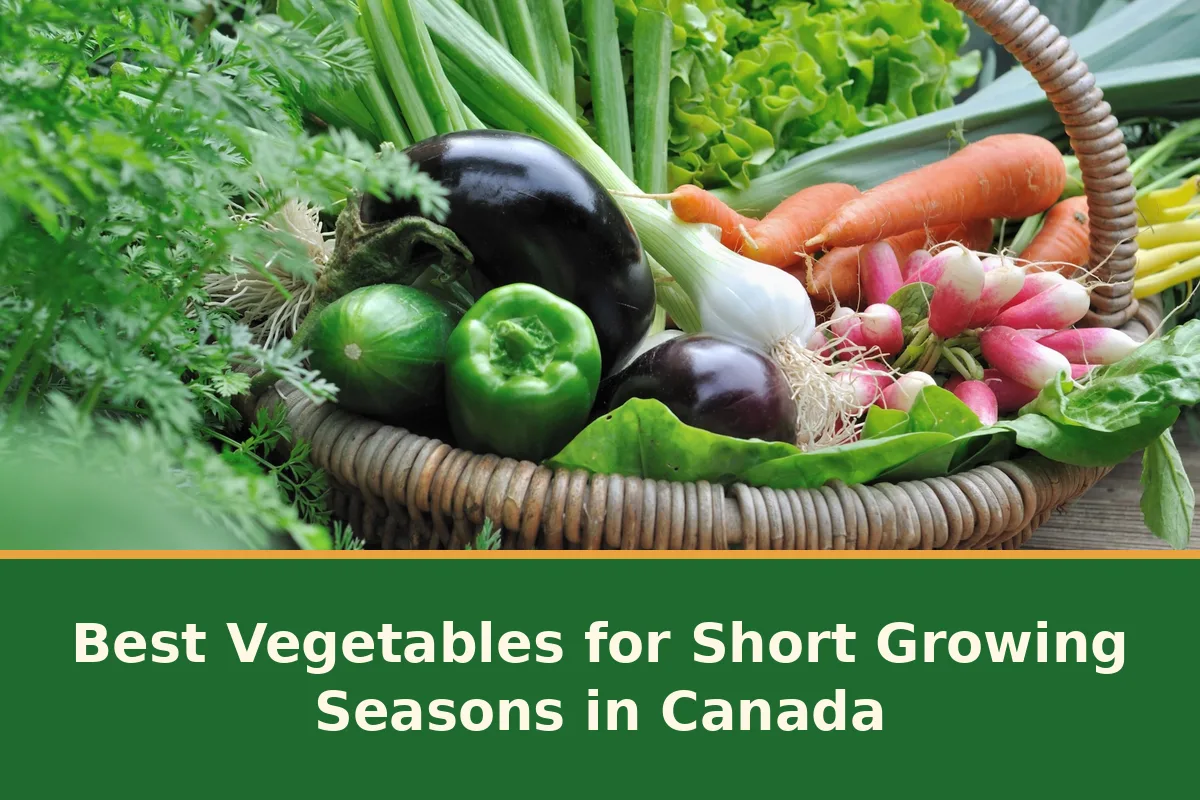
If your frost-free season is 120 days or less — most of the Prairies, northern Ontario and Quebec, and much of Atlantic Canada — the vegetables that will feed you are the ones that mature in 30 to 60 days: radish, lettuce, spinach, peas, bush beans, beets, kale, chard and zucchini, with potatoes close behind. Tomatoes and peppers join them only as early varieties started indoors. This guide gives the fast list with real days-to-maturity, the honest way to read a seed packet, and the tricks that stretch a short season at both ends.
Short-season growing at a glance
- The rule: a crop finishes if its days-to-maturity, plus 14 days of buffer, fit inside your frost-free days.
- The safest ground: radish, lettuce, spinach, peas, bush beans, beets, kale and zucchini — all done in 30–60 days.
- The head-start crops: tomatoes, peppers, celery and winter squash only make it when started indoors and chosen in early varieties.
- The expert line: the University of Saskatchewan's gardening program warns that crops needing more than 75–80 days are difficult in a Prairie season — plan under that ceiling.
- The dates: your exact last and first frost dates are in the Canada Vegetable Planting Calendar.
Step 1 — Know your real season length
"Short season" is a number, not a feeling: the frost-free days between your average last spring frost and first fall frost. Across the Prairies that number runs from about 90 to 125 days depending on the city and even the weather station — Calgary and Regina sit near the short end, Saskatoon and Winnipeg nearer the long end — while northern gardens garden on another scale entirely: roughly 85–95 days around Timmins and Thunder Bay, about 70 in Fort McMurray and under 60 in Thompson, Manitoba. Atlantic and southern Ontario gardeners, at 130–175 days, are playing a different sport. Find your own two dates before you buy a single seed packet: the Planting Calendar works from your location, and Hardiness Zones Explained shows why the zone number on a plant tag is only half the story — zones measure winter cold, not summer length.
Step 2 — Read days-to-maturity like a Prairie gardener
The number on the seed packet is honest but incomplete, and reading it properly is the whole skill of short-season gardening. Three adjustments matter. First, the starting line differs: for tomatoes, peppers, broccoli and most brassicas the count starts at transplant, not sowing — add the 6–10 indoor weeks yourself. For direct-sown crops the count starts when the seed goes in the ground. Second, autumn slows everything: a crop that takes 50 days in June takes 60–65 in September's short, cool days, so count back from your first fall frost with two extra weeks of slack. Third, averages hide the risk: an "average" first frost is a coin flip — half of years frost earlier. The working formula for every planting decision in this guide: days-to-maturity + 14 days buffer must be less than the frost-free days remaining. If the maths fails, the crop needs a head start, a cover, or a faster variety — not hope.
Step 3 — Plant the fast finishers first
These are the crops that carry a short-season garden — direct-sown, fast, and forgiving. Build the backbone of the garden from this table and the season is already a success before the ambitious crops say a word.
| Crop | Days to harvest | Short-season note |
|---|---|---|
| Radish | 25–30 | The fastest food in the garden; sow every 2 weeks |
| Lettuce (leaf) | 30–45 | Cut-and-come-again extends the harvest for weeks |
| Spinach | 35–45 | Loves cool weather; a spring and fall crop in the north |
| Bok choy | 40–50 | Fast and frost-tolerant; harvest whole or leaf by leaf |
| Turnips | 40–55 | Roots and greens both edible; sweetens after light frost |
| Kohlrabi | 45–55 | Ready weeks before its cabbage cousins |
| Zucchini & summer squash | 45–55 | The most food per plant on this list; 2 plants feed a family |
| Bush beans | 50–60 | Sow after last frost into warm soil; no staking, quick crop |
| Beets | 50–60 | Roots plus greens; tolerates light frost at both ends |
| Cucumbers (pickling types) | 50–60 | Pickling varieties mature ahead of long slicers |
| Kale | 50–60 | Harvest from midsummer to hard frost; sweetens in cold |
| Swiss chard | 50–60 | One sowing crops until freeze-up |
| Peas | 55–65 | Sow early — peas want cool soil and quit in heat |
| Carrots | 55–70 | Choose short and round types ('Parisian', 'Little Finger') in short seasons |
| Green onions | 60–70 | Sow thick, pull as needed all season |
| Potatoes (early types) | 70–90 | Early varieties lift by late summer; also the north's most reliable calorie |
Notice what these crops share: most are roots, leaves and pods rather than fruits. Fruiting crops — tomatoes, peppers, melons — spend weeks flowering before they feed you, which is exactly the time a short season does not have. The Succession Planting Guide turns the fast table into a season-long stream: radish, lettuce and beans sown in small repeats never glut and never gap.
Step 4 — Give the slow crops a head start, or skip them honestly
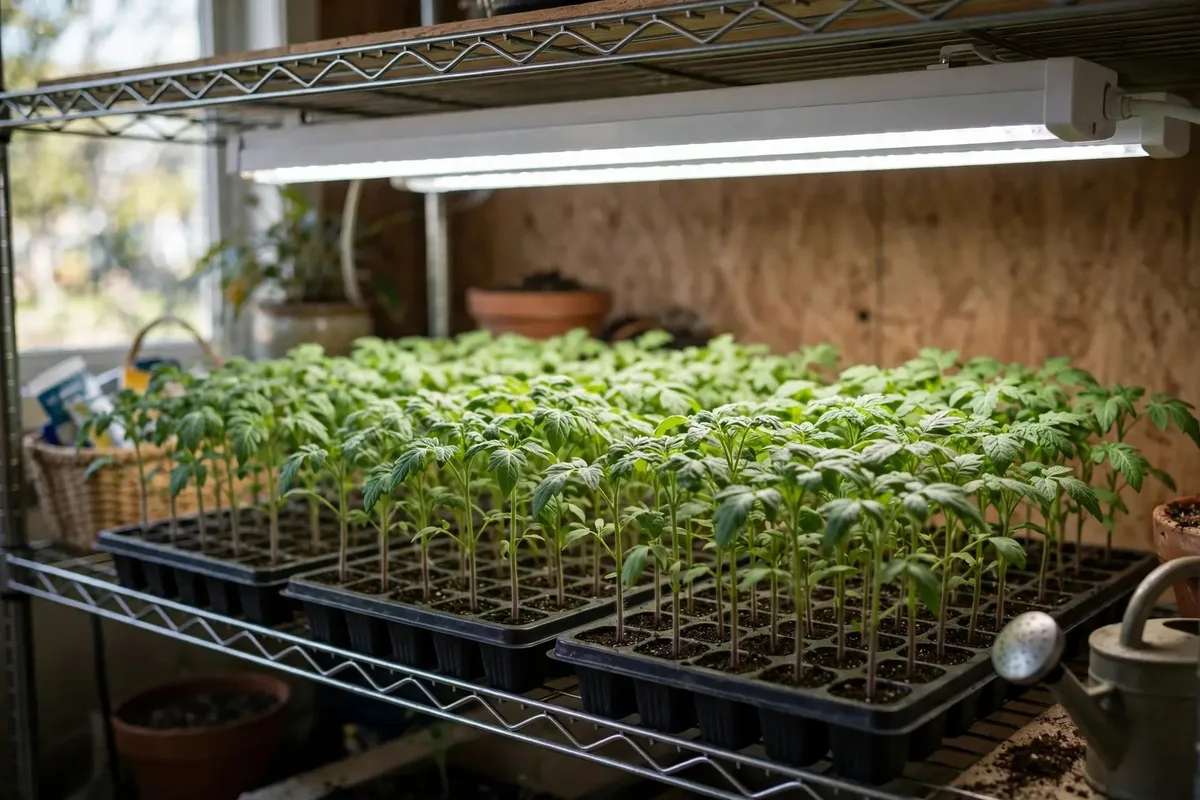
The fruiting crops are not forbidden — they are conditional. A tomato's packet number (60–80 days) starts at transplant, so a tomato started indoors in March spends its slow weeks on your shelf and only its fast, fruiting weeks in the garden. That is the entire trick, and the Canada seed-starting dates guide gives the indoor calendar by province. Variety choice is the second half of the trick: grow the tomatoes bred for exactly this problem — 'Sub-Arctic Plenty', developed in Alberta and ripe in as little as 42–45 days from transplant, and 'Manitoba', bred on the Prairies at about 60 days — instead of a 85-day beefsteak bred for Ontario. Peppers are the hardest ask: they need 8–10 indoor weeks, warm soil, and an early type (hot peppers and small sweets finish ahead of big bells). Winter squash and pumpkins sit on the line — only the earliest varieties (80–90 days), started indoors or under cover, in the warmest spot you own. And skip melons outdoors north of the warmest valleys; that bed earns more as beans. Warmth hacks that genuinely move the needle: raised beds (they thaw and warm first — see Raised Bed Gardening for Beginners), black mulch under fruiting crops, and a south wall behind them.
Step 5 — Stretch both ends of the season
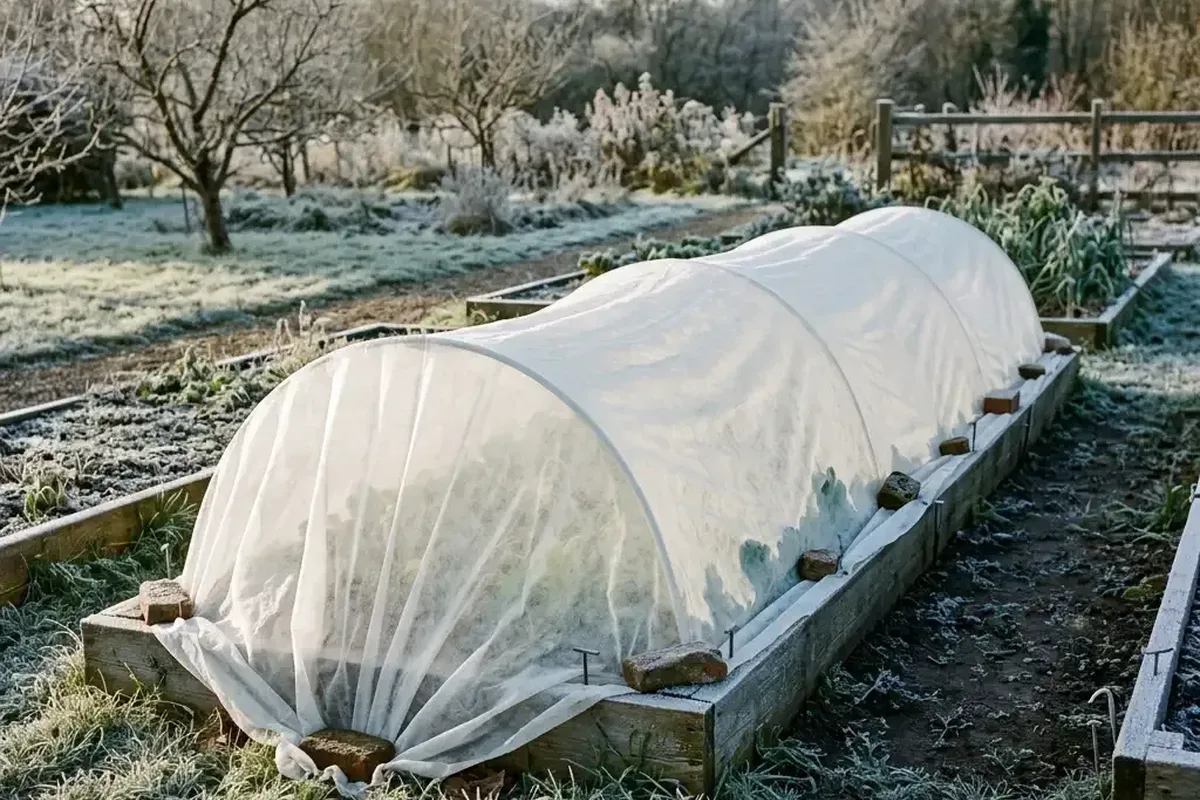
The last lever is the calendar itself. At the spring end, hardy crops — peas, spinach, lettuce, radish, brassicas — go out two to four weeks before the last frost, because they shrug off light frost and grow in cool soil; waiting for the frost date wastes a month of their favourite weather. At the autumn end, a layer of floating row cover buys roughly 2–3 °C of protection — often two to four extra weeks — and a cold frame buys more, as Cold Frames in Winter shows. Spend that protection on the crops still finishing: the last beans, the ripening tomatoes, the squash hardening its skin. Meanwhile the frost-hardy brigade — kale, chard, carrots, leeks, spinach — needs no protection at all and tastes better after frost touches it. A short-season garden run this way harvests from May to October: the season was never too short, it was only ever misread.
Keep going
Plan it: Canada Vegetable Planting Calendar 2027 · Planting Calendar · When to Start Seeds Indoors in Canada
Read next: Succession planting guide · Hardiness zones explained · Cold frames in winter
The fast finishers: Radish · Lettuce · Peas · Green Beans
Questions people ask
What vegetables grow best in a short growing season?
The ones that mature in 60 days or less from sowing: radish (25–30 days), leaf lettuce, spinach, bok choy, turnips, kohlrabi, zucchini, bush beans, beets, pickling cucumbers, kale, chard and peas. Fruiting crops like tomatoes and peppers only fit when started indoors in early varieties.
How many frost-free days do the Canadian Prairies get?
About 90 to 125 depending on the city — Calgary and Regina near the short end, Saskatoon and Winnipeg nearer the long end — and far fewer further north: roughly 70 days in Fort McMurray and under 60 in Thompson, Manitoba.
Can you grow tomatoes in zone 3?
Yes — with the method, not the hope. Start early varieties indoors 6–8 weeks before your last frost, transplant into your warmest, most sheltered spot, and choose tomatoes bred for short seasons such as 'Sub-Arctic Plenty' (42–45 days from transplant) or 'Manitoba' (about 60 days).
What does "days to maturity" actually count from?
For direct-sown crops, from the day the seed goes in the ground. For tomatoes, peppers and most brassicas, from the day the transplant goes out — the 6–10 weeks the seedling spent indoors are not counted, which is exactly why indoor starting makes slow crops possible in short seasons.
A short season is a variety problem, not a climate sentence
Every spring, gardeners in Calgary, Regina and Thunder Bay buy the same seed packets as gardeners in Toronto — and every autumn, half of those gardens end with green tomatoes and fingerling-sized squash while the other half eats. The difference is rarely effort or soil. It is arithmetic done in January: the winning gardens are planted from the short list, in early varieties, with the slow crops started indoors on time. A 100-day season grows a genuinely wide table — roots, greens, peas, beans, zucchini, cucumbers, potatoes, and ripe tomatoes — as long as every crop in the ground can prove, on paper, that it finishes by the first fall frost with a fortnight to spare.
The second difference is that short-season gardeners treat the shoulders of the year as growing time. Hardy crops sown into cold April soil and kale standing in November snow are not stunts; in a Prairie or northern garden they are a third of the harvest. Add fleece at the first frost warning and a cold frame for the greens, and the "short" season quietly becomes a seven-month one — shorter than Vancouver's, certainly, but far longer than the seed packets led you to fear.
Sources
Frost dates and season lengths cross-checked against GardenOrbit — When to Plant in Canada (Environment and Climate Change Canada 1991–2020 climate normals) and Short Season Grower — Frost Dates for Canadian Cities (Old Farmer's Almanac / Environment Canada normals). The 75–80-day Prairie ceiling follows the University of Saskatchewan gardening program guidance as reported by GardenOrbit — Easiest Vegetables for a Short Canadian Season. Days-to-maturity figures are seed-catalogue standards for the varieties named.
Related page
Read next: Canada Vegetable Planting Calendar 2027: Sow, Transplant & Direct-Sow Dates by Province.
Comments & ratings
No comments yet.
Be the first to share your experience.