
Plant Library · Vegetables · By Faizan Ahmad
🥕 How to Grow Carrot
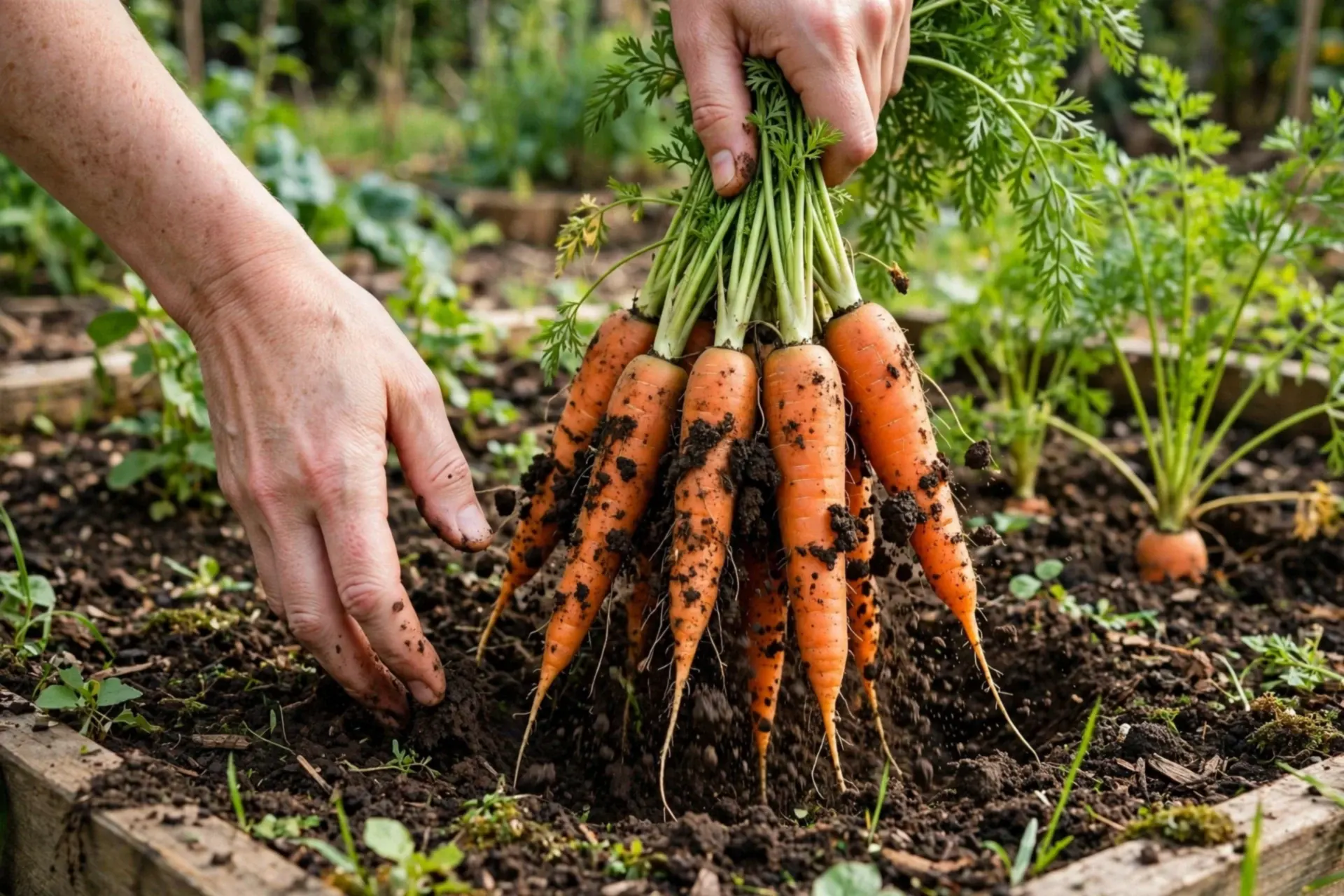
Slow to sprout (2–3 weeks) — patience, and loose soil. Carrots are a cool-season crop: direct sow about 3 weeks before your last frost into loose, stone-free soil, and keep the seed bed moist — they take a slow 2 to 3 weeks to sprout.
Grow Carrot with us — step by step
Everything for this plant is written step by step below — what to do, and exactly when. Read it through first if you like: you can grow it entirely on your own with that guide. Or start with us here — tell us your planting day and we lay out your personal schedule on this page, every next step on its own day, counted from your planting date. No guessing, no forgetting.
Step 1 — today: Sow your Carrot seeds today: 1/4 in deep, spaced 2 in apart, in full sun. Water the row in well and keep it moist while seeds sprout.
Carrot at a glance
Sow outdoors: 3 weeks before last frost
Spacing: 2 in · Seed depth: 1/4 in
Sun: Full sun
Water: Keep the seed bed moist until sprouting
Harvest: 60–80 days
Timing counts from your average last spring frost — get your own dates in the Planting Calendar. Guidance follows standard extension-service practice for Canada and the US.
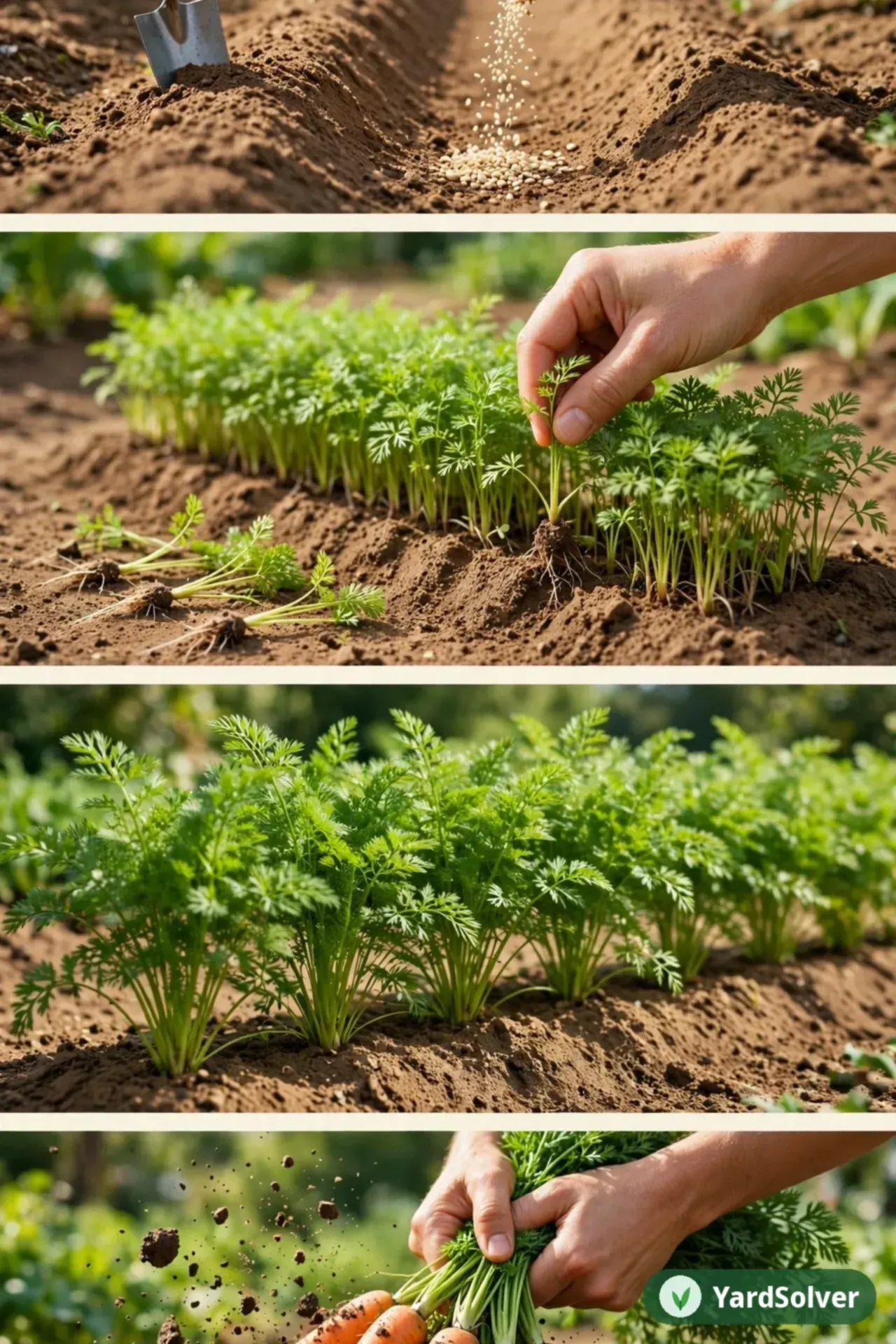
How to plant and grow carrot, step by step
Step 1 — Time it right
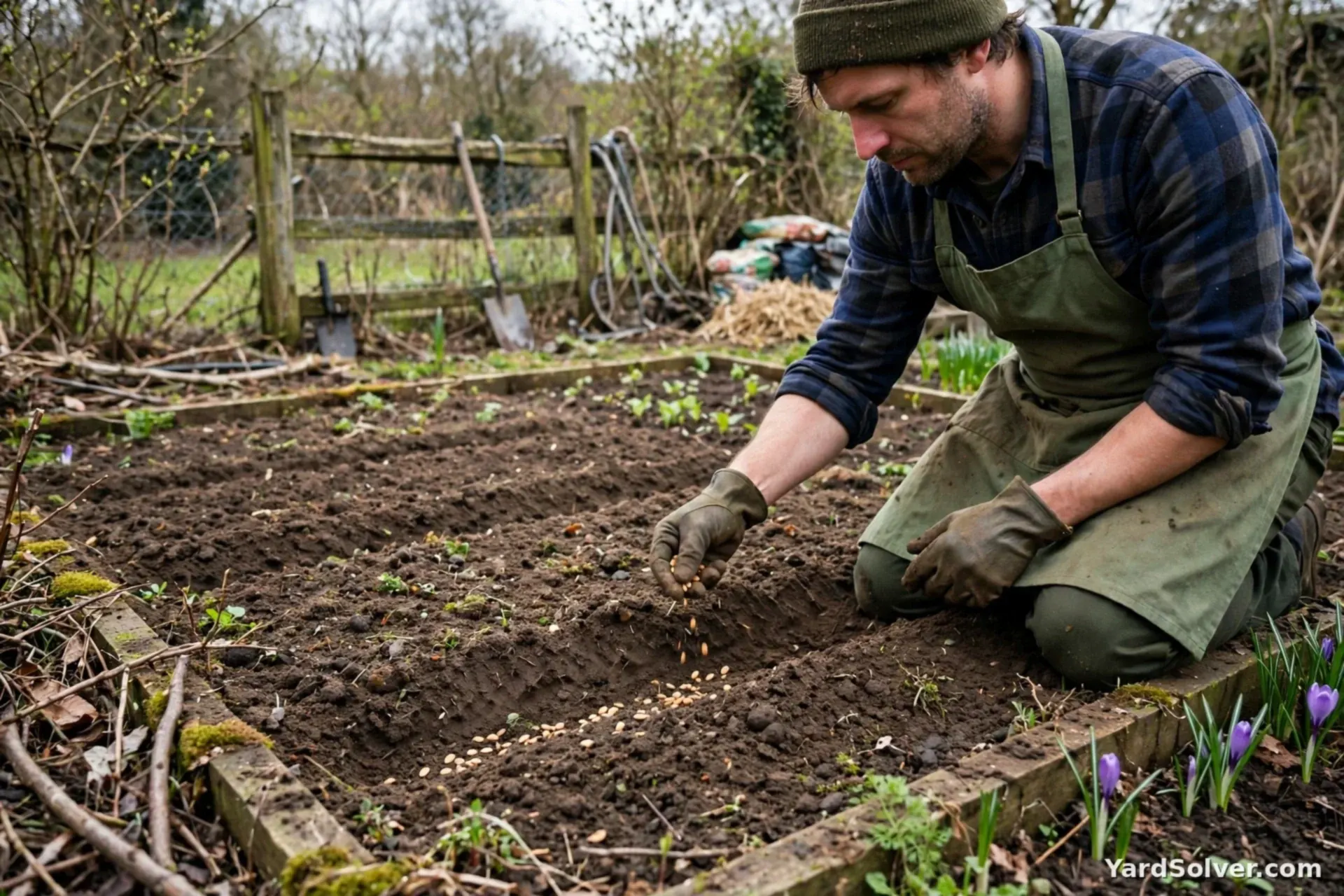
Sow outdoors: 3 weeks before last frost. All dates count from your average last spring frost — the Planting Calendar turns them into real dates for your garden. Carrots are a cool-season crop: direct sow about 3 weeks before your last frost into loose, stone-free soil, and keep the seed bed moist — they take a slow 2 to 3 weeks to sprout.
Step 2 — Prepare the spot
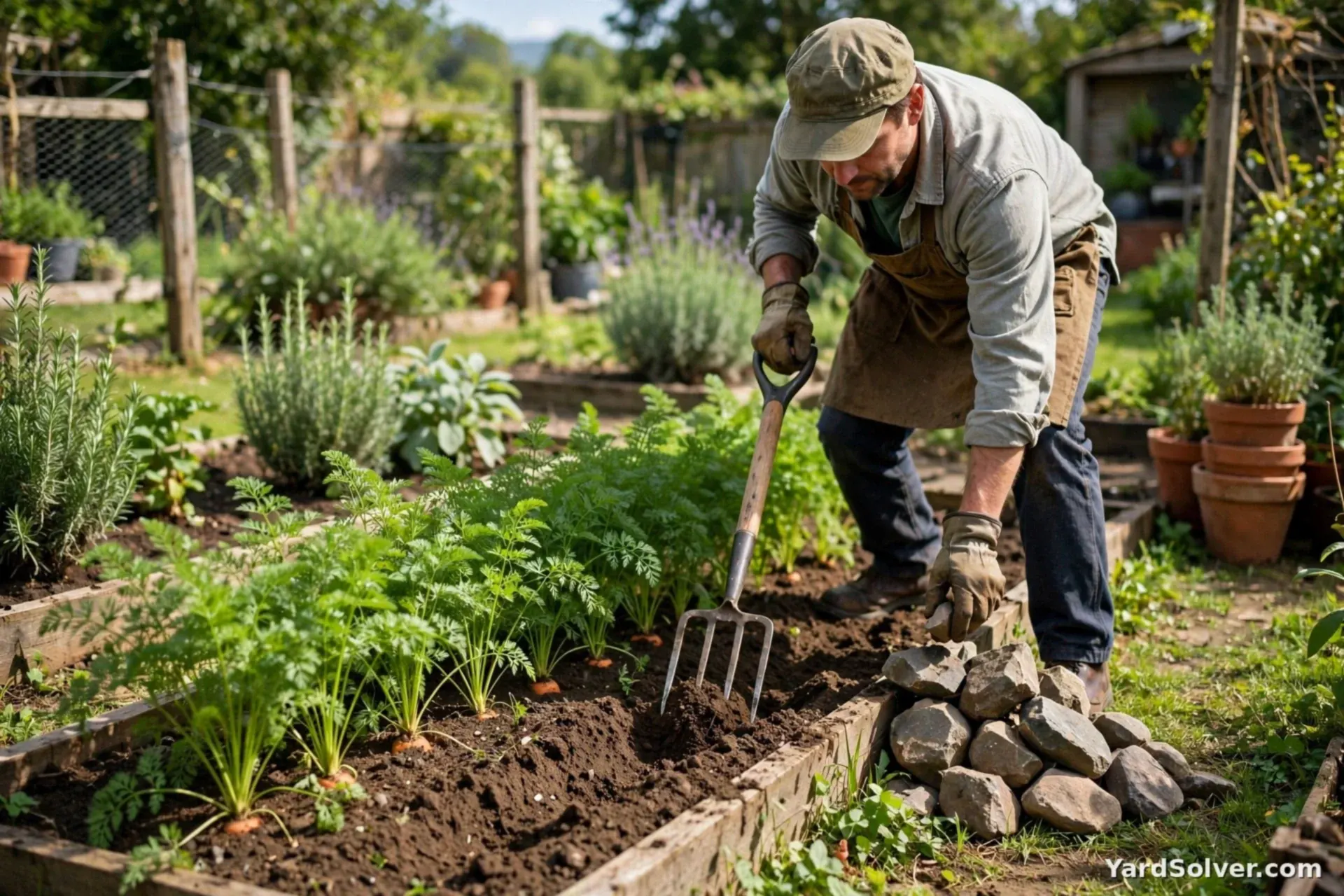
Sun: Full sun. Loose, stone-free soil is the whole secret for root crops — dig it over, pick out stones, and work in compost (never fresh manure, which forks roots). Depth and drainage matter more than feeding. Work out how much you need with the Garden Mix Calculator or the Raised Bed Soil Calculator.
Step 3 — Sow and plant out
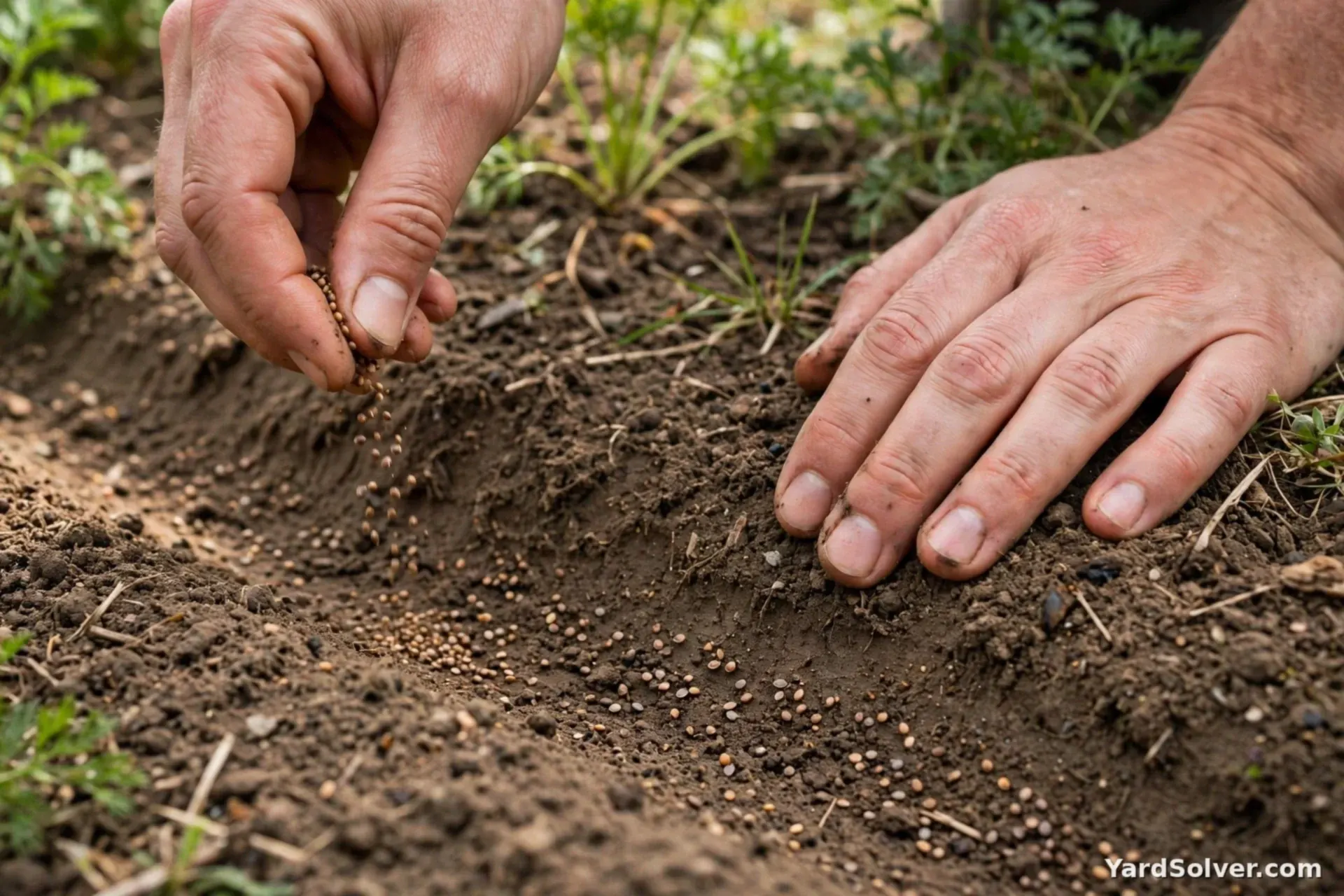
Sow directly where they will grow, 3 weeks before last frost, 1/4 in deep and 2 in apart (thin seedlings to that spacing once they are up). The Seed Calculator works out how much seed a bed needs.
Step 4 — Water and feed
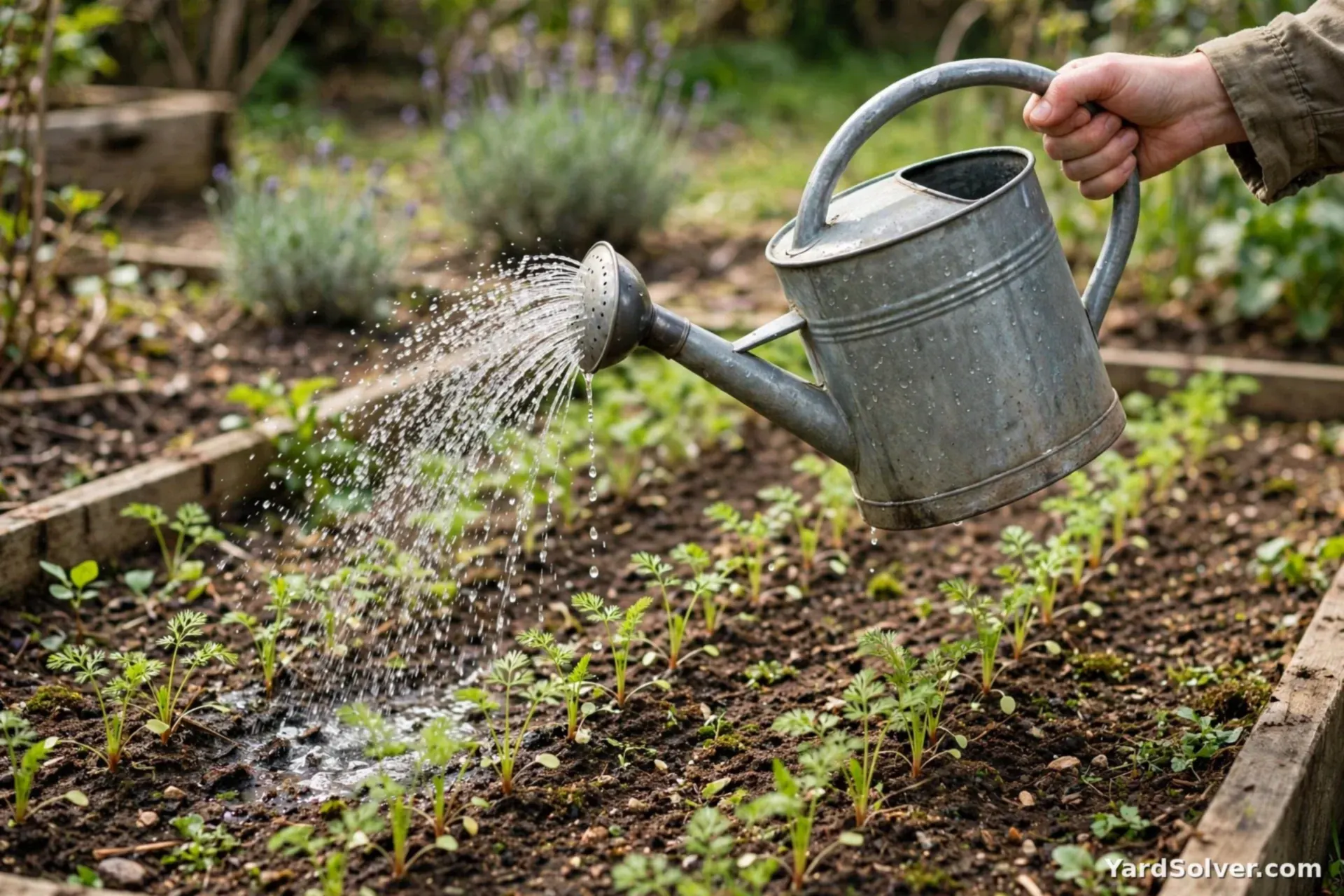
Water: Keep the seed bed moist until sprouting. The Fertilizer Calculator turns a bed size into the right amount.
Step 5 — Care and the problems to watch for
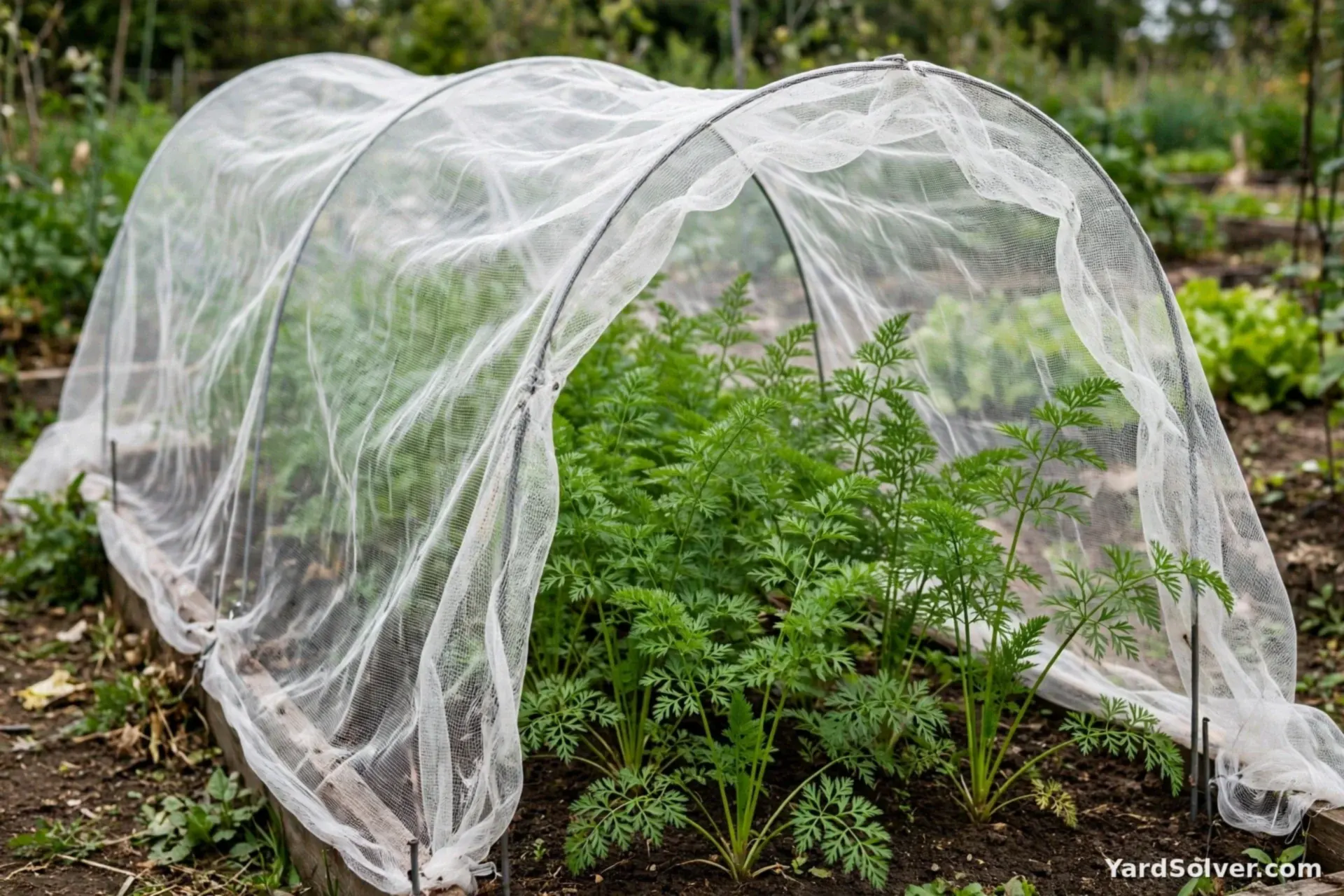
- Carrot fly — maggots tunnel roots; fine mesh over the row stops them.
- Forked roots — stones or fresh manure in the soil; keep beds loose and stone-free.
- Green shoulders — roots pushing above soil; mound a little soil over them.
Take care: Eating truly huge amounts of carrots for a long time can tint the skin slightly orange — it is harmless and fades. Carrot allergy is uncommon but exists, often linked to birch-pollen allergies.
Step 6 — Harvest
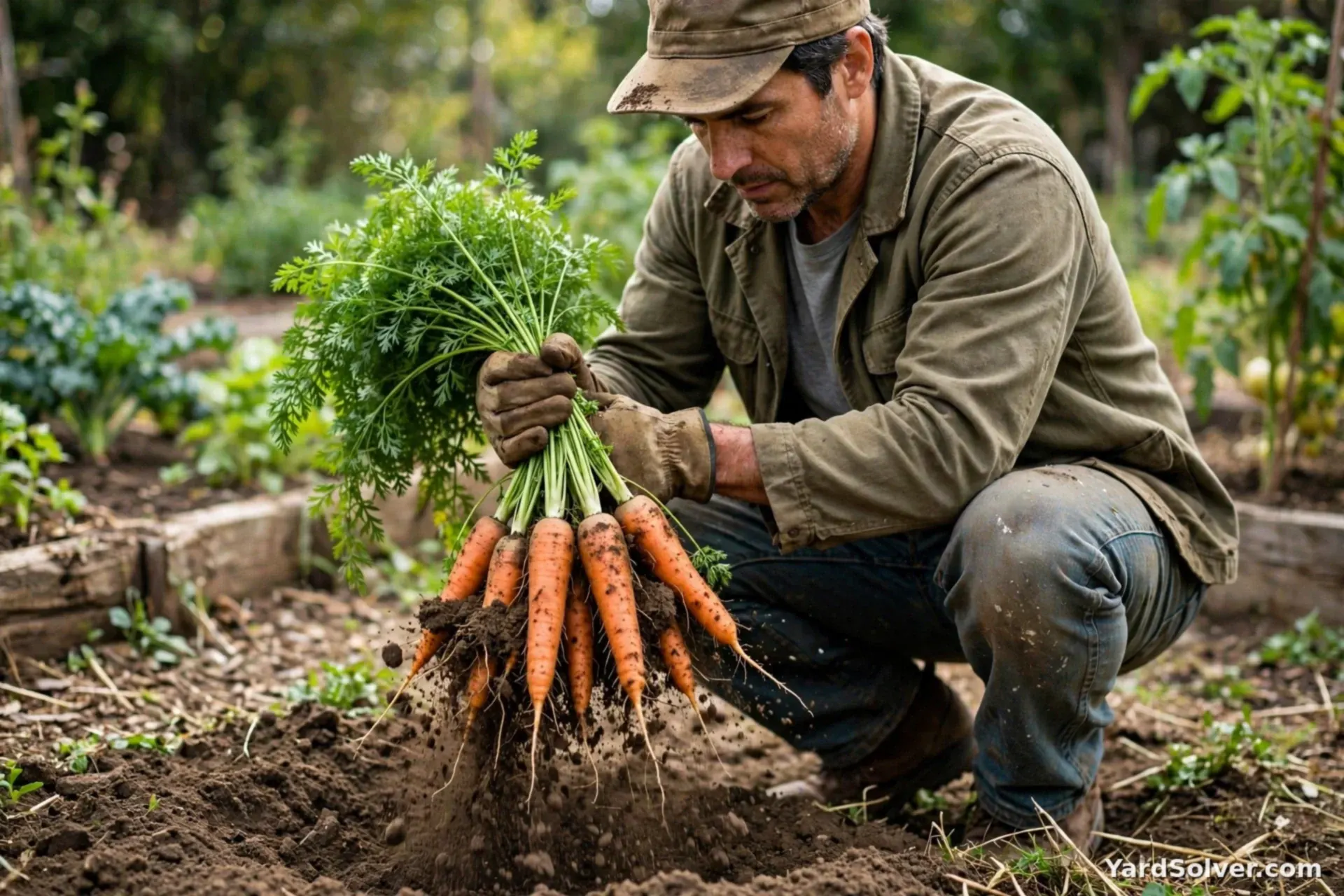
Ready in: 60–80 days. Harvest runs from about day 60 to 80 — pull one to check the size before lifting the row.
📅 Your personal Carrot schedule
Counted from your planting day — not a generic calendar. Day 0 is the day the seed went in the ground or the young plant went out.
Varieties worth growing
| Variety | Colour | Why gardeners like it |
|---|---|---|
| Scarlet Nantes | Orange | Sweet, crisp and nearly coreless — the classic home-garden carrot |
| Danvers | Orange | A sturdy, thick-shouldered type that handles heavier soil better than most |
| Little Finger | Orange | Small 4-inch carrots made for pots and shallow soil |
| Purple Haze | Purple skin, orange centre | A showy carrot that keeps its purple colour best eaten raw |
| Bolero | Orange | A dependable Nantes-type hybrid with strong tops and good disease resistance |
Good for you — and take care
Benefits
- Famous for beta-carotene, which the body turns into vitamin A for healthy eyes
- Provides fibre for good digestion
- Provides vitamin K and potassium
- Crunchy, sweet and low in calories
- Purple and red types add extra natural antioxidants
Take care
- Eating truly huge amounts of carrots for a long time can tint the skin slightly orange — it is harmless and fades
- Carrot allergy is uncommon but exists, often linked to birch-pollen allergies
A little history — and one good fact
Carrots come from Central Asia, around present-day Afghanistan, where the first farmed carrots were purple and yellow, not orange. Orange carrots were bred by Dutch growers a few hundred years ago and proved so sweet and popular that they took over the world. Wild carrot relatives — including Queen Anne's lace — still grow along roadsides today.
Fun fact: Carrots were not always orange — for most of history they were purple or yellow, and orange ones are the newcomers.
Keep going
Guides: When to Start Seeds Indoors · How to Prepare Garden Soil in Spring · How to Harden Off Seedlings
Calculators: Plant Spacing Calculator · Seed Calculator · Garden Mix Calculator
More vegetables: Tomato · Pepper · Cucumber · Parsley Root
← Back to the Plant Library · Get your personal planting dates
Questions people ask
When do I plant carrot?
Count from your average last spring frost: sow outdoors 3 weeks before last frost. Carrots are a cool-season crop: direct sow about 3 weeks before your last frost into loose, stone-free soil, and keep the seed bed moist — they take a slow 2 to 3 weeks to sprout.
How far apart do I space carrot?
Space plants 2 in apart, with seed sown 1/4 in deep. Sun: full sun.
When is carrot ready to harvest?
60–80 days. Slow to sprout (2–3 weeks) — patience, and loose soil.
Straight, sweet carrots are made before sowing: loose, stone-free soil and thin sowing decide the crop
Carrots forgive almost everything except heavy, stony ground and crowded sowing. The root is the harvest, and it grows straight down from the seed — every stone, clod or fork of fresh manure it meets on the way can split it into the short, forked shapes beginners blame on the variety. Work the bed deep and fine, rake it level, and sow thinly in shallow drills. Where soil is heavy clay, the honest fixes are short, round varieties, raised beds of loose mix, or a deep container — all three give the root the clear run it needs.
Thinning is the job most often skipped and most often regretted. Seedlings left cheek-by-jowl compete into thin, woody roots no later care can fatten. Thin in stages to a final spacing that lets each root swell, water in dry spells so growth never checks — a check followed by heavy rain is what splits roots open — and keep the shoulders covered with soil as they push up, because green, sun-exposed shoulders taste bitter. Carrot fly is the one serious pest; a fine insect mesh over the bed from sowing is simpler and more reliable than any spray.
The worked example: seed sown thinly into a deep, stone-free bed, thinned on time and watered steadily, commonly lifts long, straight, sweet roots. The identical seed sown thick into unworked ground typically lifts a tangle of forked stubs. With carrots, the crop is decided at the soil-preparation stage — everything after sowing is just keeping the promise the bed already made.
Sources
Key facts on this page — timing, spacing and care — cross-checked against NC State Extension Plant Toolbox — Daucus carota (carrot) — culture, spacing, soil and care requirements.
Related page
Read next: How to Test Garden Soil (pH & Nutrients), Step by Step.
Comments & ratings
No comments yet.
Be the first to share your experience.