
Guides · 2027 planning · Published November 20, 2026 · By Faizan Ahmad
When to Order Seeds for Spring: The December-to-February Window for 2027
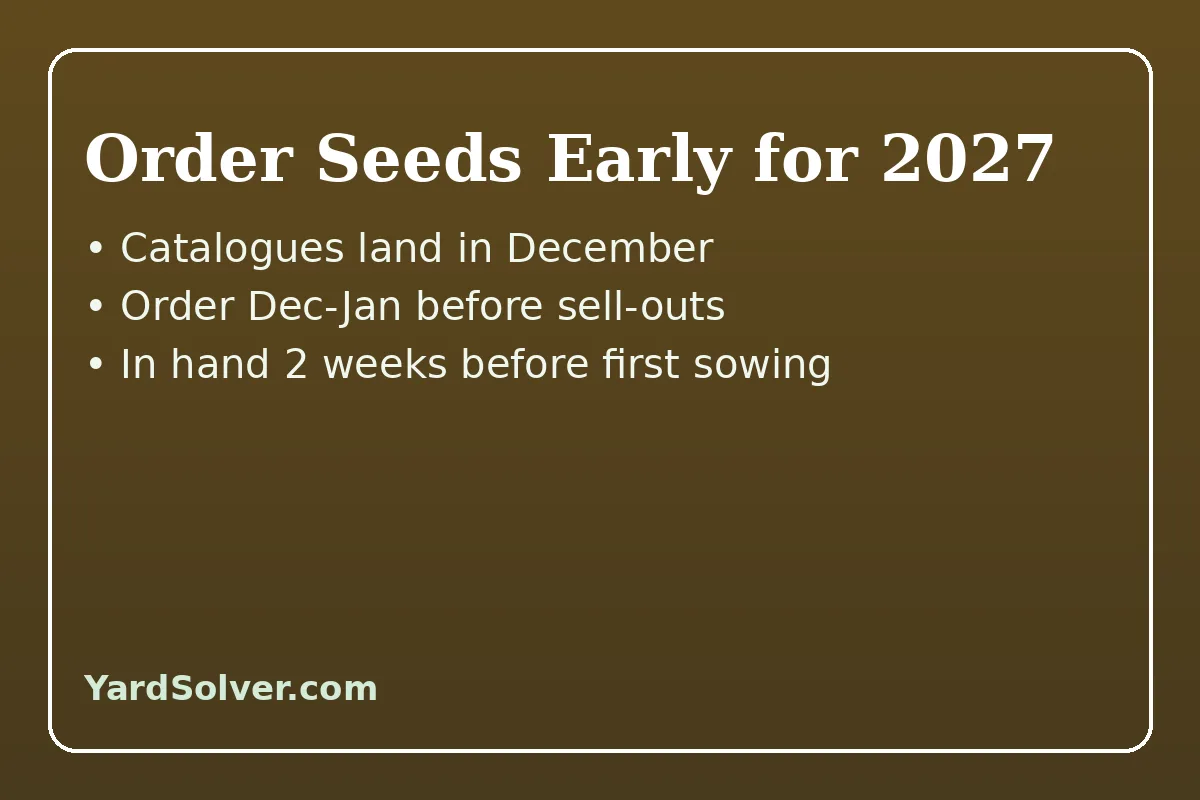
Order seeds for spring between December and February — in practice, place the main order in December or January, as soon as the new catalogues land, and have every packet in hand at least two weeks before your first indoor sowing date. Seed companies release their 2027 lists in December, popular and new varieties routinely sell out by late winter, and the earliest crops — onions and leeks, sown 10–12 weeks before last frost — need their seed by late January in much of Canada and the northern US. Ordering early is not impatience; it is the only way the garden you planned in winter is the garden you can actually plant in spring. This guide gives the month-by-month order plan, the in-hand date for each crop counted back from last frost, how to build the order from an inventory instead of a catalogue's front page, and how to store packets so early buying never wastes seed.
The short answer, on one card
Catalogues: released in December — request print copies early or shortlist online. Order: December to January for anything popular, new or heirloom; February is the last safe month for the rest. In hand: at least two weeks before each crop's first indoor sowing date. First deadline: onions and leeks — seed needed by late January in zones 5–6. Before ordering: inventory what you already own and germination-test the doubtful packets, so you order gaps, not duplicates. Storage: cool, dry and dark, in a sealed container — early-ordered seed keeps perfectly until sowing.
Why the window is December to February
Three clocks run at once. The first is the seed companies': catalogues are usually released in December, and that first listing is the full one — every variety, in stock, including the small-batch heirlooms and the new-season introductions that will not be reprinted or restocked once they go. Beginning-gardener guidance from the National Gardening Association's Gardening.org makes the point directly: the earlier you place your seed order, the better, because some companies sell out quickly, especially of rare and hard-to-come-by types; the working advice is to have selections picked in December or January at the latest and order as soon as you know what you want. The second clock is the crop's: seed-starting dates are counted back from last frost, and the long-season crops start shockingly early — onions and leeks in February in cold climates, peppers not long after — so the seed has to be in the house before the sowing calendar starts, not ordered when it does. The third clock is yours: January and February are when the January garden checklist jobs and indoor projects like winter sowing compete for the same weekends. The quotable version: in seed ordering, late winter is already late — the garden is chosen in December.
In-hand dates: count back from last frost
| Crop | Start indoors (weeks before last frost) | Seed in hand by — zone 5–6 (last frost mid-May) | Seed in hand by — zone 7 (last frost mid-April) |
|---|---|---|---|
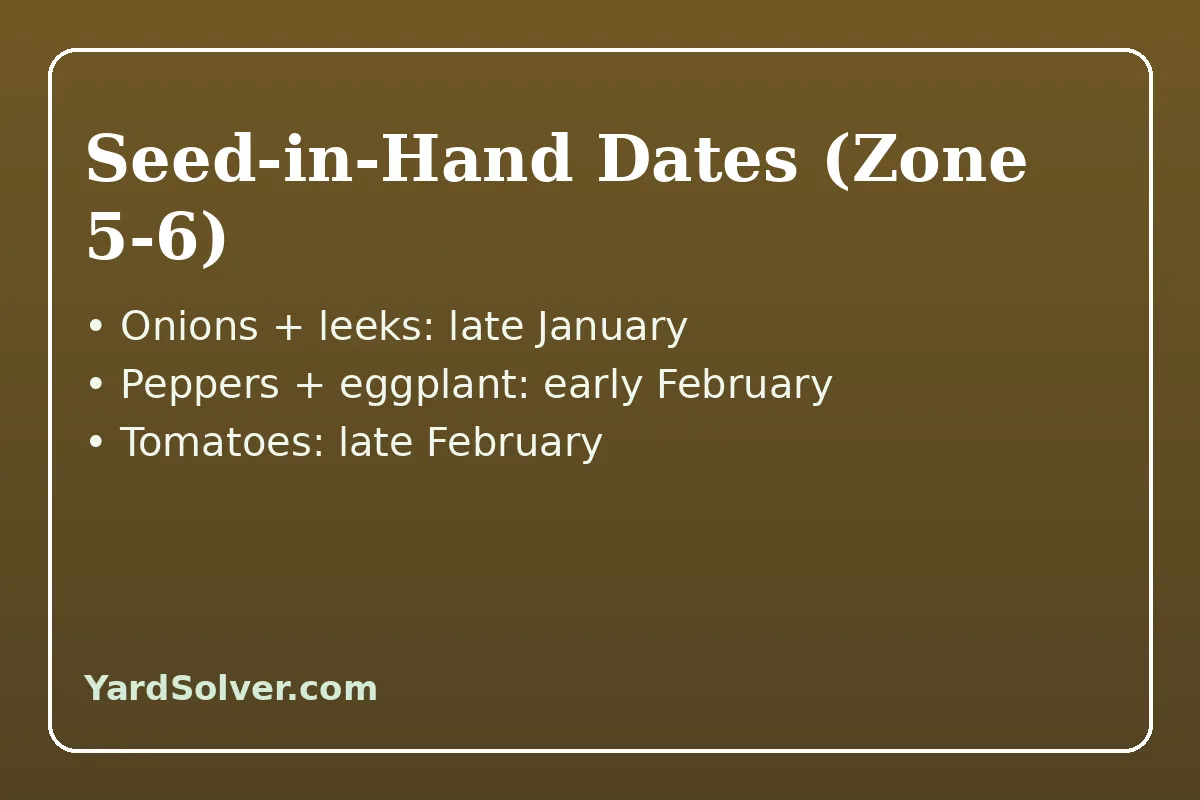
| Onions and leeks | 10–12 weeks | Late January | Late December |
| Celery | 10–12 weeks | Late January | Late December |
| Peppers and eggplant | 8–10 weeks | Early February | Early January |
| Broccoli, cabbage, cauliflower | 4–6 weeks (for early transplants) | Late February | Late January |
| Tomatoes | 6–8 weeks | Late February | Late January |
| Lettuce for transplants | 4–6 weeks | February | January |
| Cucumbers, squash, melons (in pots) | 3–4 weeks | March | February |
| Beans, corn, carrots, beets, peas | Direct sow | Any time before spring | Any time before spring |
The table follows the standard count-back method: find your average last spring frost, subtract the weeks on the packet, and hold the seed two weeks before that date to leave room for postage and mistakes. University of Minnesota Extension's starting-seeds guidance gives the same northern-climate rhythm — leeks, onions and celery in February, cold-hardy brassicas and the long-season heat-lovers in early to mid-March, tomatoes in early April for a mid-to-late-May last frost. Warmer zones shift every date earlier, colder zones later, but the order of the crops never changes. Our Canada 2027 seed-starting calendar and the 2027 Canada planting calendar carry the full date tables by zone; this guide's job is the step before them — making sure the seed exists when those dates arrive. For the varieties themselves, start with Best New Seed Varieties for 2027 and decode any unfamiliar packet language with How to Read a Seed Packet.
Build the order from an inventory, not a catalogue
The cheapest seed order is the one that starts in your own seed box. Work through the full seed stash audit first: list every packet you own, note its year, and germination-test anything doubtful using the damp-paper method in Are Old Seeds Still Good? — most vegetable seed keeps two to five years stored cool and dry, and onion and parsnip seed, the short-lived exceptions, are exactly the ones to buy fresh every year. Then plan the beds before the basket: how many plants of each crop the garden actually holds, at the spacing the crop needs, with one succession sowing allowed for. University of Minnesota Extension's rule for buying is the discipline to copy — do not buy more seed than you will use in two or three years, because fresher seed germinates better and a packet is already many plants. Only then open the catalogues, with the gap list beside you. Order the must-haves in the first order — the sold-out-prone varieties, the long-season crops, anything on a January deadline — and let impulse additions ride in the same basket rather than a second, forgotten one. Gardeners who split orders with a neighbour halve the cost of the varieties both households only need half a packet of.
Storing an early order, and the cold-stratification bonus
Early buying only works if the seed waits well, and it does: packets stored in a sealed jar or airtight container in a cool, dark, dry place — a fridge is ideal for long storage, with a silica packet to hold humidity down — lose almost nothing between December and sowing. Keep the packets in their original printing; the packet is the instruction sheet you will need at the bench, and photograph the backs if you decant anything into envelopes. One group of seeds should not wait in the jar at all: the perennials and natives that need cold stratification should go straight into their chilling period or into winter-sowing jugs outdoors, which is why Seeds That Need Cold Stratification belongs in the same December sitting as the order itself. Do that, and the sequence closes neatly: inventory in November, order in December, stratify and winter-sow in January, and the first indoor trays in February — each step done in the month when it is easy, instead of all of them in the March weekend when it is not.
How the window shifts between Canada and the US
The December-to-February window is a northern-temperate rule, and it slides with last frost. In the warmest parts of the US — zones 9 and 10, with last frosts in February — the whole calendar runs six to eight weeks earlier: catalogues still land in December, but tomatoes are sown in January and the in-hand deadline for summer crops is the new year, which makes December ordering not early but simply on time. Gardeners there also run a second, smaller order in midsummer for fall crops, ordered while the spring garden is still producing. In the coldest parts of Canada — zones 3 and 4, last frost in late May or early June — every in-hand date in the table shifts about four weeks later, and the pressure eases on delivery but not on selection: the sell-out clock is set by the whole continent ordering at once, not by your local frost. Canadian gardeners should also order cross-border varieties early, since small Canadian suppliers and US catalogues shipping north both sell through their Canadian-bound stock first. Wherever you garden, the test is the same: pick the crop you sow earliest, count back from last frost, and make sure this December's order covers it — the rest of the calendar can flex, that one date cannot.
When the order arrives: check it like a delivery, not a gift
Treat the seed parcel as a delivery to be verified, not a present to be opened in March. Check every packet against the order confirmation the week it lands: wrong varieties and short shipments are common in the January rush, and a company will fix them instantly in January and apologise in March when the replacement is also sold out. Note the packed-for year on each packet — you want seed packed for 2027 — and file packets in sowing order in the storage jar, earliest crop at the front, with the germination-test results from your stash audit paper-clipped to their replacements. If a packet arrives with far more seed than the bed needs, that is next year's tested stash, not this year's thicker sowing: sowing double-density to use up seed just buys a thinning chore. Finally, write the two or three varieties you could not get at the top of next year's list the day the order arrives, while the disappointment is fresh — that small habit, compounded over a few Decembers, is how experienced gardeners end up never missing a variety at all.
Keep going
Start the sequence with the Seed Stash Audit and Are Old Seeds Still Good?, pick varieties from Best New Seed Varieties for 2027, put the packets to work with When to Start Seeds Indoors in Canada 2027, and chill what needs chilling with Seeds That Need Cold Stratification.
Sources
The December catalogue timing, the have-selections-picked-by-December-or-January advice and the warning that seed companies sell out quickly — especially of rare varieties — follow the National Gardening Association's A Beginning Gardener's Guide to Ordering Seeds (Gardening.org). The northern-climate indoor sowing rhythm (February onions, leeks and celery; March brassicas, peppers and eggplant; April tomatoes) and the buy-no-more-than-two-to-three-years and cool-storage rules follow the University of Minnesota Extension, Starting Seeds Indoors. The in-hand-two-weeks-early rule and the count-back table structure follow When to Order Garden Seeds (ThriveThyme), which builds on Virginia Cooperative Extension planting guidance.
Questions people ask
When is the best time to order seeds for spring?
December to February, with the main order placed in December or January as soon as the new catalogues are released. Popular, new and heirloom varieties sell out by late winter, and the earliest indoor crops need their seed by late January in cold climates.
Why do gardeners order seeds so early?
Three reasons: selection (the December catalogue is the full list, before sell-outs), timing (onions, leeks, celery and peppers are sown 8–12 weeks before last frost, so the seed must already be in the house), and price and calm — winter ordering avoids the spring rush entirely.
How early should seed be in hand before sowing?
At least two weeks before the crop's first indoor sowing date. Count back from your average last frost using the weeks on the packet, then subtract a fortnight for delivery and germination tests. Direct-sown crops like beans and carrots have no indoor deadline but should still ride in the early order.
Should I order seeds before testing my old ones?
No — inventory first. List what you own, check packet years, and germination-test doubtful seed on damp paper. Most vegetable seed keeps two to five years stored cool and dry, so a tested stash usually cuts the new order substantially. Onion and parsnip seed are short-lived; buy those fresh yearly.
How do I store seed bought in December until spring?
In the original packets, inside a sealed jar or airtight container with a silica packet, in a cool, dark, dry place — the refrigerator is ideal for longer storage. Seeds that need cold stratification are the exception: start their chilling, or winter-sow them outdoors, instead of storing them.
What if a variety I want sells out?
Order the must-haves first next year, and this year: check a second company (varieties are rarely exclusive), look for the same variety under its other common names, or choose the closest substitute by days-to-maturity and disease resistance on the packet — then note it on next December's list.
Comments & ratings
No comments yet.
Be the first to share your experience.