
Plant Library · Vegetables · By Faizan Ahmad
🌿 How to Grow Celery
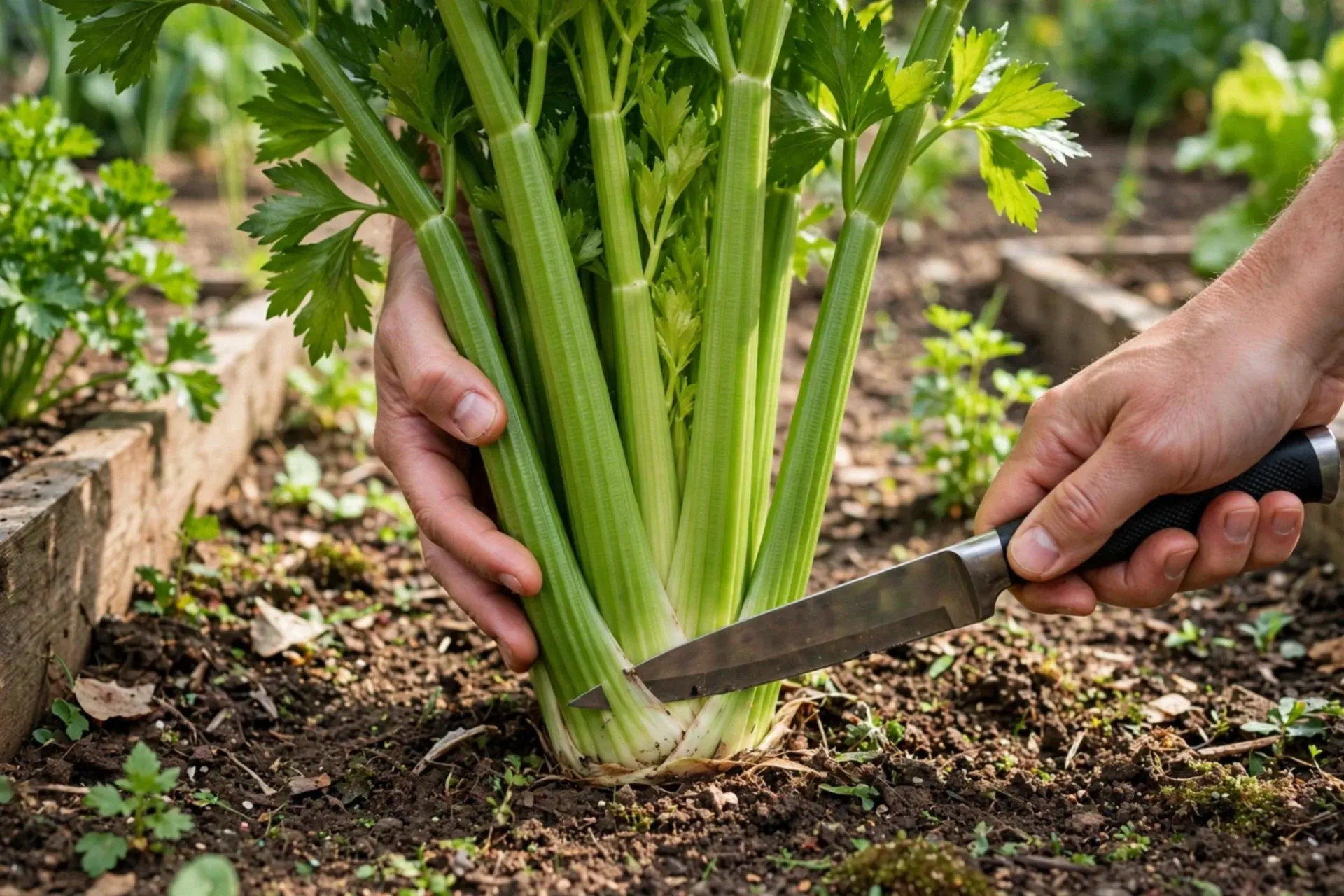
The earliest indoor start of all and the thirstiest crop — mulch well. Celery needs the earliest start of all: sow indoors about 11 weeks before your last frost and transplant about a week after it — it is the thirstiest crop in the garden, so mulch well and never let it dry out.
Grow Celery with us — step by step
Everything for this plant is written step by step below — what to do, and exactly when. Read it through first if you like: you can grow it entirely on your own with that guide. Or start with us here — tell us your planting day and we lay out your personal schedule on this page, every next step on its own day, counted from your planting date. No guessing, no forgetting.
Step 1 — today: Plant out your young Celery plants today (hardened off first), spaced 8–10 in apart, and water them in deeply. Starting from seed instead? Sow indoors now, 1/4 in deep, and this same schedule counts from transplant day.
Celery at a glance
Sow indoors: 11 weeks before last frost
Move outside: 1 week after last frost
Spacing: 8–10 in · Seed depth: 1/4 in
Sun: Full sun
Water: Never let it dry out
Harvest: 85–100 days after transplant
Timing counts from your average last spring frost — get your own dates in the Planting Calendar. Guidance follows standard extension-service practice for Canada and the US.
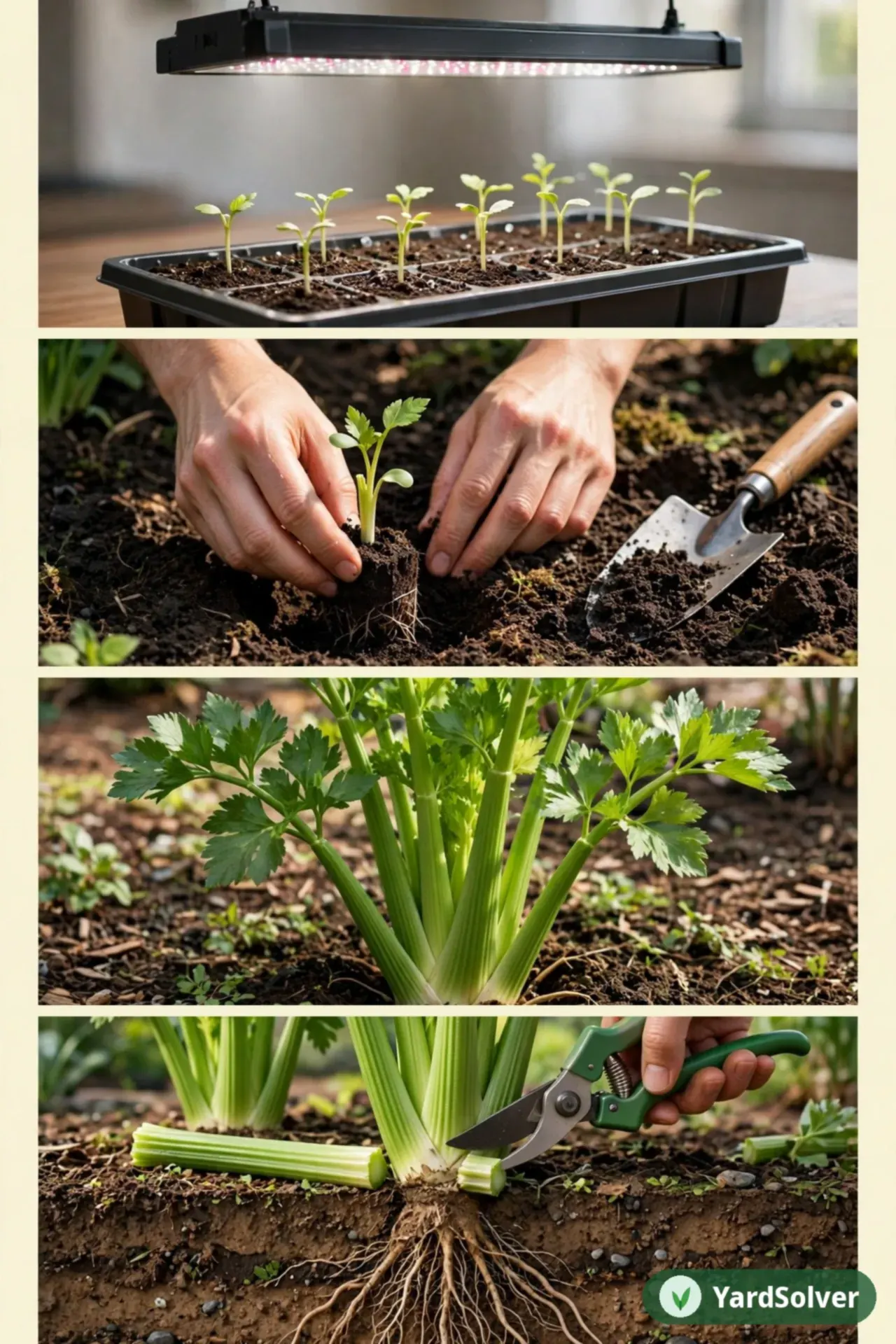
How to plant and grow celery, step by step
Step 1 — Time it right
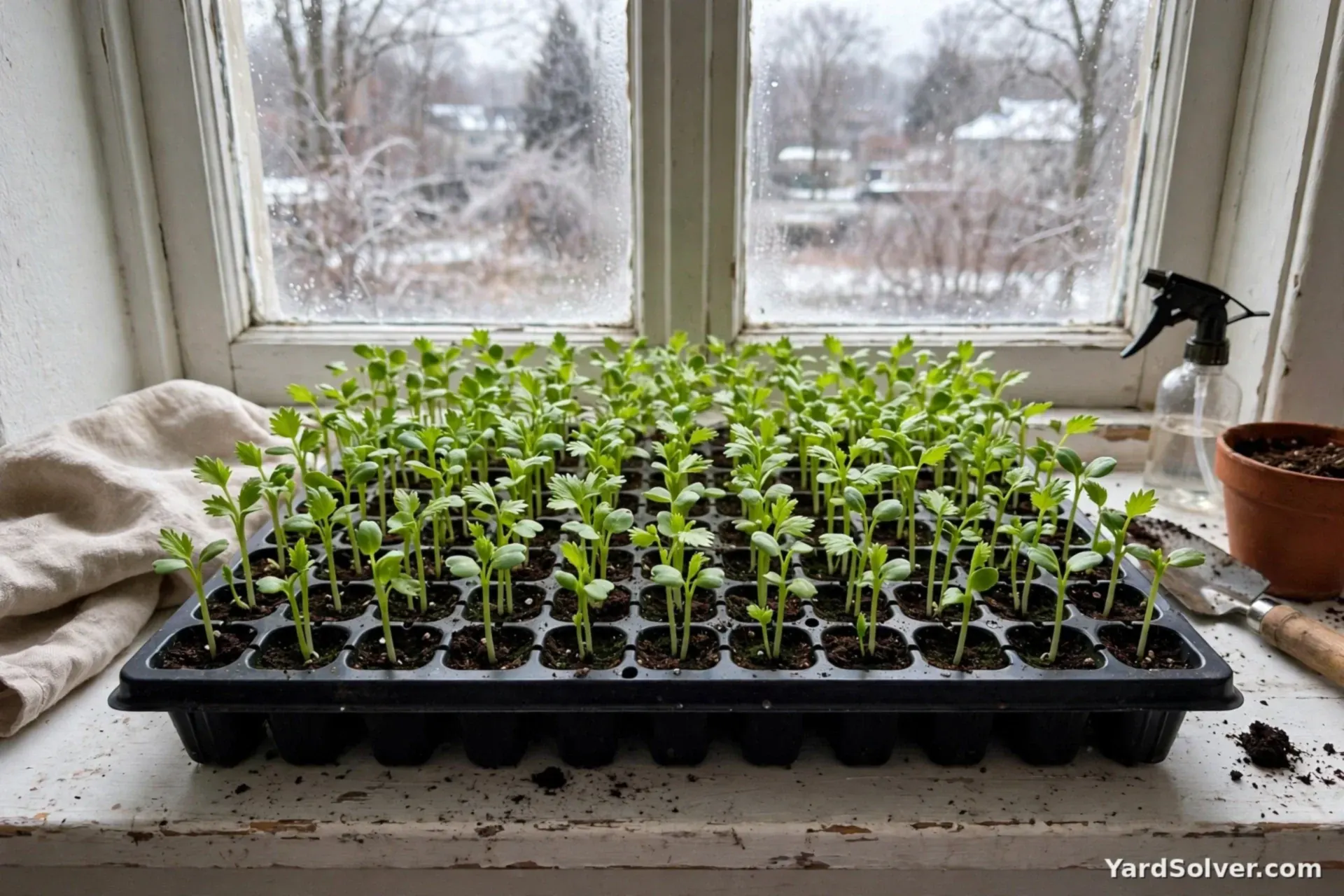
Sow indoors: 11 weeks before last frost; Move outside: 1 week after last frost. All dates count from your average last spring frost — the Planting Calendar turns them into real dates for your garden. Celery needs the earliest start of all: sow indoors about 11 weeks before your last frost and transplant about a week after it — it is the thirstiest crop in the garden, so mulch well and never let it dry out.
Step 2 — Prepare the spot
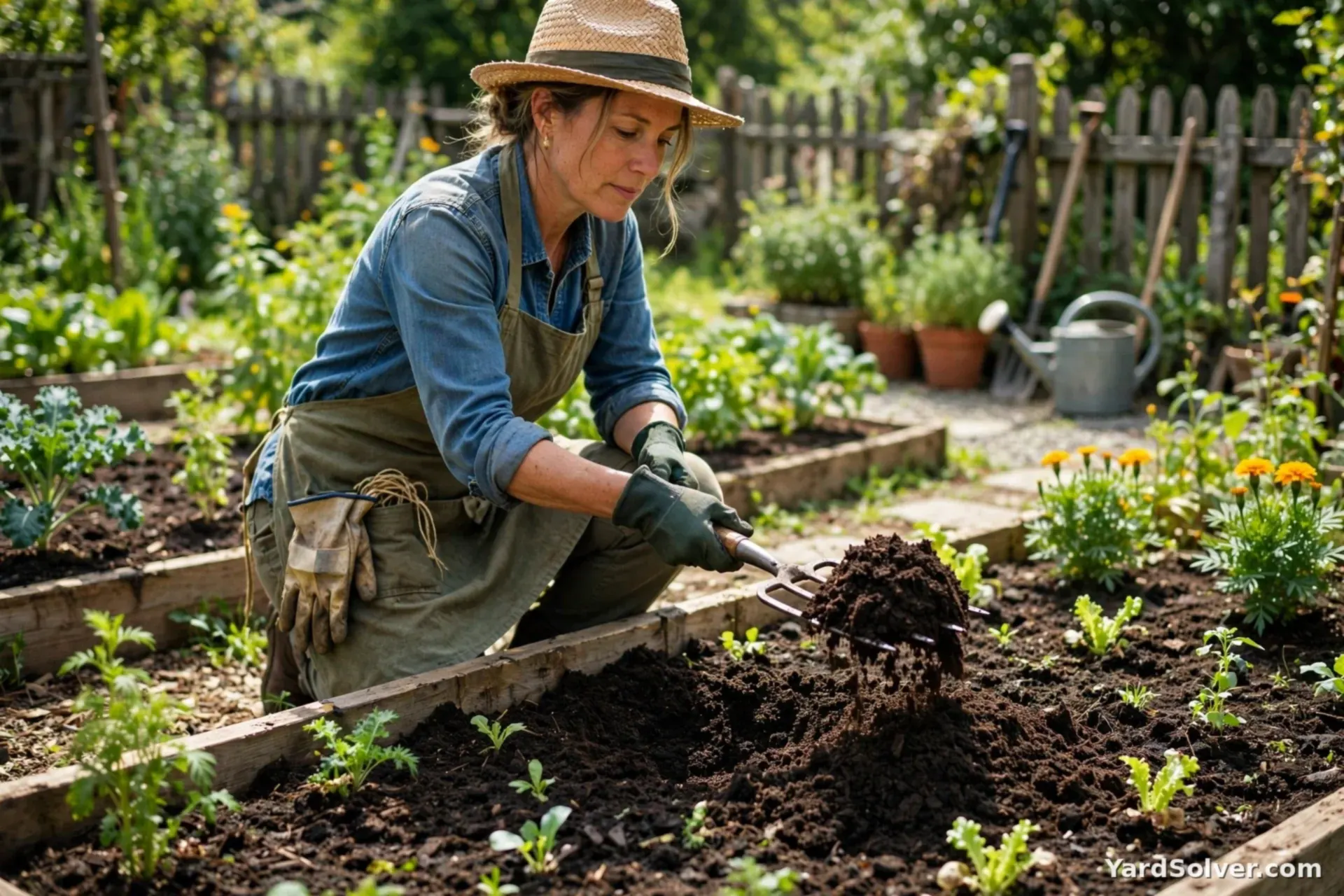
Sun: Full sun. Moist, compost-rich soil that never fully dries out. Leafy crops are fast and shallow-rooted, so little-and-often water beats occasional soaking. Work out how much you need with the Garden Mix Calculator or the Raised Bed Soil Calculator.
Step 3 — Sow and plant out
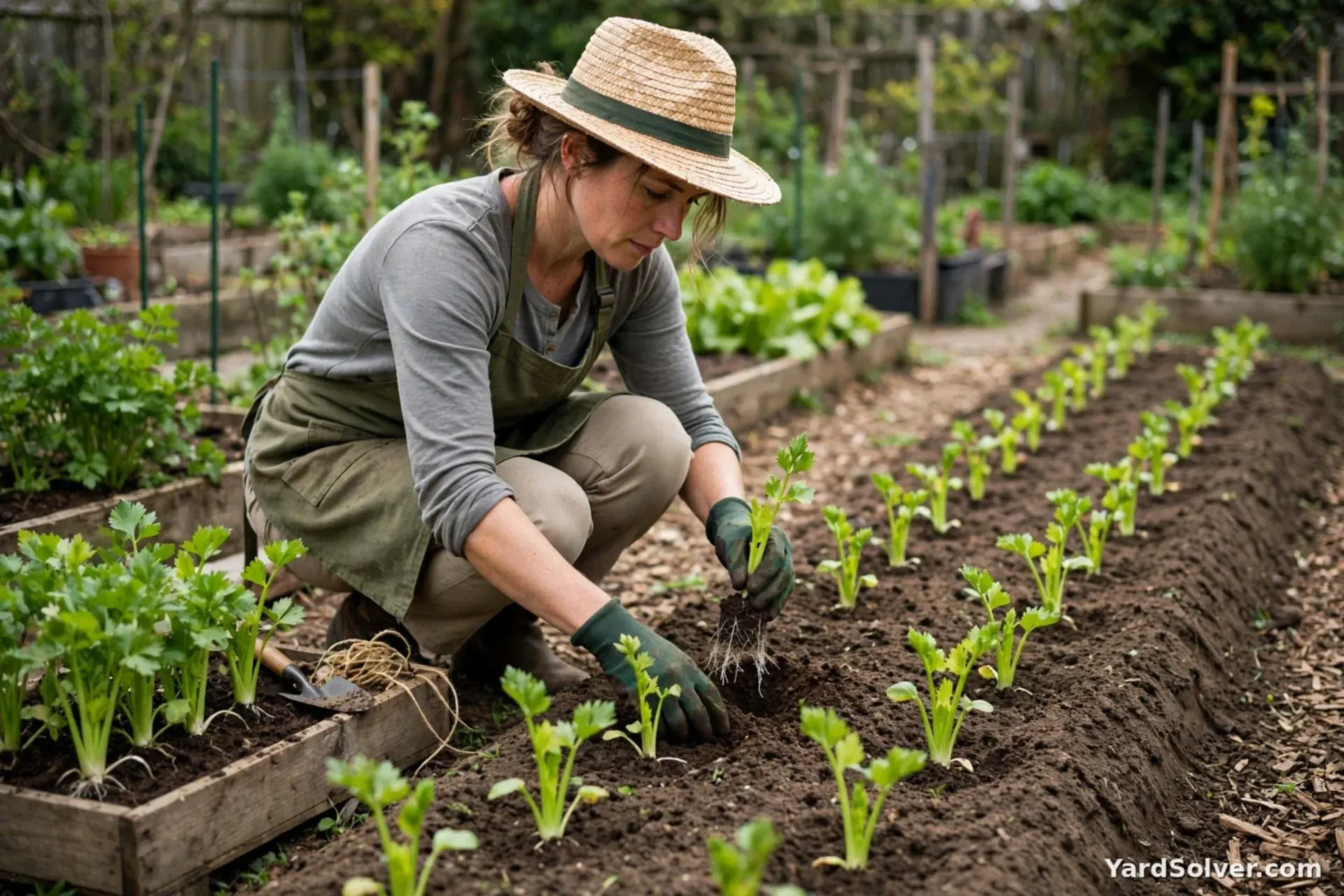
Start seed indoors 11 weeks before last frost, sowing 1/4 in deep. Grow seedlings on in strong light, then harden them off over 7–10 days (see How to Harden Off Seedlings) and move them outside 1 week after last frost, spaced 8–10 in apart. The Plant Spacing Calculator turns that spacing into plants-per-bed.
Step 4 — Water and feed
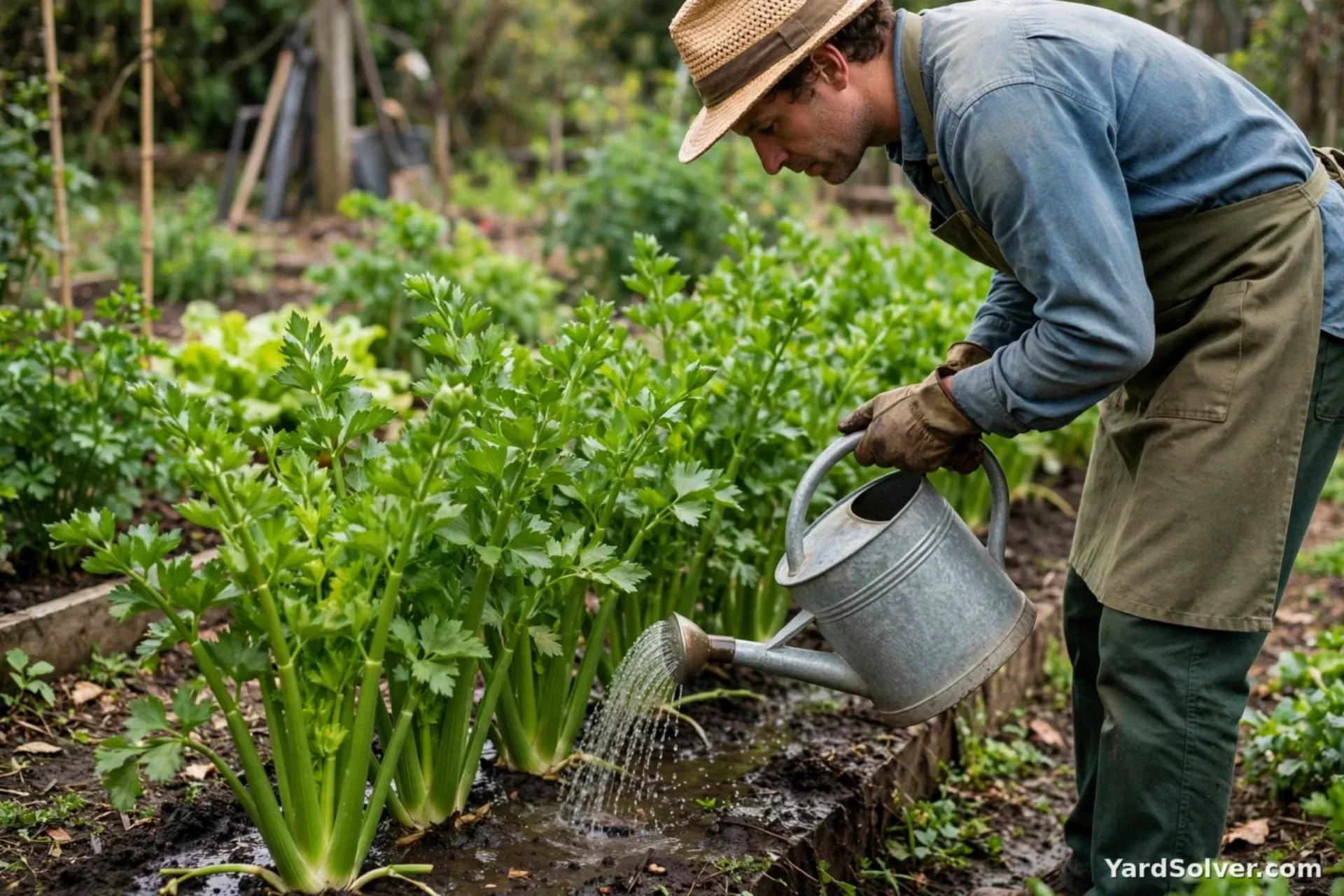
Water: Never let it dry out. First feed: around day 30 — Celery is a hungry feeder — feed about a month after transplanting and never let the soil dry out. The Fertilizer Calculator turns a bed size into the right amount.
Step 5 — Care and the problems to watch for
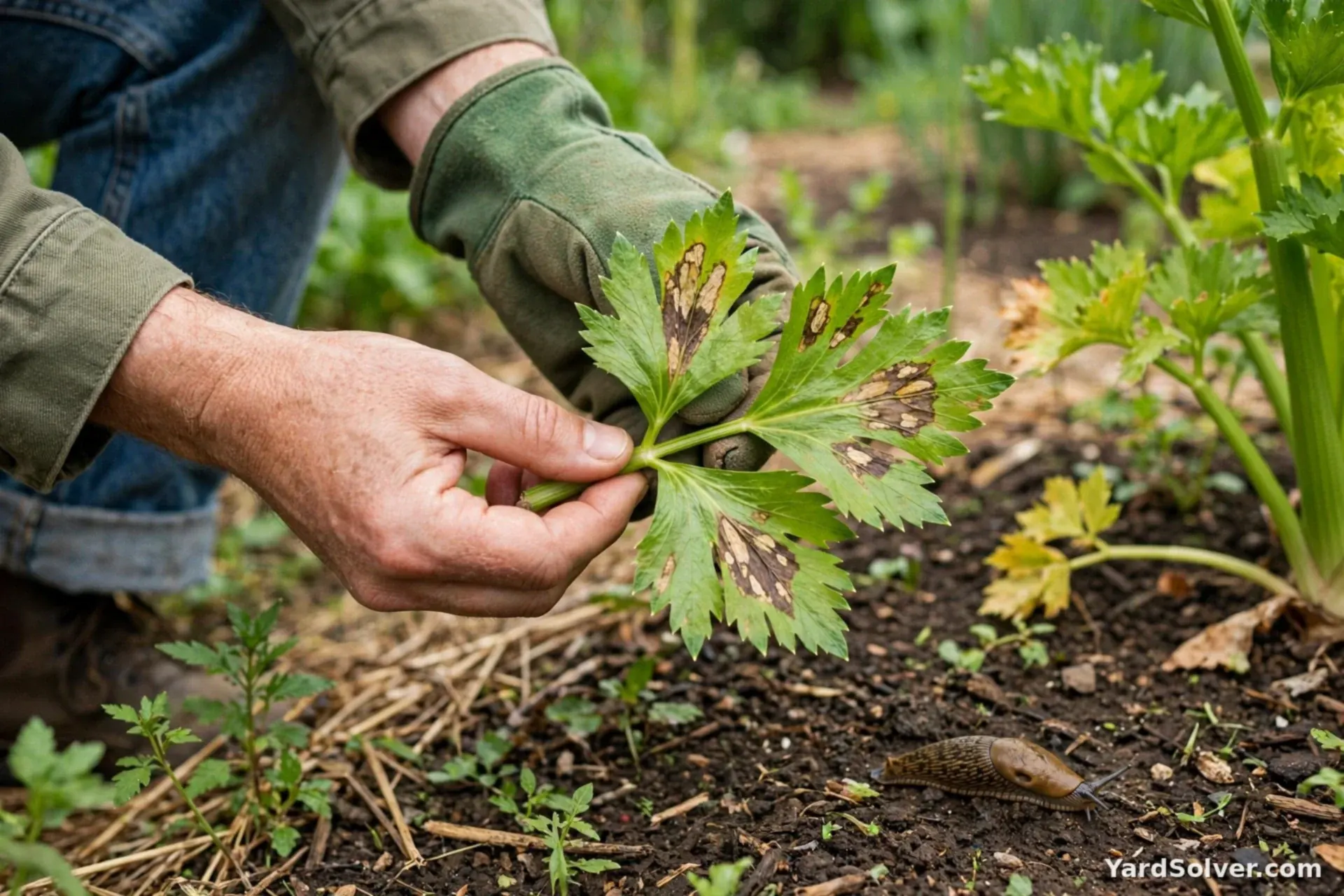
- Slugs — celery is a favourite; protect young plants.
- Leaf spot (septoria) — spotted leaves in wet weather; water at the base and space plants.
- Bitter, stringy stems — celery is thirsty; never let it dry out.
Take care: Celery is one of the more common food allergies in some countries — anyone who reacts to it should avoid it, seeds and spice included. Wash stalks well before eating, as soil and grit hide in the grooves.
Step 6 — Harvest
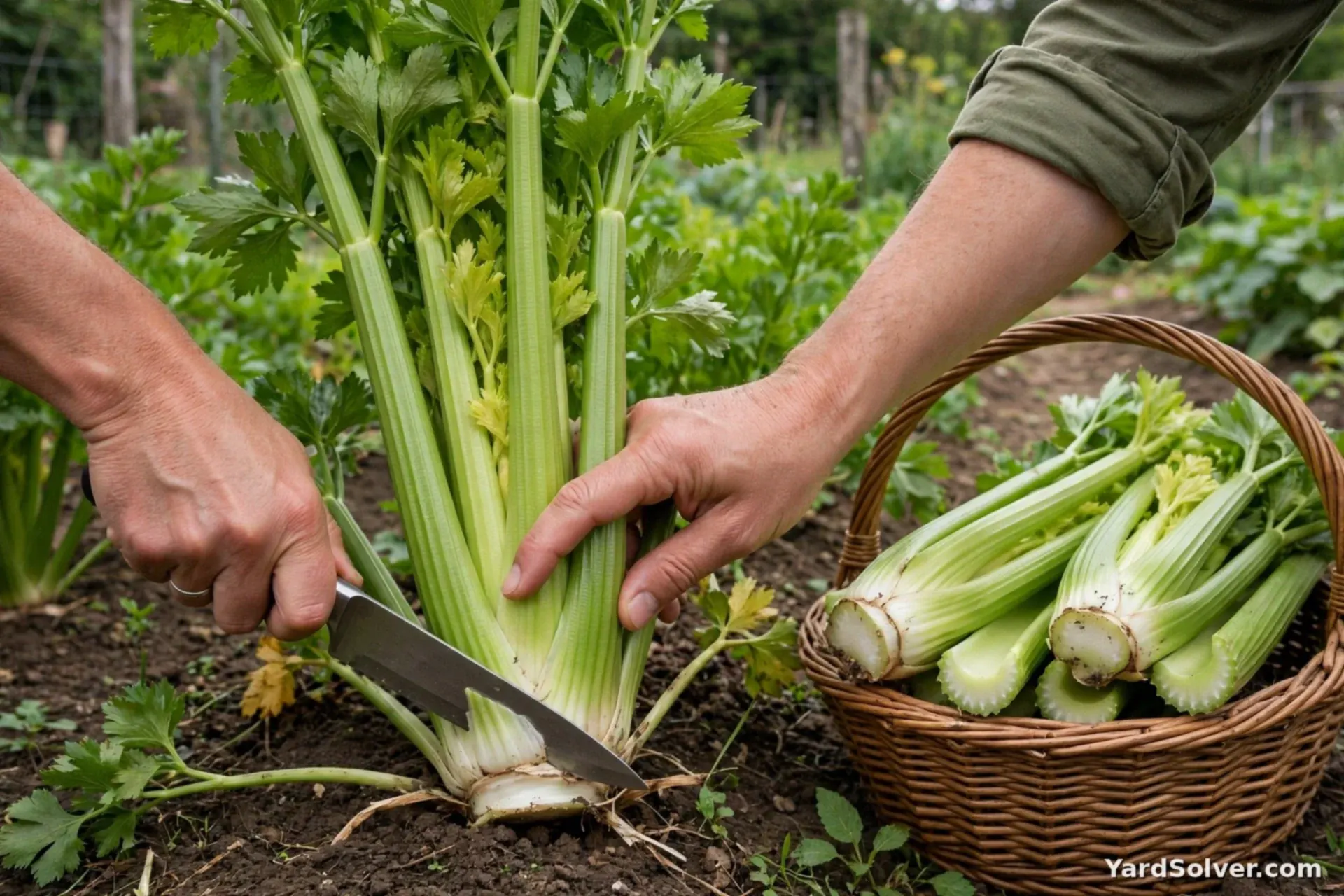
Ready in: 85–100 days after transplant. Harvest runs from about day 85 to 100 after transplant — cut whole heads, or take outer stalks as needed.
📅 Your personal Celery schedule
Counted from your planting day — not a generic calendar. Day 0 is the day the seed went in the ground or the young plant went out.
Varieties worth growing
| Variety | Colour | Why gardeners like it |
|---|---|---|
| Utah 52-70 | Green | The standard tall green celery — crisp, reliable stalks |
| Tall Utah | Green | A classic strain with thick, stringy-in-a-good-way ribs for soups |
| Conquistador | Green | An early hybrid that copes better with warm spells |
| Tango | Green | Smooth, tender stalks with less string than older types |
| Golden Self-Blanching | Pale yellow-green | An old type that blanches itself to a mild, pale gold |
Good for you — and take care
Benefits
- Mostly water and fibre, so it is filling with very few calories
- Provides vitamin K for healthy blood and bones
- Provides potassium and folate
- Provides vitamin C and vitamin A in smaller amounts
- Crunchy and hydrating on hot days
Take care
- Celery is one of the more common food allergies in some countries — anyone who reacts to it should avoid it, seeds and spice included
- Wash stalks well before eating, as soil and grit hide in the grooves
A little history — and one good fact
Celery comes from wild celery, a plant of marshy coasts around the Mediterranean. The ancient Greeks and Romans used the wild plant mostly as medicine and flavouring, and gardeners in Italy and France only bred the thick, mild stalks we eat in the last few hundred years. Crisp stalk celery then became a salad and soup staple in North America.
Fun fact: Celery was once such a luxury that wealthy Victorian families served it standing in special tall glass 'celery vases' at the centre of the table.
Keep going
Guides: When to Start Seeds Indoors · How to Prepare Garden Soil in Spring · How to Harden Off Seedlings
Calculators: Plant Spacing Calculator · Seed Calculator · Fertilizer Calculator · Garden Mix Calculator
More vegetables: Celeriac · Pepper · Cucumber
← Back to the Plant Library · Get your personal planting dates
Questions people ask
When do I plant celery?
Count from your average last spring frost: sow indoors 11 weeks before last frost; move outside 1 week after last frost. Celery needs the earliest start of all: sow indoors about 11 weeks before your last frost and transplant about a week after it — it is the thirstiest crop in the garden, so mulch well and never let it dry out.
How far apart do I space celery?
Space plants 8–10 in apart, with seed sown 1/4 in deep. Sun: full sun.
When is celery ready to harvest?
85–100 days after transplant. The earliest indoor start of all and the thirstiest crop — mulch well.
Related guide
Read next: What Seeds to Start Indoors in January: 8 Slow Crops.
Celery is a bog plant in disguise: constant moisture and rich feeding are what make stalks crisp instead of stringy
Celery descends from a marsh plant, and it has never forgotten it. Almost every celery failure — thin stalks, stringy texture, bitter flavour, plants that bolt or stall — traces back to the same two causes: the roots dried out, or the bed was not rich enough for a genuinely hungry crop. Grow it in the richest, most moisture-retentive ground you have, work in generous compost before planting, mulch deeply, and then water so regularly that the soil never truly dries. In hot weather that can mean watering several times a week.
The second craft is blanching for those who want pale, tender hearts: as the plants reach full size, wrap the stalks — a cardboard collar, boards, or simply earthing up — to exclude light for the last two to three weeks. Self-blanching varieties skip most of this work and suit most home gardens better. Cut outer stalks as needed once plants are established, or lift whole heads; flavour and crispness are best in cool weather, and a light frost sweetens rather than harms a mature plant.
The worked example: celery grown in rich, mulched soil with water that never lapses commonly cuts as thick, crisp, mild stalks. The identical plants in ordinary dry garden soil typically give thin, tough, bitter strings. With celery there is no technique that substitutes for water — the watering can is the technique.
Sources
Key facts on this page — timing, spacing and care — cross-checked against NC State Extension Plant Toolbox — Apium graveolens (celery) — culture, moisture, soil and care requirements.
Related page
Read next: How Much Compost Do I Need? Top-Dressing Rates for Lawns & Beds — How the Calculator Works.
Comments & ratings
No comments yet.
Be the first to share your experience.