
Plant Library · Herbs · By Faizan Ahmad
🌾 How to Grow Lemongrass
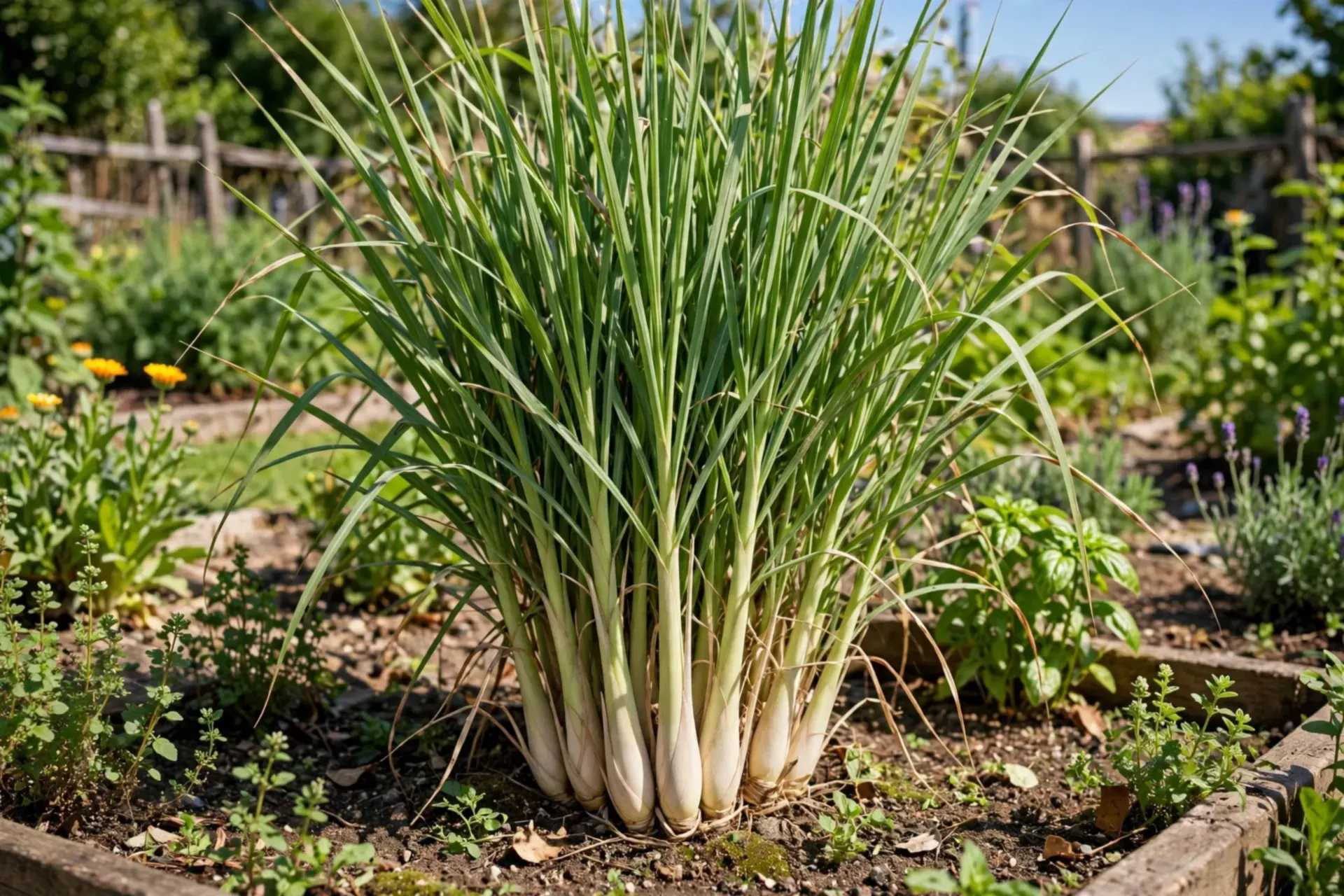
A tropical grass — in cold climates it lives in a big pot and summers outside. Lemongrass is a tender tropical perennial, hardy only in zones 9–11 — everywhere colder it is grown as an annual or lives in a big pot that summers outside and winters indoors. Give it heat, sun and plenty of water and a single clump produces armfuls of lemon-scented stalks in one season.
Grow Lemongrass with us — step by step
Everything for this plant is written step by step below — what to do, and exactly when. Read it through first if you like: you can grow it entirely on your own with that guide. Or start with us here — tell us your planting day and we lay out your personal schedule on this page, every next step on its own day, counted from your planting date. No guessing, no forgetting.
Step 1 — today: Plant out your young Lemongrass plants today (hardened off first), spaced 24 in apart, and water them in deeply. Starting from seed instead? Sow indoors now in warmth, 1/4 in deep, and this same schedule counts from transplant day — or root fresh supermarket stalks in water and plant those.
Lemongrass at a glance
Sow indoors: 10 weeks before last frost
Move outside: 3 weeks after last frost
Spacing: 24 in · Seed depth: 1/4 in
Sun: Full sun
Water: Plenty — a thirsty tropical grass
Harvest: Cut stalks at the base once 1/2 in thick, from late summer
Timing counts from your average last spring frost — get your own dates in the Planting Calendar. Guidance follows standard extension-service practice for Canada and the US.
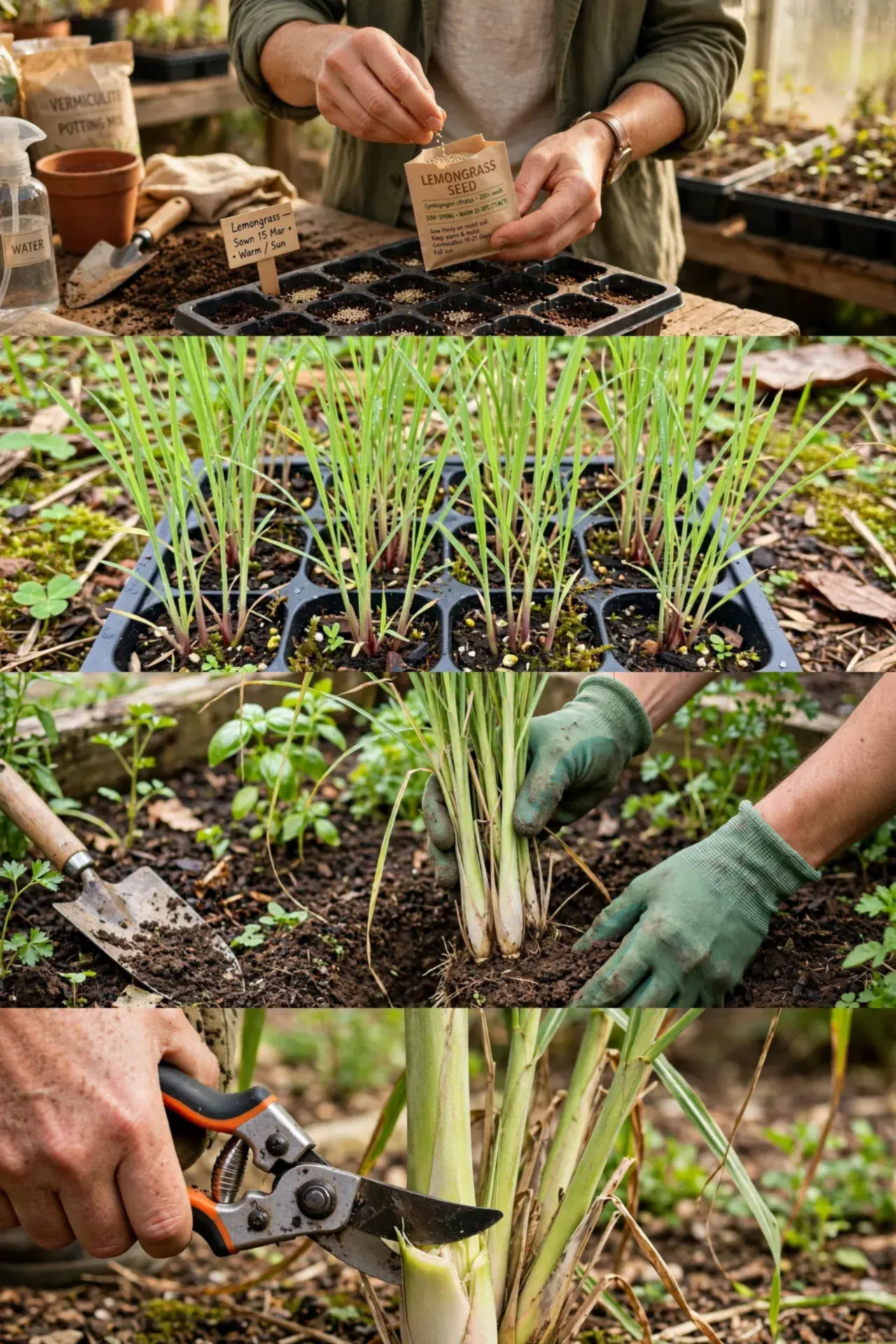
How to plant and grow lemongrass, step by step
Step 1 — Time it right
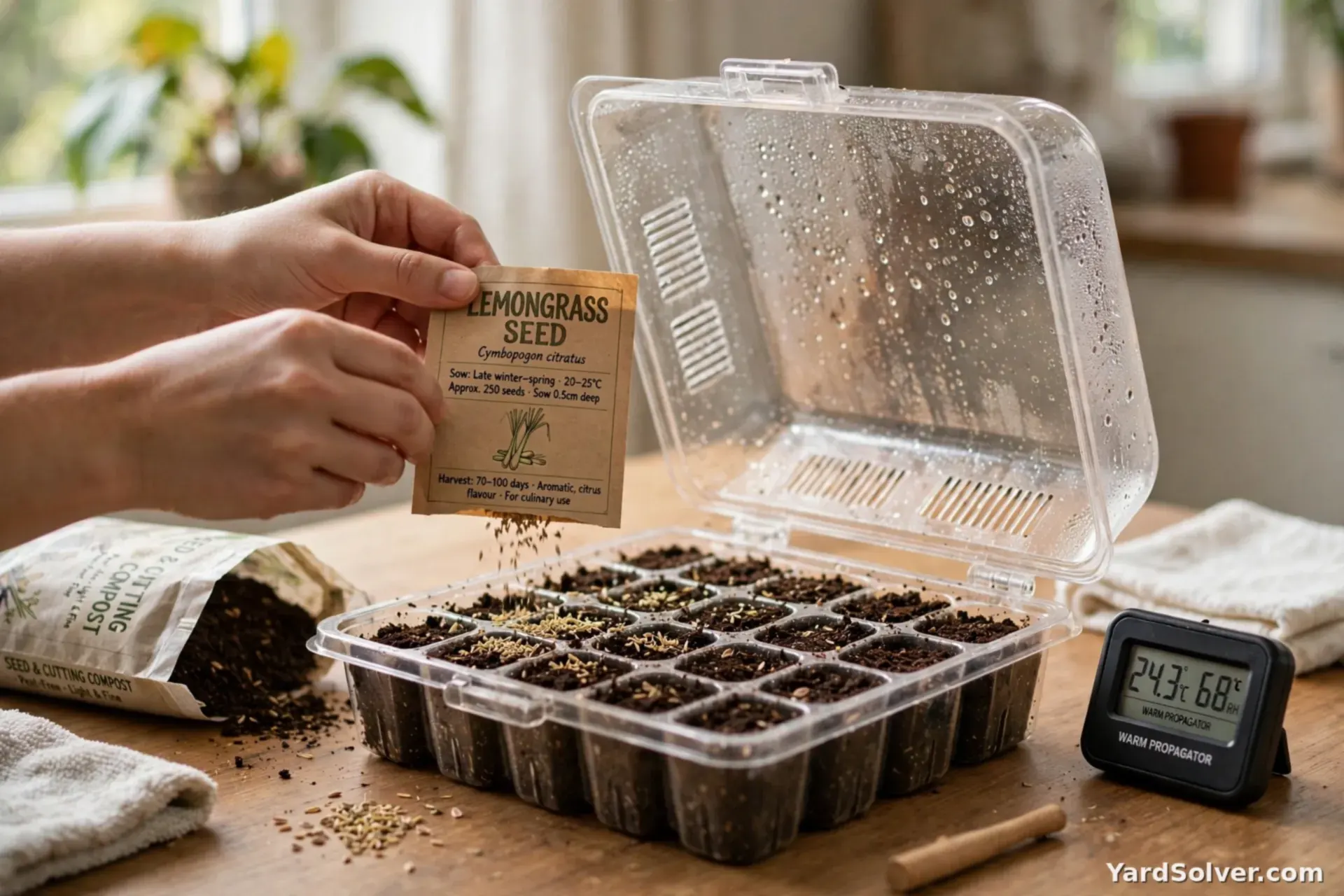
Sow indoors: 10 weeks before last frost; Move outside: 3 weeks after last frost. All dates count from your average last spring frost — the Planting Calendar turns them into real dates for your garden. Seed needs real warmth to sprout. The shortcut most gardeners use: stand fresh supermarket stalks in water, wait for roots, and plant those instead.
Step 2 — Prepare the spot
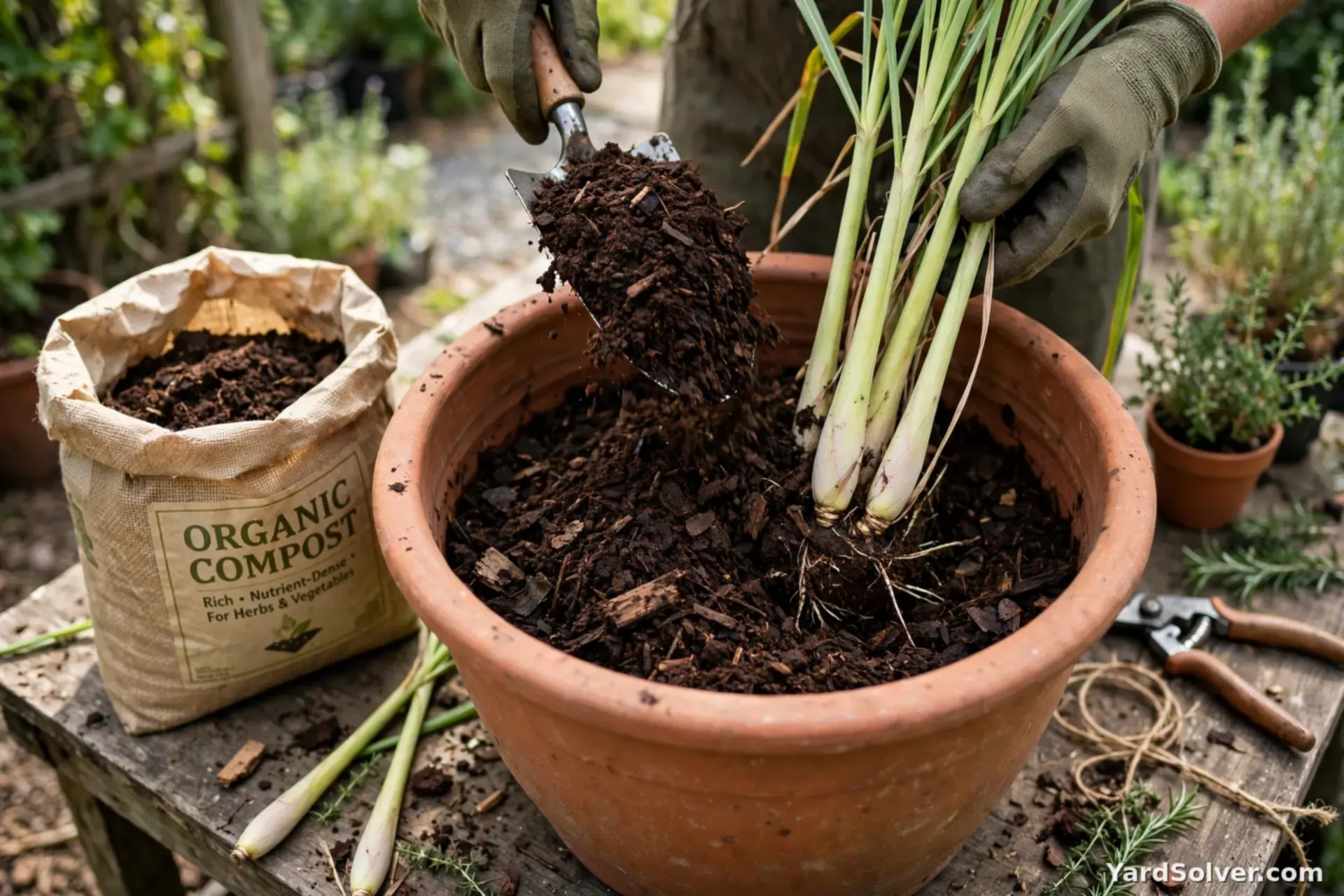
Sun: Full sun. Lemongrass is the opposite of the Mediterranean herbs: rich soil, steady moisture and a big root run. In the ground, work in plenty of compost; in cold climates choose a large pot (it must hold a thirsty, fast grass all summer) so the plant can come indoors before frost. Work out how much you need with the Garden Mix Calculator or the Raised Bed Soil Calculator.
Step 3 — Sow and plant out
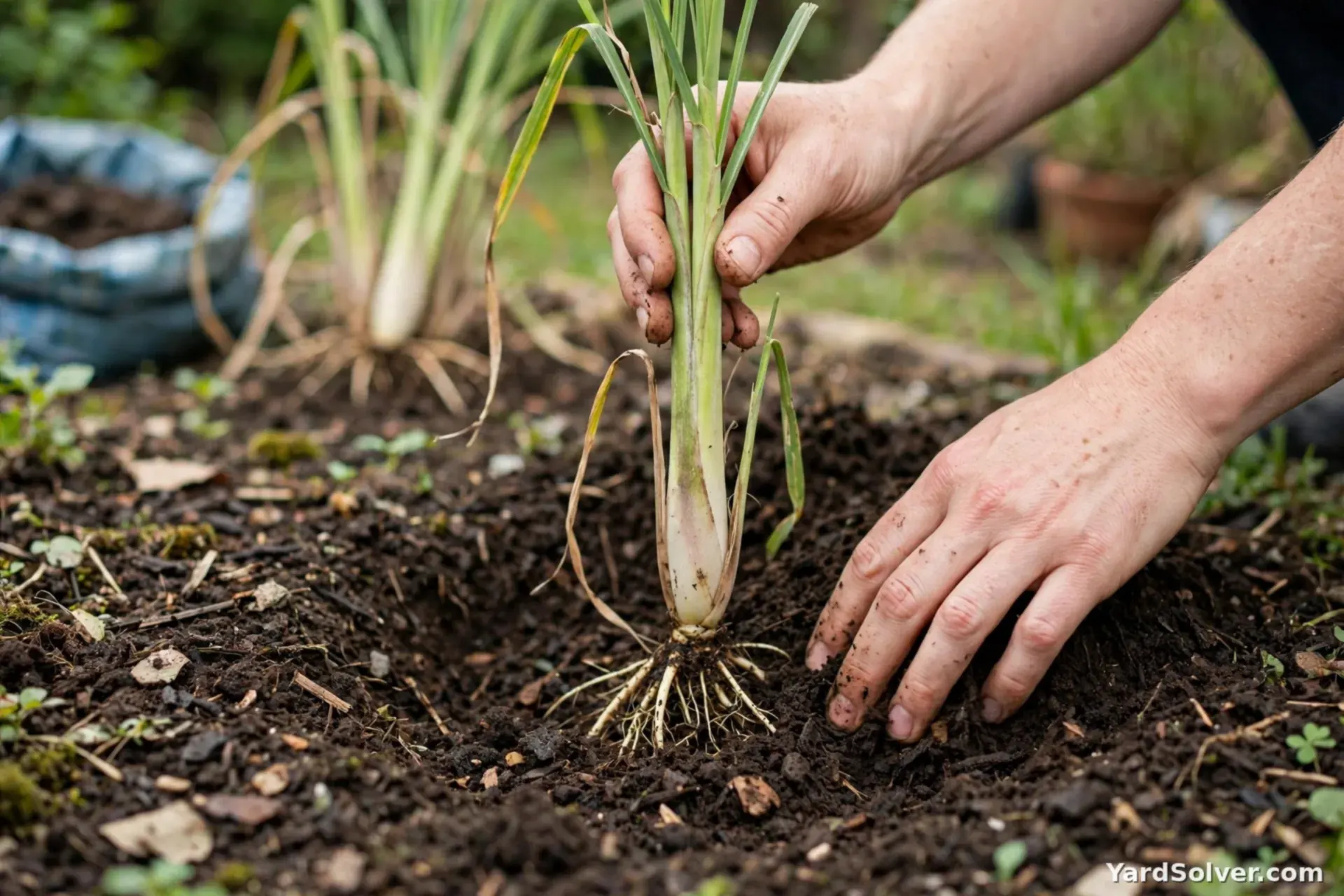
Start seed indoors 10 weeks before last frost, sowing 1/4 in deep in warmth, or pot up rooted stalks. Harden plants off over 7–10 days (see How to Harden Off Seedlings) and move them outside 3 weeks after last frost, spaced 24 in apart — a happy clump gets big. The Plant Spacing Calculator turns that spacing into plants-per-bed.
Step 4 — Water and feed
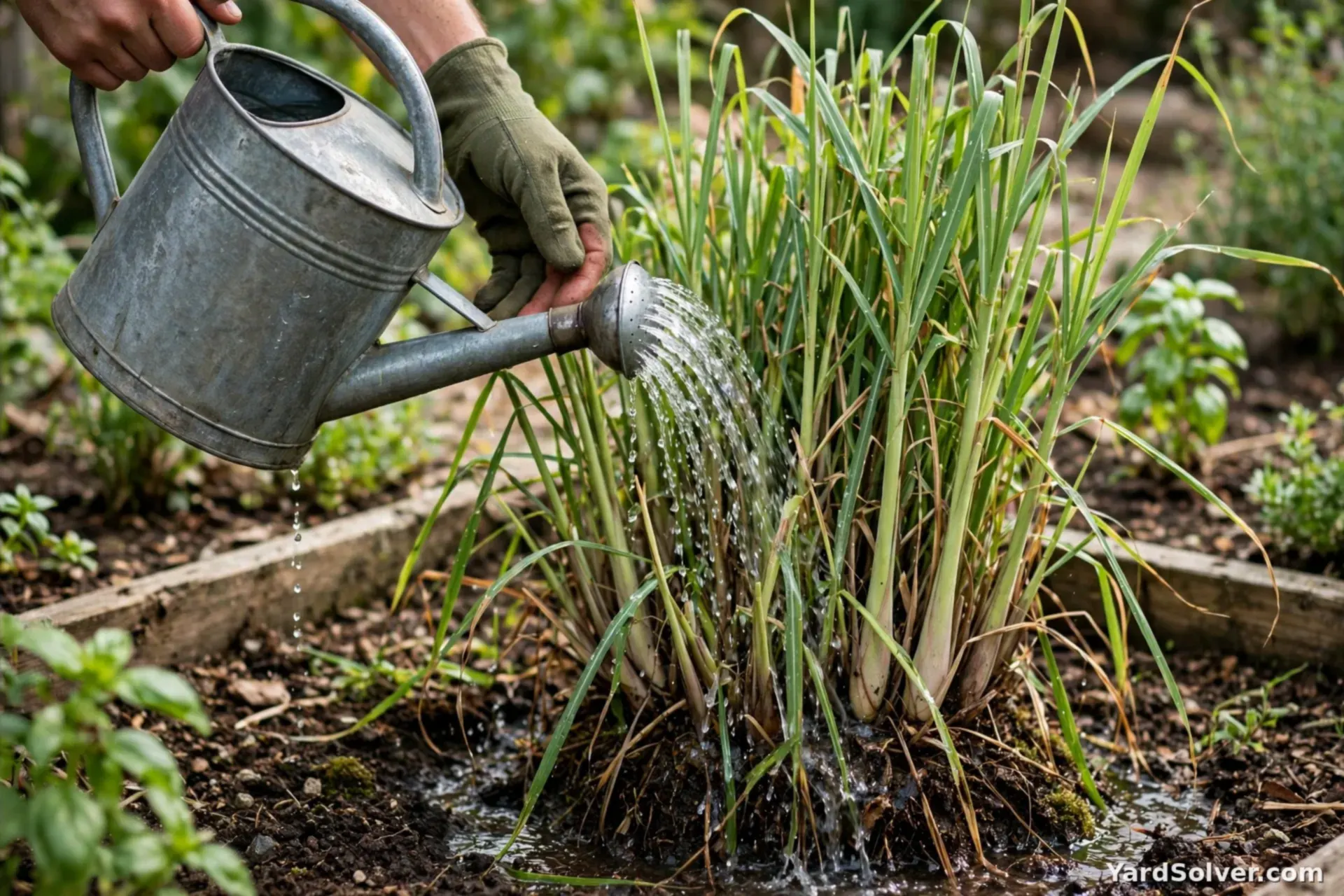
Water: Plenty — a thirsty tropical grass. Keep the soil moist all summer and feed regularly — lemongrass grows as fast as lawn grass in heat and is just as hungry. A balanced feed every few weeks keeps stalks swelling. The Fertilizer Calculator turns a bed size into the right amount.
Step 5 — Care and the problems to watch for
- Rust spots — orange-brown spots on leaves in humid weather; cut out bad leaves and space clumps for air.
- Aphids in the leaf funnels — rinse out with a strong jet of water.
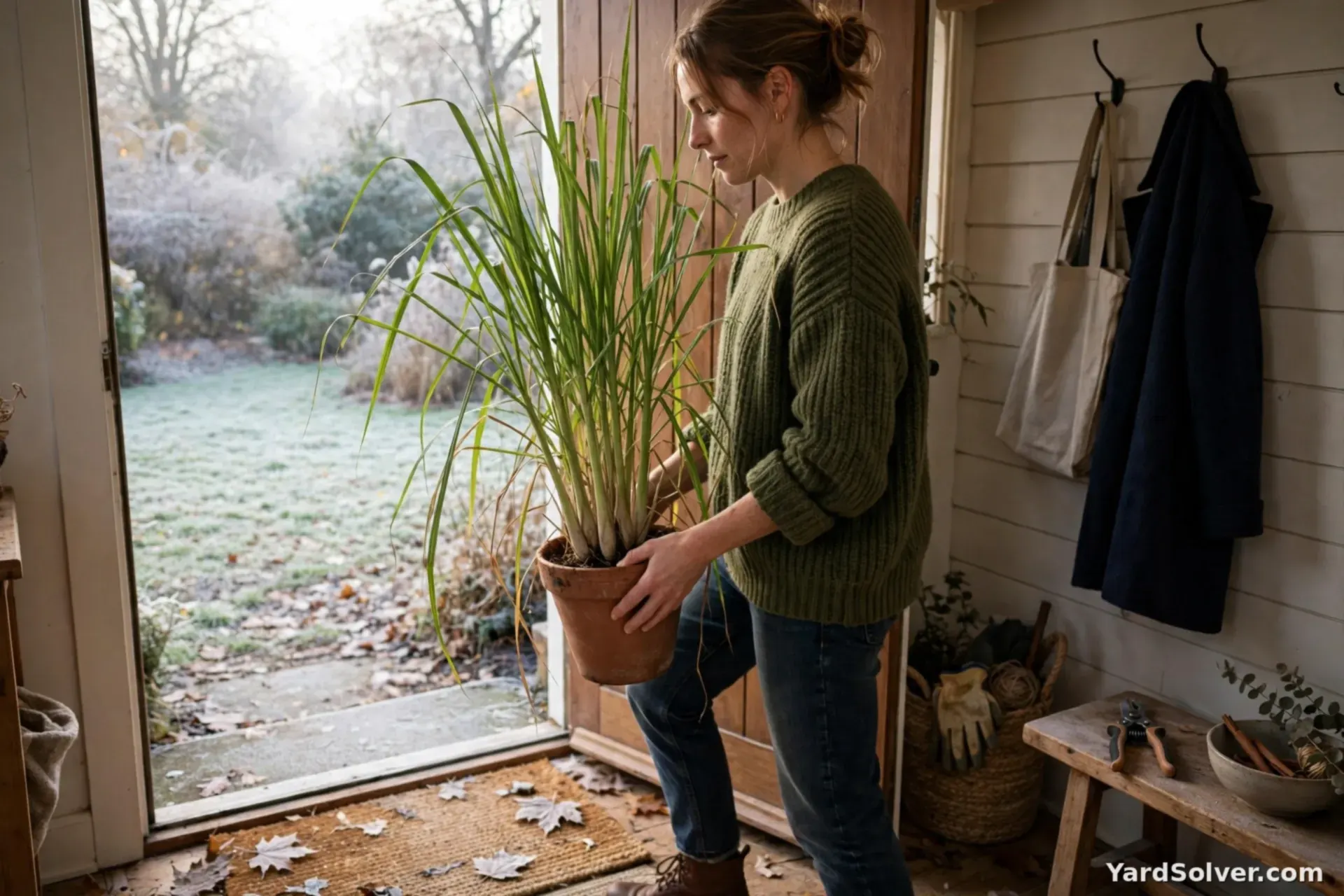
- Frost kill — even a light frost can finish it; potted plants must come indoors before the first frost night.
Take care: Lemongrass leaves have sharp, finely toothed edges that can cut skin like paper — wear gloves for big harvests and keep curious grazers away from the clump.
Step 6 — Harvest
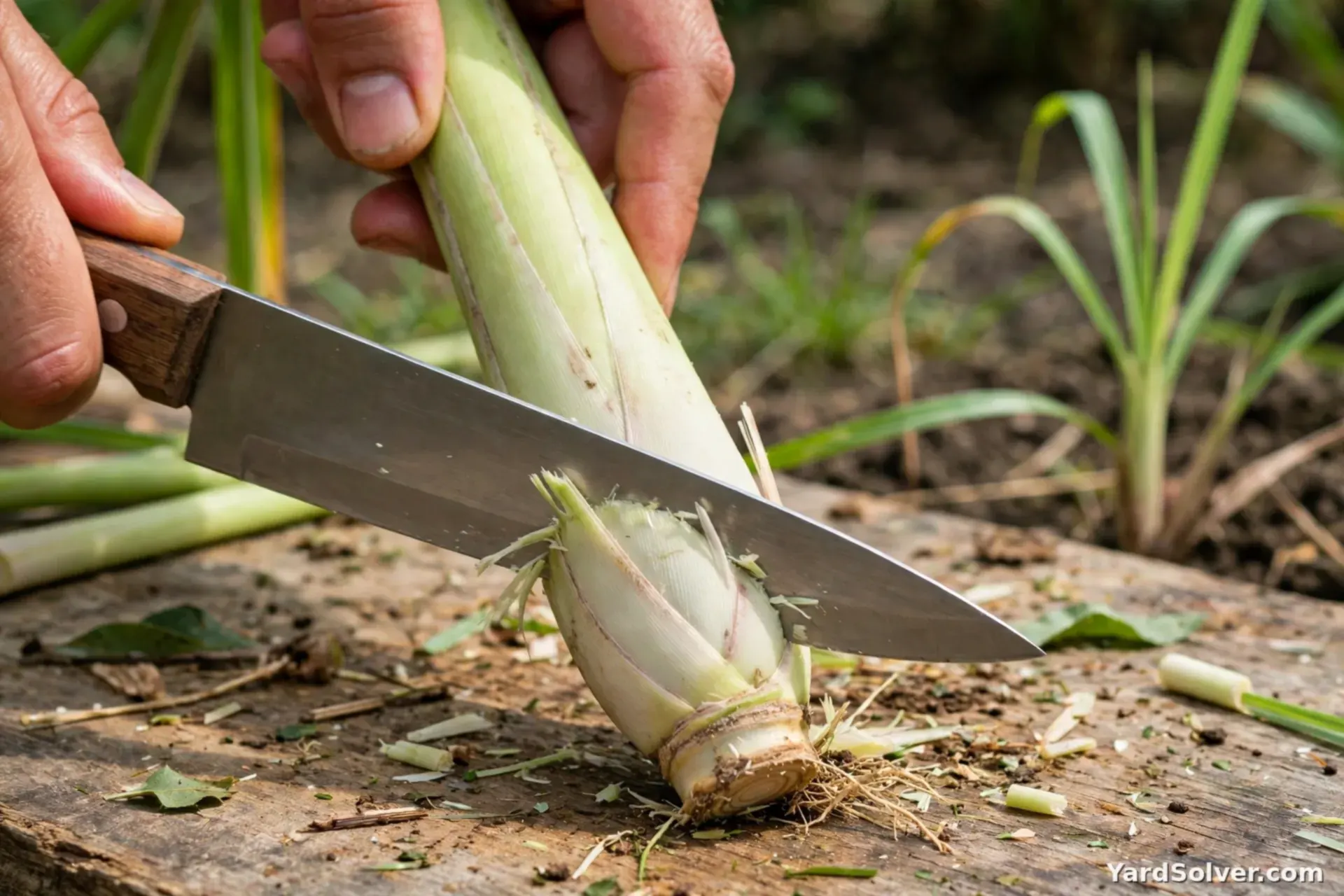
Ready in: Cut stalks at the base once 1/2 in thick, from late summer. Harvest stalks once the base is at least 1/2 in thick: grip low, twist and pull, or cut cleanly at the base. Use the tender white lower third for cooking; the green leaves make a fine lemon tea and can flavour soups while they simmer.
Problems, pests & diseases — diagnosis and fixes
- Orange-brown rust spots spreading on leaves: lemongrass rust, worse in humid, crowded plantings. Fix: remove the worst leaves, improve airflow, and water at the base — new growth usually outruns it in hot weather.
- Stalks staying thin and grassy by midsummer: hunger or thirst — the two usual causes. Fix: feed with a balanced fertilizer and water deeply and often; thickness follows within weeks in warm weather.
- Plant blackens and collapses after a cold night: frost damage — lemongrass has no frost tolerance. Fix: cut back blackened growth; if the crown survived it may resprout, otherwise start again — and bring pots in earlier next year.
- Small insects clustered where leaves meet stalks: aphids sheltering in the leaf funnels. Fix: blast them out with a hose on several days running.
- Leaf tips browning and growth stalling in a pot: root-bound and dry — the pot is too small for a thirsty grass. Fix: pot up into a much larger pot with rich mix and resume deep watering.
- Hollow, chewed stalks at the base: occasionally slugs sheltering in the clump. Fix: tidy dead leaves from the base and hand-pick at dusk.
📅 Your personal Lemongrass schedule
Counted from your planting day — not a generic calendar. Day 0 is the day the seed went in the ground or the young plant went out.
Varieties worth growing
| Variety | Colour | Why gardeners like it |
|---|---|---|
| West Indian (C. citratus) | Pale green stalks | The standard culinary lemongrass — the one sold fresh in shops, best for cooking |
| East Indian (C. flexuosus) | Green | Grown mainly for its oil in India; usable in the kitchen, with a slightly different scent |
| Citronella Grass (C. nardus) | Green, coarse | A close relative grown for insect-repellent oil — not a cooking herb |
| Java Citronella (C. winterianus) | Green, coarse | The other citronella source for oils and candles — not for the kitchen |
| Palmarosa (C. martinii) | Green | A scented relative distilled for rose-like oil — grown for perfume, not pots of soup |
Good for you — and take care
Benefits
- Fresh lemon flavour for Thai and Vietnamese cooking, with no lemon required
- Provides small amounts of vitamin C and potassium
- Leaves make a refreshing herbal tea
- Fast, handsome summer screen in a pot or bed
- One clump yields generously in a single season
Take care
- Leaf edges are sharp enough to cut — handle big harvests with gloves
- Frost kills it — in cold zones it must winter indoors or be regrown each year
- Citronella relatives are for oil, not cooking — buy culinary lemongrass for the kitchen
A little history — and one good fact
Lemongrass is native to tropical Asia, where it has flavoured food and tea in India and Southeast Asia for centuries. It spread through tropical gardens worldwide and into northern kitchens with Thai and Vietnamese cooking in the late twentieth century — in cold climates it survives as a summer visitor, grown fresh each year or overwintered in a pot on a sunny windowsill.
Fun fact: The same lemon scent that flavours soup also perfumes soap — lemongrass oil's main scent compound, citral, is shared with lemon peel itself.
Keep going
Guides: Earliest Seeds to Start Indoors · Grow Herbs Indoors in Winter · How to Harden Off Seedlings
Calculators: Plant Spacing Calculator · Seed Calculator · Fertilizer Calculator
More herbs: Basil · Rosemary · Mint · Chives · Stevia · Ginger · Turmeric · Sugar Cane · Citronella Grass · Lemon Verbena
← Back to the Plant Library · Get your personal planting dates
Questions people ask
When do I plant lemongrass?
Count from your average last spring frost: sow indoors 10 weeks before last frost; move outside 3 weeks after last frost. Lemongrass is a tender tropical perennial for zones 9–11: start it indoors early in warmth, or plant rooted stalks, and move it out only when nights are warm.
How far apart do I space lemongrass?
Space plants 24 in apart, with seed sown 1/4 in deep. Sun: full sun.
When is lemongrass ready to harvest?
Cut stalks at the base once 1/2 in thick, from late summer. A tropical grass — in cold climates it lives in a big pot and summers outside.
A tropical grass grown as a summer annual in cold gardens: start it from a grocery-store stalk and harvest before the frost
Lemongrass (Cymbopogon citratus) is a tropical clumping grass grown for the swollen, fragrant stalk bases that flavour soups and teas. Where frost bites it is not a perennial at all but a fast summer annual: a single stalk planted in spring, in the hottest and sunniest spot with regular water, becomes a metre-wide fountain of foliage by autumn, and the stalks are harvested before the first frost ends the plant.
Starting it is famously cheap. A fresh grocery stalk with an intact base, stood in water until roots show and then potted on, grows as well as a bought plant; divisions of an existing clump are faster still. The stalks to harvest are the thick ones — a centimetre or more at the base — cut or twisted out individually so the clump keeps producing, and the tough outer leaves and green tops go to teas and stocks rather than the bin.
The worked example: stalks planted out after the last frost in a hot bed, watered through dry spells, typically yield bundles of usable stalks by late summer. A clump left hopefully in the ground through a cold winter typically returns nothing but mush — in cold gardens, lemongrass is replanted, not overwintered, and a few stalks potted up indoors are next year's stock.
Sources
Key facts on this page — timing, spacing and care — cross-checked against Cymbopogon citratus — Wikipedia — background on lemongrass and its cultivation and NC State Extension Plant Toolbox — Cymbopogon citratus — culture and care requirements.
Related page
Read next: Best Vegetables for Containers: Pots, Soil & Watering.
Comments & ratings
No comments yet.
Be the first to share your experience.